
I used to think of travel as a checklist. A frantic, breathless race against the clock to see every monument, visit every museum, and capture every iconic photo. My first few days in Paris were no different. I was a blur of movement, darting from the Louvre to the Eiffel Tower, fueled by adrenaline and the fear of missing out. I was seeing Paris, but I wasn’t experiencing it. I was a tourist, not a traveler, and the city, in its infinite, elegant wisdom, decided it was time to teach me a lesson in the art of sitting still.
The lesson began on a Tuesday afternoon, a day I had scheduled for “aggressive sightseeing” in the Latin Quarter. I was exhausted, my feet aching, and my mind overloaded with historical dates and architectural styles. I needed a break, but my internal clock was screaming at me to keep moving. It was then, tucked away on a quiet side street, away from the main tourist drag, that I saw it: a small, unassuming café with a faded green awning and a scattering of wicker chairs facing the street. It was called Le Temps Perdu—The Lost Time. The name itself felt like a gentle, almost mocking, invitation.
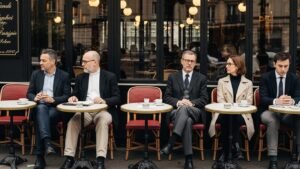
I hesitated for a moment, glancing at my itinerary, which demanded I be at the Pantheon in ten minutes. But the sight of an elderly gentleman slowly turning the pages of a newspaper, completely oblivious to the world, was too compelling. I surrendered. I chose a chair on the terrace, facing the street, and ordered a café au lait. The waiter, a man who moved with the unhurried grace of someone who understood the value of every second, simply nodded. There was no rush, no pressure, only the quiet promise of a moment suspended in time.
The coffee arrived in a thick, white porcelain cup, the milk perfectly frothed. I took a sip, and the warmth spread through me, a physical antidote to my self-imposed frenzy. And then, I did something revolutionary: I put down my phone. I didn’t check my list, I didn’t take a photo, and I didn’t plan my next move. I simply sat. I became a flâneur—a stroller, an observer, a connoisseur of the street scene—without even moving my feet.
The History of the Unhurried Seat
To understand the magic of that moment, you have to understand the history of the Parisian café. It is not just a place to drink coffee; it is a cultural institution, a second living room, and a stage for the city’s intellectual life. The first cafés in Paris opened in the late 17th century, and by the 18th century, they had become the beating heart of the Enlightenment. Figures like Voltaire and Rousseau debated philosophy over cups of coffee, transforming the café into a crucible of ideas.
The design of the café is crucial to its function. The small, round tables and the chairs arranged to face the street are not accidental. They are an architectural invitation to observe, to be seen, and to engage with the public sphere. The café is where the private and the public meet, where you can be alone without being lonely. It is a space that encourages contemplation and conversation in equal measure.
In the 20th century, the cafés of Saint-Germain-des-Prés—like Les Deux Magots and Café de Flore—became the headquarters for existentialists and artists. Jean-Paul Sartre and Simone de Beauvoir spent countless hours writing and debating there, making the simple act of sitting in a café a philosophical statement. It was a rejection of bourgeois life and a celebration of freedom and intellectual pursuit. When you sit in a Parisian café, you are not just drinking coffee; you are participating in a legacy that spans centuries of thought and revolution.
The Gentle Art of Flânerie
The experience of “sitting without haste” is intrinsically linked to the French concept of flânerie. The flâneur is not just a wanderer; he is a deliberate observer, a detective of the urban landscape. He is someone who slows down to notice the details that the rushed masses miss: the way the light hits a particular building, the subtle drama unfolding between two people at a nearby table, the changing expressions on the faces of passersby.
From my small table at Le Temps Perdu, I began my own quiet flânerie. I watched a young couple argue passionately, their hands flying, only to dissolve into laughter a moment later. I saw a delivery man, his face etched with fatigue, pause to share a quick joke with the waiter. I observed the intricate dance of the traffic, the way the scooters weaved through the cars, a ballet of controlled chaos. These were the real, unscripted moments of Paris, the ones that no guidebook could ever capture.
This deliberate slowing down is a radical act in our hyper-connected, productivity-obsessed world. It is a form of resistance. The Parisian café, with its tacit permission to linger, offers a sanctuary from the tyranny of the clock. It reminds you that time is not just a resource to be managed, but a space to be inhabited.
If you are planning a trip to Paris and want to find these hidden gems, you might find my article on 2-Day Trip in Paris: Hidden Cafés and Secret Streets helpful. It focuses on getting off the beaten path to discover the city’s quieter, more authentic corners.
The Sensory Ritual of the Coffee
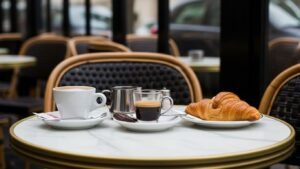
The experience is not complete without the ritual of the coffee itself. In Paris, coffee is not a grab-and-go fuel; it is a ceremony. The café au lait is a gentle start, but the true Parisian experience often involves the petit noir (a small espresso) or the noisette (an espresso with a dash of milk). The drink is consumed slowly, savored, often with a small square of dark chocolate or a simple, buttery croissant.
The sensory details of the café are what anchor you to the moment. The clinking of porcelain, the low murmur of French conversation, the rhythmic hiss of the espresso machine, the faint smell of tobacco lingering from the street, and the rich, roasted aroma of the coffee itself. These are the elements that weave together to create the atmosphere, the ambiance that makes the Parisian café so unique.
This is a stark contrast to the coffee culture in many other parts of the world, where the focus is on speed and efficiency. In Paris, the focus is on the pause. It is a moment of self-care, a small, daily luxury that is non-negotiable. It is a cultural value that says: your well-being is more important than your to-do list.
A Lesson in Presence
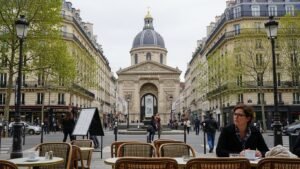
My hour at Le Temps Perdu was the most productive hour of my trip, not because I accomplished anything on my checklist, but because I accomplished something far more important: I became present. I stopped consuming the city and started absorbing it. I realized that the true beauty of Paris is not in its monuments, but in the small, human moments that unfold on its streets every day.
The café is a masterclass in observation. It teaches you to look beyond the surface, to see the stories hidden in plain sight. It is a reminder that travel is not about collecting souvenirs or photos; it is about collecting moments of genuine connection and understanding.
This philosophy of slowing down extends beyond the café. It changes the way you approach a meal, a walk in the park, or a conversation with a stranger. It encourages a deeper, more meaningful engagement with the world around you.
If you are interested in how other cities express their culture through simple, yet profound, culinary experiences, you might enjoy my article on What Street Food Says About a City: A Deep Dive into Urban Culture and History. It explores how the food on the pavement can tell the story of a city’s soul, much like the café tells the story of Paris’s intellectual heart.
The next time you find yourself in Paris, or any city for that matter, I urge you to find your own Le Temps Perdu. Order a coffee, put down your phone, and simply sit. Allow yourself the luxury of lost time. You will find that the greatest sights are not always the ones you travel across the world to see, but the ones that unfold right in front of you when you finally stop rushing. The Parisian café is not just a place to rest your feet; it is a place to rest your soul.
Taylor Smith is a passionate traveler since the age of 19 and currently lives in the United States. At 40 years old, Taylor loves exploring new cultures, experiencing local cuisine, and discovering authentic places around the world. He is also a dedicated writer, sharing his travel experiences and tips on this blog to help others make the most of their journeys in a thoughtful and inspiring way.