
The word “tourist” has taken on a bit of a heavy weight lately. When we think of a tourist, we often conjure images of someone moving through a city like a ghost through a wall—passing through, taking a photo, and leaving nothing behind but a footprint and perhaps a bit of plastic waste. But there is another way to see the world, a way that transforms the act of travel from a transaction into a relationship. It’s the shift from being a tourist to being a guest. When you are a guest in a foreign land, you move with intention. You realize that the cobblestone street you are walking on isn’t just a backdrop for your vacation; it is someone’s front yard, someone’s history, and someone’s future.
[imagem1]
Sustainable travel is often marketed as a list of things to buy—bamboo straws, solar-powered chargers, or expensive eco-resorts. But after twenty years of living out of a suitcase, I’ve realized that sustainability is actually a mindset. it’s about the “slow” choices we make every day. It’s about understanding that our presence has an impact, and we have the power to decide if that impact is a burden or a gift. Much like I discussed in the art of slow travel: why your next trip should have no schedule, sustainability is deeply tied to the pace at which we move. When we rush, we consume. When we slow down, we contribute.
The Myth of the “Perfect” Eco-Traveler
Let’s be honest: travel, by its very nature, has a footprint. We fly in planes, we stay in hotels that wash towels every day, and we eat in restaurants that import ingredients. The goal isn’t to be a “perfect” eco-traveler—that’s an impossible standard that often keeps people from trying at all. Instead, the goal is to be a conscious traveler. It’s about making the “better” choice whenever it’s available.
I remember a trip to a small village in the mountains where I felt paralyzed by the fear of doing something “unsustainable.” I was so worried about my plastic use and my carbon footprint that I forgot to actually talk to the people who lived there. An old man sitting outside a bakery noticed my stress and shared a piece of bread with me. He told me, “We don’t need you to be perfect; we just need you to care about our home as much as we do.” That was a turning point for me. Caring about a destination means respecting its rhythm, its resources, and its people.
Choosing the Path Less Trampled
One of the most sustainable things you can do is simply change where you go. We’ve all seen the photos of overcrowded cities where the locals are being pushed out by rising rents and “over-tourism.” While it’s tempting to follow the crowd to the most famous landmarks, there is an incredible world waiting just a few miles away from the main tourist hubs.
When you choose a secondary city or a rural village, your travel dollars go much further. You aren’t just another body in a crowded square; you are a vital part of the local economy. This is a lesson I learned while exploring the hidden magic of the Scottish Highlands. By spending time in the smaller, less-visited glens, I was supporting family-run B&Bs and local craftsmen who actually benefit from tourism, rather than large international hotel chains. Sustainable travel is about spreading the love (and the money) to the places that actually need it.
The Power of the Plate: Eating Sustainably
Food is perhaps the most direct way we interact with a destination’s environment. As a guest, your goal should be to eat as close to the ground as possible. This means seeking out restaurants that use seasonal, local ingredients. Not only is this better for the planet—reducing the “food miles” required to get that steak or salad to your table—but it also results in a much better meal.
In many parts of Europe and Asia, the concept of “farm-to-table” isn’t a trendy marketing slogan; it’s just how things have always been done. When you eat at a local trattoria in Italy or a night market in Thailand, you are often eating food that was grown just a few miles away. By avoiding the globalized fast-food chains that look the same in Paris as they do in New York, you are helping to preserve the culinary biodiversity of the planet. You are ensuring that these unique flavors survive for the next generation of travelers.

Transportation: The Joy of the Long Way
We are obsessed with getting there fast. We want the direct flight, the high-speed rail, the door-to-door taxi. But the faster we move, the more we disconnect from the landscape. Sustainable travel invites us to take the “long way.” Whenever possible, I opt for trains over short-haul flights. Not only is the carbon footprint significantly lower, but the experience is infinitely richer.
On a train, you see the transition of the land. You see the backyard gardens, the changing architecture, and the way the light shifts across the fields. It’s a meditative experience that prepares your mind for the destination. If the train isn’t an option, I look for local buses or, better yet, I walk. Walking is the only way to truly “see” a city. It’s the only way to stumble upon that hidden cafe or the street performer who changes your mood. Being a guest means being willing to move at a human pace.
Respecting the “Local” in Local Culture
Sustainability isn’t just about the environment; it’s about cultural preservation. Being a guest means doing your homework before you arrive. It means learning a few basic phrases in the local language—not because you’ll be fluent, but because the effort shows respect. It means dressing appropriately for the temples, churches, or homes you are visiting.
I’ve seen too many travelers treat sacred sites like photo studios. As a guest, you realize that your “perfect shot” is less important than the sanctity of the space. Sometimes, the most sustainable thing you can do is put the camera away and just listen. It’s about understanding the “unspoken rules” of a place. When you respect the culture, the locals open up to you in a way that “tourists” never experience. You stop being an outsider looking in and start being a part of the conversation.
Reducing Waste on the Road
While the mindset is the most important part, the logistics of waste still matter. I always travel with a reusable water bottle, a small cloth bag for shopping, and a set of bamboo utensils. These take up very little space in my suitcase—as I mentioned in my guide on how to pack for four seasons in one suitcase—but they prevent hundreds of pieces of single-use plastic from ending up in local landfills.
In many developing countries, waste management systems simply cannot keep up with the volume of trash generated by tourism. When we bring our own reusables, we are taking responsibility for our own footprint. It’s a small gesture, but when thousands of travelers do it, the impact is massive. It’s about leaving a place exactly as you found it—or, if possible, a little bit better.
The Ethics of Wildlife and Nature
We all want that “nature” experience, but we have to ask ourselves: at what cost? Sustainable travel means avoiding any attraction that exploits animals for entertainment. Whether it’s riding elephants, taking photos with sedated tigers, or visiting “sanctuaries” that aren’t actually sanctuaries, we have to use our common sense and our compassion.
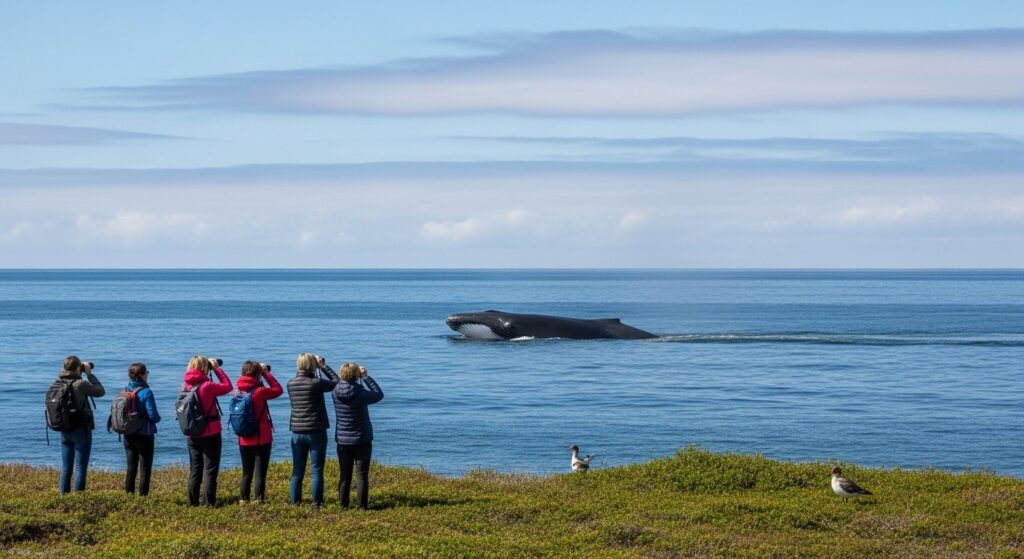
True nature travel is about observation, not interaction. It’s about seeing the whale from a distance, watching the bird through binoculars, and staying on the marked trails to protect the fragile ecosystem. Being a guest in nature means remembering that you are in someone else’s home—the home of the flora and fauna that make this planet worth exploring in the first place.
Leaving a Legacy of Respect
When people ask me why I’m so passionate about sustainable travel, I tell them that it’s because I want my children—and their children—to see the world as I have seen it. I want them to experience the silence of the Highlands, the spice markets of India, and the clear waters of the Greek Islands. If we continue to travel as “consumers,” those places will eventually disappear or become hollowed-out versions of themselves.
But if we travel as guests, we become protectors of those places. We become storytellers who carry the wisdom of one culture back to another. We realize that travel is a privilege, not a right. And like any good guest, we should strive to be the kind of person that the host actually wants to invite back.
The next time you book a trip, don’t just ask yourself where you want to go. Ask yourself who you want to be when you get there. Choose the local guesthouse. Buy the handmade souvenir. Take the train. And most importantly, keep your heart open to the lessons that only the world can teach you. Because in the end, we don’t just travel to see the world; we travel so that the world can change us.

Taylor Smith is a passionate traveler since the age of 19 and currently lives in the United States. At 40 years old, Taylor loves exploring new cultures, experiencing local cuisine, and discovering authentic places around the world. He is also a dedicated writer, sharing his travel experiences and tips on this blog to help others make the most of their journeys in a thoughtful and inspiring way.