
Photographing the Eiffel Tower is a dream for many travelers visiting Paris. It is, after all, one of the most iconic landmarks in the world, a symbol of romance, innovation, and the city itself. Yet capturing the perfect photograph is not as simple as pointing your camera and clicking. Timing, light, angles, and even crowd dynamics play crucial roles. Understanding the best time to take photos of the Eiffel Tower can elevate your shots from ordinary snapshots to memorable, frame-worthy images.
Why Timing Matters in Photography
Photography is, at its core, the art of light. The same subject can look dramatically different depending on the time of day. Sunrise and sunset, often referred to as the golden hours, provide warm, soft light that enhances textures and creates long, elegant shadows. Midday sun, on the other hand, produces harsh contrasts and can wash out colors, making photographs look flat.
Timing also affects crowd density. The Eiffel Tower is one of the most visited landmarks in the world, attracting millions each year. Early morning or late evening visits reduce the number of tourists in your frame, offering cleaner, more professional-looking shots.
Sunrise: The Magic of Early Morning
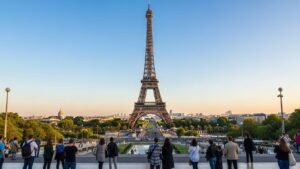
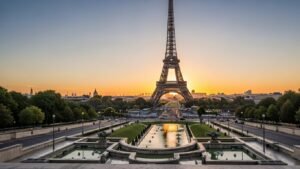
There is something profoundly magical about capturing the Eiffel Tower at sunrise. The city is still waking up, streets are quiet, and the soft morning light casts a warm glow over the iron lattice structure. The Trocadéro Gardens, one of the most popular vantage points, is almost empty in the early hours, providing unobstructed views.
Arriving before sunrise has several advantages:
-
Empty spots: Minimal tourists in the frame.
-
Soft light: Golden hues enhance the texture and color of the tower.
-
Reflections: Pools and fountains in the surrounding gardens mirror the structure beautifully.
Planning is key. Depending on the season, sunrise can vary between 5:30 AM and 8:00 AM. Check local sunrise times and aim to arrive at least 30 minutes early to set up equipment and scout angles.
Golden Hour: Late Afternoon and Sunset
While sunrise offers calm and solitude, sunset brings warmth, color, and dramatic skies. The Eiffel Tower glows as the golden light hits its metallic structure. During golden hour, shadows are long and soft, ideal for capturing depth in your photographs.
Popular locations include:
-
Trocadéro Gardens: Elevated views with symmetry and reflections.
-
Champ de Mars: Offers perspective with greenery leading up to the tower.
-
Seine River Banks: Combine urban scenery and water reflections.
Tips for golden hour photography:
-
Arrive 45–60 minutes before sunset to capture changing light.
-
Use a tripod for stability, especially if shooting in low-light conditions.
-
Adjust white balance to warm tones to enhance the golden glow.
Blue Hour: Capturing the City After Sunset
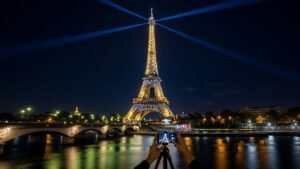
Blue hour refers to the period just after sunset when the sky takes on a deep, rich blue, and the Eiffel Tower lights up. This is one of the most dramatic times to photograph the landmark. Long exposures can create striking images where the tower glimmers against a calm, dark sky.
Tips for blue hour photography:
-
Use a tripod to avoid camera shake.
-
Experiment with longer shutter speeds to capture movement in the crowd or reflections in the water.
-
Balance ambient light with artificial lighting from the tower for dynamic results.
Night Photography: Sparkling Light Shows
Every evening, the Eiffel Tower sparkles for five minutes at the start of each hour after sunset. Capturing this requires planning and technical preparation:
-
Tripod essential: Long exposures highlight the sparkle and reduce blur.
-
Remote shutter release: Prevents shake during long exposures.
-
ISO adjustment: Use a low ISO for clearer images and minimal noise.
Best vantage points for night photography:
-
Trocadéro Gardens: Iconic for night shots.
-
Pont de Bir-Hakeim: Offers a cinematic view with bridge elements.
-
Seine River Banks: Incorporate reflections in the water for a dramatic effect.
Weather Considerations
Weather plays a significant role in photography. Clear days offer crisp, vibrant images, while cloudy skies can provide moodier, more dramatic shots. Rainy days are challenging but can be rewarding, as wet surfaces reflect lights and colors, adding depth to photos.
Tips for shooting in different conditions:
-
Overcast: Emphasize details and textures of the tower.
-
Rain: Use reflections creatively in fountains, puddles, and streets.
-
Windy days: Stabilize your tripod carefully to prevent blur.
Seasonal Differences
While the Eiffel Tower is photogenic year-round, seasons affect lighting, crowds, and atmospheric conditions:
-
Spring: Blossoming gardens and moderate temperatures make it ideal for daytime photography.
-
Summer: Longer days and warm light allow for extended photo sessions, but crowds peak.
-
Autumn: Rich colors in the surrounding parks create stunning compositions.
-
Winter: Fewer tourists and soft winter light offer a peaceful shooting environment.
Practical Tips for Visiting Photographers
-
Arrive early or late: Avoid peak tourist congestion for cleaner compositions.
-
Plan for multiple shots: Capture wide-angle views, details, and candid moments.
-
Scout angles: Don’t rely on postcards; explore different perspectives.
-
Use layers: Include foreground elements such as fountains, trees, or bridges for depth.
-
Respect safety and rules: Climbing structures or restricted areas is prohibited.
Conclusion: Timing Makes the Difference
The Eiffel Tower is endlessly photogenic, but timing is everything. Sunrise provides calm, solitude, and soft light. Golden hour offers warmth and depth. Blue hour and night photography create dramatic, sparkling images that capture the tower’s magic.
Choosing the best time depends on your goals, patience, and comfort with crowds. By understanding light, planning ahead, and experimenting with angles and techniques, any visit can yield memorable, frame-worthy photographs.
No matter the hour, photographing the Eiffel Tower is not just about capturing a landmark — it’s about telling your story, experiencing Paris through your lens, and creating images that evoke emotion for years to come.
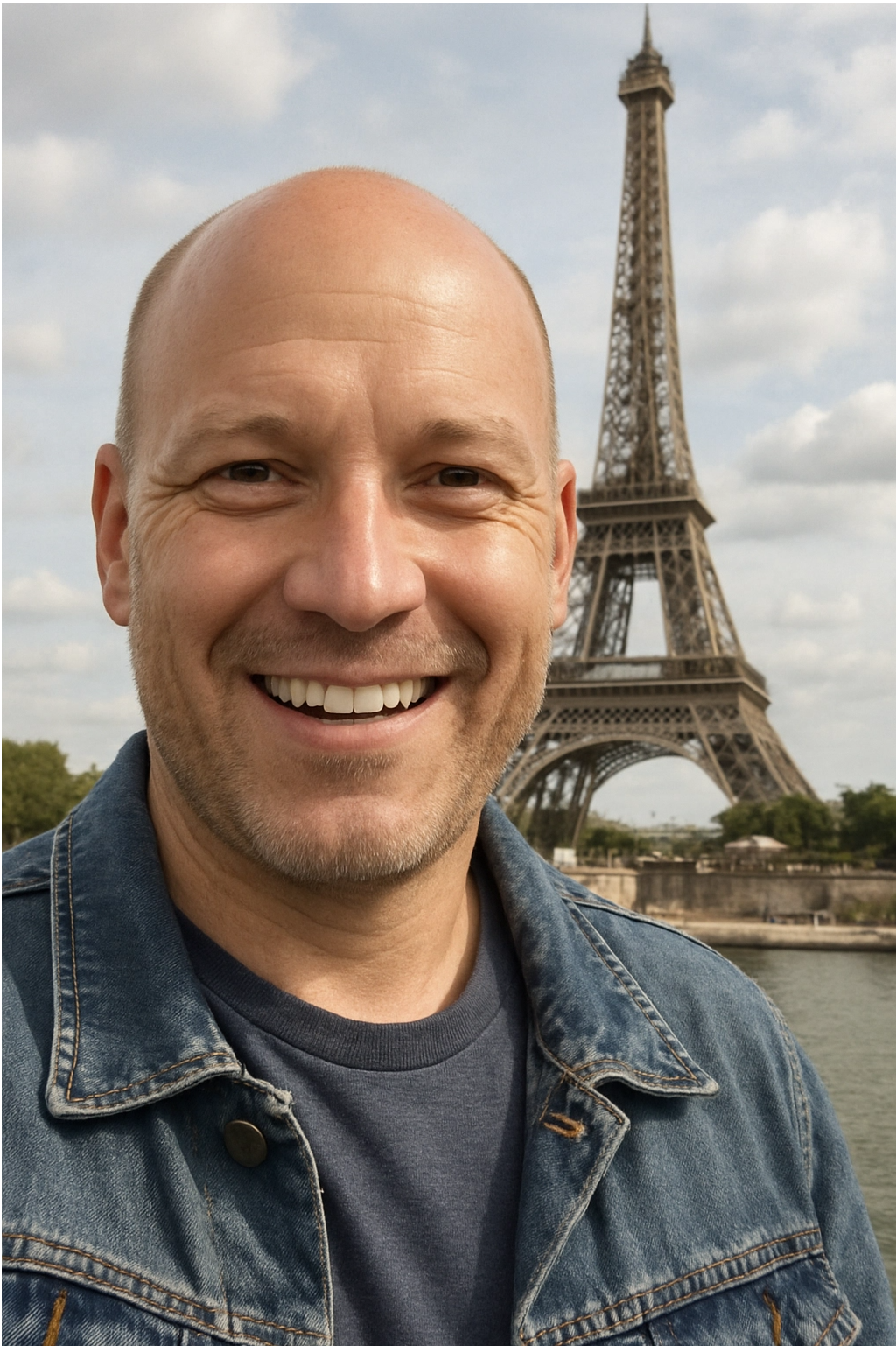
Taylor Smith is a passionate traveler since the age of 19 and currently lives in the United States. At 40 years old, Taylor loves exploring new cultures, experiencing local cuisine, and discovering authentic places around the world. He is also a dedicated writer, sharing his travel experiences and tips on this blog to help others make the most of their journeys in a thoughtful and inspiring way.