
Cold brew has transitioned from a summer trend to a permanent fixture in the specialty coffee world. Unlike iced coffee—which is simply hot coffee poured over ice—cold brew is a completely different chemical extraction. In the coffee laboratory, we understand that heat is a catalyst that speeds up the extraction of oils, acids, and sugars. When you remove heat from the equation, you must replace it with another variable: Time. By steeping coffee grounds in cold water for 12 to 24 hours, we create a beverage that is physically and chemically distinct from anything a kettle can produce.
The result is a concentrate that is famous for its incredible smoothness, heavy body, and low acidity. Because cold water does not extract the same range of acids as hot water, cold brew is often the preferred choice for those with sensitive stomachs or for those who enjoy the deep, chocolatey “base notes” of the bean. Mastering the science of cold brew at home requires patience, but it also offers a level of convenience that no other method can match.
The Chemistry of Cold Extraction: Why It Tastes Sweeter
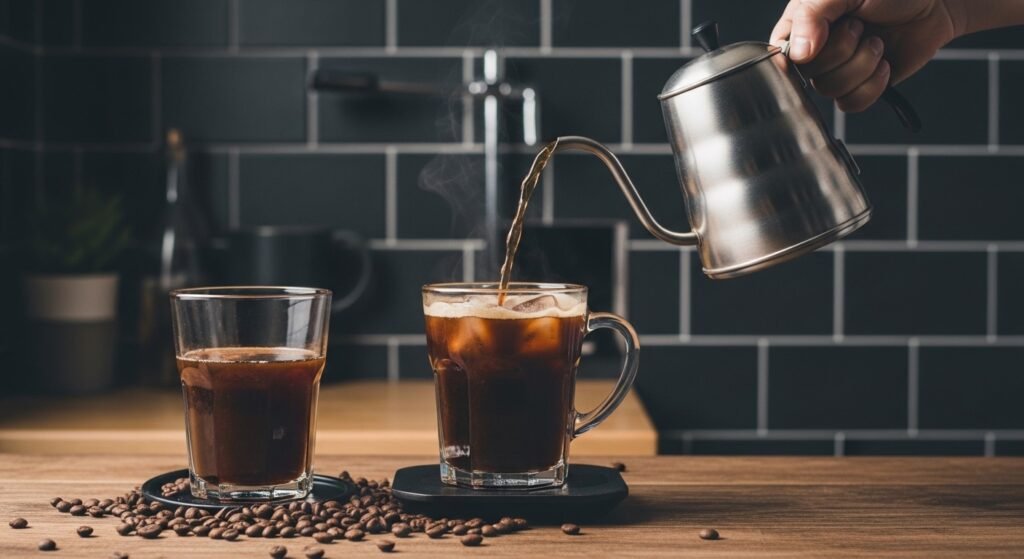
The main reason cold brew tastes so different is that certain compounds in coffee are only soluble at high temperatures. Many of the bitter oils and sharp acids that we associate with a “bold” cup of hot coffee never make it into a cold brew. Instead, the cold water slowly coaxes out the long-chain sugars and the chocolatey, nutty elements of the bean. This is why a cold brew often tastes naturally sweet, even without added sugar.
However, because the extraction is so gentle, your choice of bean is vital. For a classic, syrupy cold brew, we highly recommend looking into Brazilian coffee regions like Mogiana or Sul de Minas. These beans naturally possess the low acidity and nutty profiles that thrive in a long, cold immersion. When you remove the heat, these “terroir” characteristics become the foundation of a drink that feels more like a rich liqueur than a standard coffee.
The Recipe: Applying the Golden Ratio to Immersion
Even though cold brew is a forgiving method, you shouldn’t guess your measurements. Precision is still the key to success on the barista’s bench. Most cold brew recipes use a much tighter ratio than filter coffee because we are typically creating a concentrate designed to be diluted later with water, milk, or tonic.
While we typically use a 1:17 ratio for hot coffee, as explained in our guide on the golden ratio and how much coffee to use, cold brew concentrate usually requires a 1:4 or 1:5 ratio. This means for every 100g of coffee, you use 400g to 500g of cold, filtered water. This high concentration ensures that even after a 16-hour steep, the liquid has enough “punch” to maintain its body and mouthfeel when poured over ice.

The Importance of a Coarse Grind
If there is one technical detail that can ruin a cold brew, it is the grind size. Because the coffee will be in contact with water for an extended period, you need a very coarse grind—reminiscent of sea salt or breadcrumbs. If the grind is too fine, the water will over-extract the bitter plant fibers, leading to a “muddy” or ashy taste that even the cold temperature can’t prevent.
This is where choosing the right grinder for your home setup becomes a game-changer. A high-quality burr grinder will produce uniform, large particles that allow the water to flow freely around them, ensuring a clean and bright extraction. Once the steeping time is over, filtering the grounds through a dual-stage process (a metal mesh followed by a paper filter) will give you a concentrate that is crystal clear and shelf-stable in your refrigerator for up to two weeks.
The Laboratory Experiment: Cold Brew Variations
Once you have your concentrate, the “Drink Laboratory” is open for experimentation. The most popular modern variation is the refreshing coffee tonic, where the cold brew concentrate provides a stable, chocolatey base that doesn’t melt the ice or dilute the bubbles as quickly as hot espresso would.
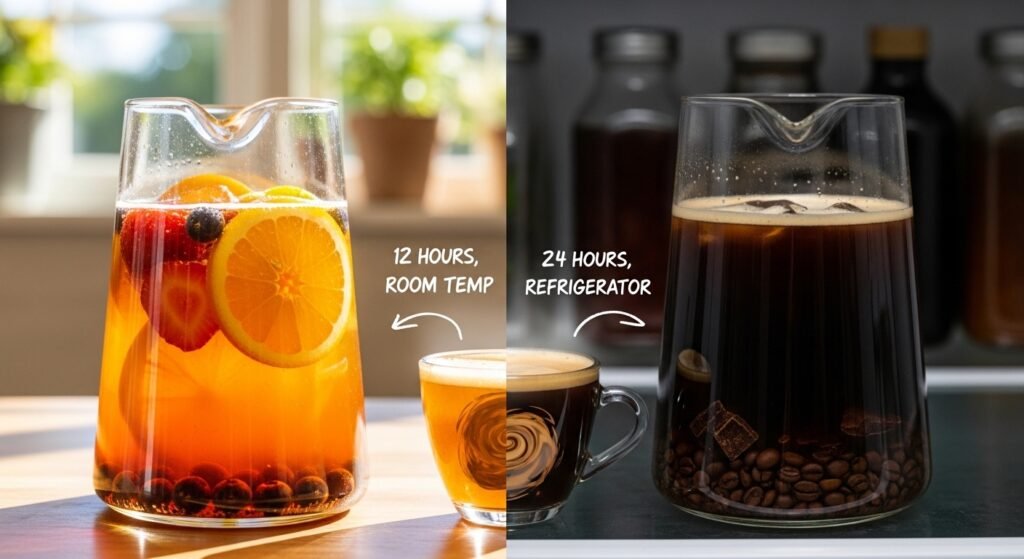
You can also experiment with steeping times. A 12-hour steep at room temperature will often result in a brighter, more fermented fruit profile, whereas a 24-hour steep in the refrigerator will be deeper, smoother, and more cocoa-forward. There is no “perfect” time—only the time that produces the flavor profile you enjoy most.
Conclusion: The Ultimate Coffee Convenience
The science of cold brew proves that you don’t need expensive machinery or boiling water to create a world-class beverage. All you need is high-quality beans, a precise ratio, and the most valuable ingredient of all: time. Cold brew is the ultimate “prep-ahead” drink, allowing you to have a professional-grade coffee waiting for you the moment you wake up.
By understanding how time replaces heat, you gain a new perspective on coffee extraction. You start to see coffee not just as a quick morning jolt, but as a complex biological product that reveals different secrets depending on how you treat it. Whether you drink it black over ice or use it as a base for a sophisticated cocktail, cold brew is a essential tool in any coffee lover’s arsenal. So, fill your jar, set your timer, and let physics do the work for you.

Kevin Smith is deeply interested in the craft and culture of coffee, with practical experience exploring specialty beans, brewing techniques, and flavor development. Over the years, he has spent time studying preparation methods, observing extraction processes, and understanding how small details influence the final cup.
Through NovaWeHub, Kevin shares clear, practical, and research-based insights designed to make coffee knowledge approachable for everyone — from beginners to enthusiasts. His focus is on simplifying complex concepts and encouraging readers to explore coffee with curiosity, confidence, and a more refined sensory awareness.