
We have all been there: you open a fresh bag of coffee beans or walk past a local roastery, and the scent is so intoxicating it feels like a dream. It’s a mix of caramel, toasted nuts, flowers, and something primal that wakes up the brain. But then, you brew the coffee, take a sip, and while it tastes good, it rarely captures that exact, ethereal magic of the dry fragrance. In the coffee laboratory, this is known as the “aroma-flavor gap,” and the reason behind it is a fascinating mix of chemistry and human biology.
Aroma is arguably the most complex part of the coffee experience. While our tongues can only perceive basic tastes (sweet, sour, salty, bitter, and umami), our noses can distinguish between thousands of unique volatile organic compounds (VOCs). Understanding the science of aroma is the key to unlocking the true potential of your sensory experience. In this guide, we will explore why the smell of coffee is so powerful, how it travels through our bodies, and how you can bridge the gap between that heavenly scent and your morning cup.
The Chemistry of Volatiles: A Symphony of 800 Compounds
Coffee is one of the most chemically complex food products in existence, boasting over 800 aromatic compounds. For comparison, wine usually has around 250. These compounds are created during the roasting process through the Maillard reaction—the same browning process that makes toasted bread or seared steak smell so good.
When you grind your beans—hopefully using a burr grinder for maximum clarity—you are breaking open the cellular structure of the coffee and releasing these volatile gases. Some are responsible for the fruity notes found in African coffee profiles, while others provide the deep, nutty scents typical of Brazilian coffee regions. The reason the dry smell is so intense is that these compounds are at their highest concentration the moment they are released from the bean.
Orthonasal vs. Retronasal Olfaction: The Two Paths to Flavor
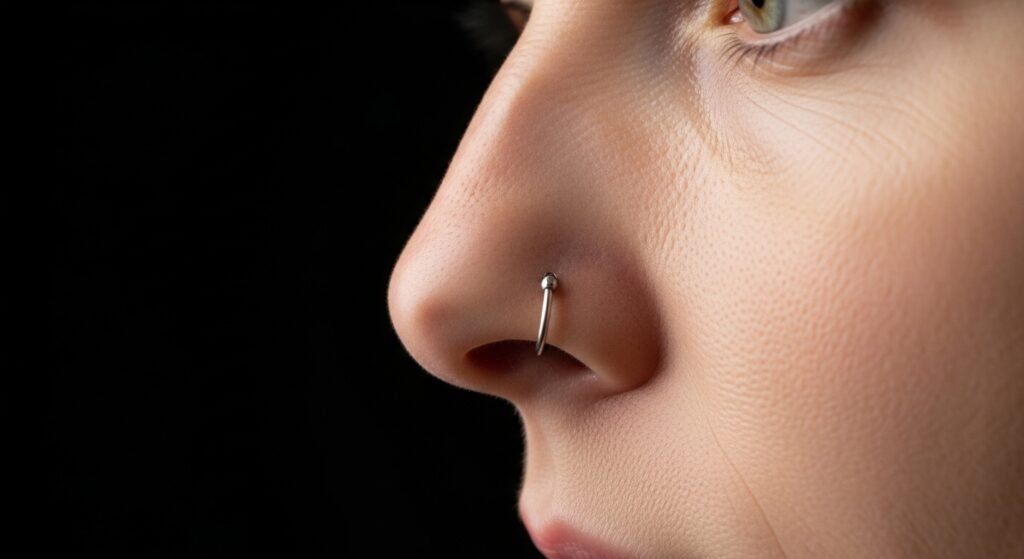
The reason coffee “smells better than it tastes” lies in how our bodies process scent. We have two ways of smelling: Orthonasal (through the nostrils when we sniff) and Retronasal (from the back of the mouth up to the nose when we swallow).
When you sniff a bag of coffee, you are using orthonasal olfaction. The volatiles go directly to your olfactory bulb, providing a pure, unfiltered scent. However, when you take a sip, the experience changes. As the liquid enters your mouth, it is mixed with saliva and heated by your body temperature. As you swallow, the science of aftertaste begins to take over. The vapors travel from the back of your throat up into your nasal cavity.
The catch? Saliva actually traps some of these aromatic molecules, and the act of swallowing creates a “puff” of air that can push scents away. This is why the flavor often feels “muted” compared to the initial sniff. To bridge this gap, baristas use the “slurp” technique during coffee cuppings, which aerates the coffee and forces those aromatics into the retronasal passage with more intensity.
The Role of Water and Heat
The chemistry of your water also plays a silent role in how aroma is perceived. As we’ve noted in our study on water quality, certain minerals can either enhance or mask these delicate volatiles. If your water is too hard, the alkalinity can “mute” the bright, floral aromas of a high-altitude bean.
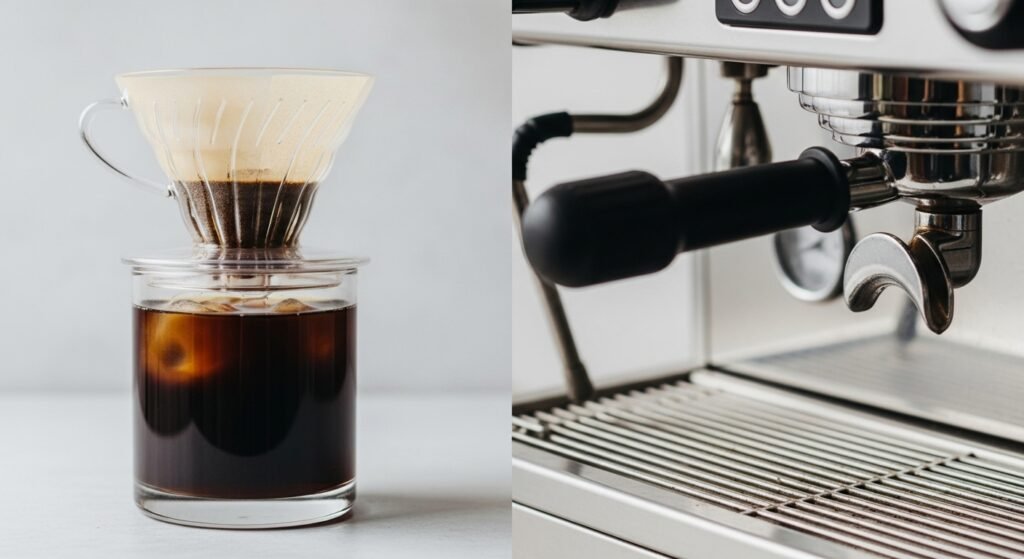
Temperature is the other critical catalyst. Volatile compounds are, by definition, easy to evaporate. This is why a cold brew experiment often smells very different from a hot V60. In cold brew, the lack of heat means many of the “high-note” floral aromatics are never released into the air—they stay trapped in the liquid. This results in a drink that is smoother on the palate but less “perfumed” in the nose. Conversely, a hot espresso—when you are properly calibrating the extraction—creates a burst of aroma because the 9 bars of pressure and high heat force the oils and gases into a fine mist (the crema).
Why We Experience “Aroma Fatigue”
Have you ever noticed that after a few minutes in a coffee shop, you stop “smelling” the coffee? This is called olfactory adaptation or aroma fatigue. Our brains are designed to detect new scents as potential information (or threats). Once a scent becomes constant, the brain filters it out to focus on new stimuli.
This is why, in the “laboratory of the senses,” we recommend taking “cleansing breaths” or smelling your own skin (which is a neutral scent to your brain) between different coffee samples. This “resets” your olfactory sensors, allowing you to identify flavor notes more accurately. This is a vital part of the journey of a bean, ensuring that the farmer’s hard work in the field isn’t lost to your tired nose.
Practical Tips to Enhance Aroma in Your Cup
To make your coffee taste as good as it smells, you must manage the variables on your barista’s bench. Here are three laboratory-tested tips:
-
Grind Just Before Brewing: Since volatiles start escaping the moment the bean is broken, every minute you wait between grinding and brewing is a loss of aroma.
-
Use the Right Glassware: Just like wine, the shape of your cup matters. A cup with a narrow rim traps the aromas, forcing them toward your nose as you sip. This is why drinks like the classic Irish coffee or a modern Carajillo are often served in specific glasses that highlight their aromatic layers.
-
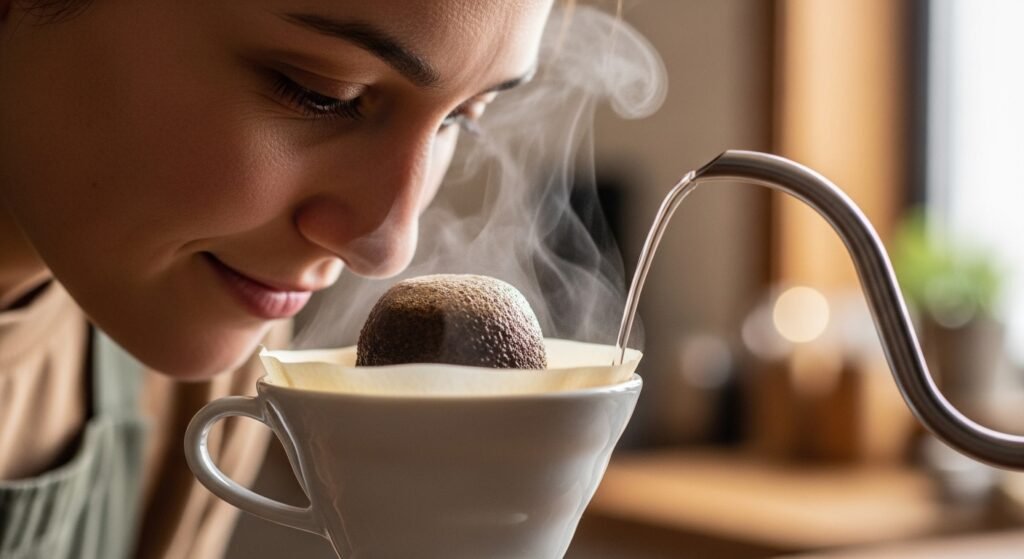
Mind the “Bloom”: When making pour-over coffee, the “bloom” (the initial wetting of the grounds) is the moment most of the CO2 and trapped aromatics are released. Take a moment to lean in and sniff the bloom—it’s the bridge between the dry fragrance and the final liquid.
Conclusion: The Invisible Language of Coffee
Aroma is the language coffee uses to tell us its story. It tells us about the terroir where it grew, the skill of the roaster, and the freshness of the grind. While biology may prevent the taste from ever exactly matching the smell, understanding the science behind it allows us to appreciate the complexity of the experience.
By paying attention to your water quality, maintaining your equipment, and engaging your retronasal olfaction, you can close the gap between the scent and the sip. Coffee isn’t just a drink; it’s a multi-sensory journey that begins the moment you open the bag. So, the next time you find yourself mesmerized by the smell of fresh coffee, take a deep breath—you are participating in one of nature’s most complex chemical performances.

Kevin Smith is deeply interested in the craft and culture of coffee, with practical experience exploring specialty beans, brewing techniques, and flavor development. Over the years, he has spent time studying preparation methods, observing extraction processes, and understanding how small details influence the final cup.
Through NovaWeHub, Kevin shares clear, practical, and research-based insights designed to make coffee knowledge approachable for everyone — from beginners to enthusiasts. His focus is on simplifying complex concepts and encouraging readers to explore coffee with curiosity, confidence, and a more refined sensory awareness.