
Central America is often described as the “garden” of the coffee world. While Brazil provides the scale and Africa provides the wild exotics, Central America—specifically Guatemala and Honduras—provides the elegance. These are the coffees that define “balance.” They possess a structured acidity that dances on the tongue, paired with a deep, sugary sweetness that makes them favorites for both V60 pour-overs and sophisticated espresso blends.
In the “sensory laboratory,” we study these origins to understand how microclimates and volcanic activity shape the terroir. Guatemala has long been the prestigious veteran of the region, while Honduras has recently risen as a powerhouse of quality and volume. To master the barista’s bench, one must be able to distinguish between the smoky complexity of an Antigua lot and the bright, tropical clarity of a Santa Barbara harvest.
Guatemala: The Land of Volcanic Fire
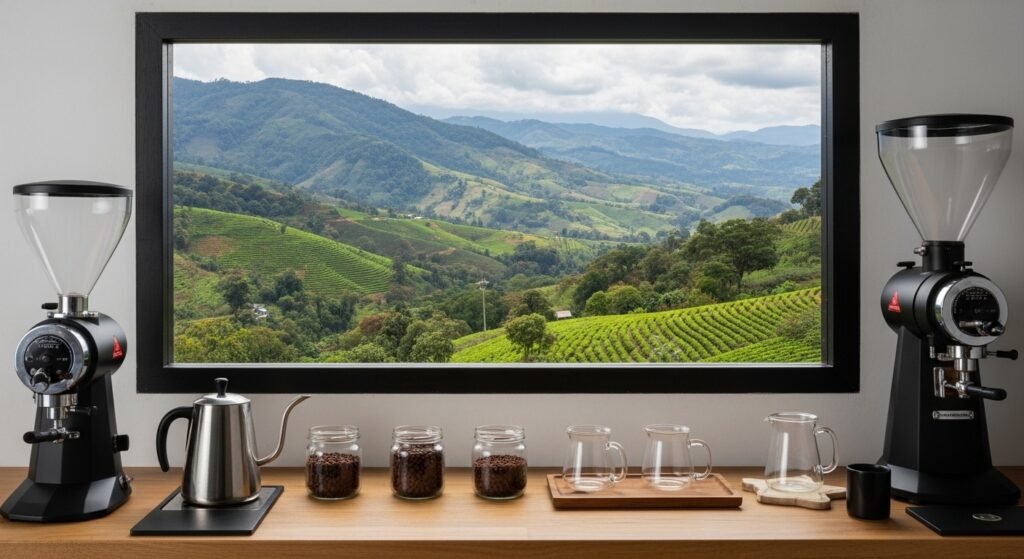
Guatemala is a country of microclimates. With eight distinct growing regions, its coffee profile is as varied as its landscape. The most famous of these is Antigua, where three volcanoes—Agua, Fuego, and Acatenango—encircle the valley. The volcanic ash provides a nutrient-dense soil that is incredibly rich in minerals, which is a key factor in the science of high-altitude coffee.
Guatemalan coffees are known for their “dual personality.” They offer a bright, malic acidity (reminiscent of green apples or grapes) but are backed by a heavy, cocoa-like sweetness. When you identify flavor notes in a Huehuetenango coffee, you might find surprising floral aromas that rival Ethiopian profiles, but with a more substantial body and mouthfeel. This complexity is why Guatemala remains a staple for any roaster looking to showcase the “spirit of the mountain.”
Honduras: The Rising Star of Quality
For a long time, Honduras was seen as a producer of commercial-grade coffee. However, over the last decade, it has undergone a specialty revolution. Today, Honduras is the largest producer in Central America and the sixth-largest in the world. Its secret weapon is the diversity of its varieties, including Pacas and Lempira, and its focus on experimental processing.
Regions like Copán and Santa Barbara are now producing lots that consistently score high in international competitions. Honduran coffee is typically characterized by a very “creamy” sweetness. While a Colombian coffee might be sharp and citrusy, a Honduran lot often leans toward tropical fruits like mango or papaya, balanced by a caramel aftertaste. This makes it an excellent choice for cold brew, where the fruit notes can develop without the interference of high-temperature bitterness.
The Role of the Washed Process
Both Guatemala and Honduras are masters of the Washed Process. Because these regions receive significant rainfall, the water quality and the precision of the wet mills are paramount. In the laboratory, we see that washed Central Americans provide a “cleaner” canvas than Brazilian naturals.
This clarity is what allows a barista to truly calibrate an espresso shot to highlight specific acidity. In a washed Guatemalan, the acid vs. bitter balance is shifted toward the “vibrant” end of the spectrum. The removal of the fruit mucilage before drying ensures that the terroir—the soil, the altitude, and the mineral content—is the undisputed star of the cup.
Sensory Comparison: A Central American Cupping
If you were to host a coffee cupping at home featuring these two origins, look for these differences:
-
The “Antigua” Smoke: Some Guatemalan lots have a very subtle, pleasant “smokiness” or spice (like clove or cinnamon) that comes from the volcanic soil.
-
The “Honduran” Cream: Notice the texture on the tongue. Honduran coffees often feel “thicker” or more “velvety” compared to the tea-like clarity of a Guatemalan.
-
The Acidity Type: Guatemala often leans toward “Citric” (lemon/lime) or “Malic” (apple), while Honduras leans toward “Tartaric” (grape/stone fruit).
These nuances are what make the journey of the bean from seed to export so fascinating. Each mountain range and each valley contributes something unique to the chemistry of the final brew.
Brewing for Success: From Pour-over to Cocktails
Because of their balanced nature, these coffees are incredibly versatile on the barista’s bench.
-
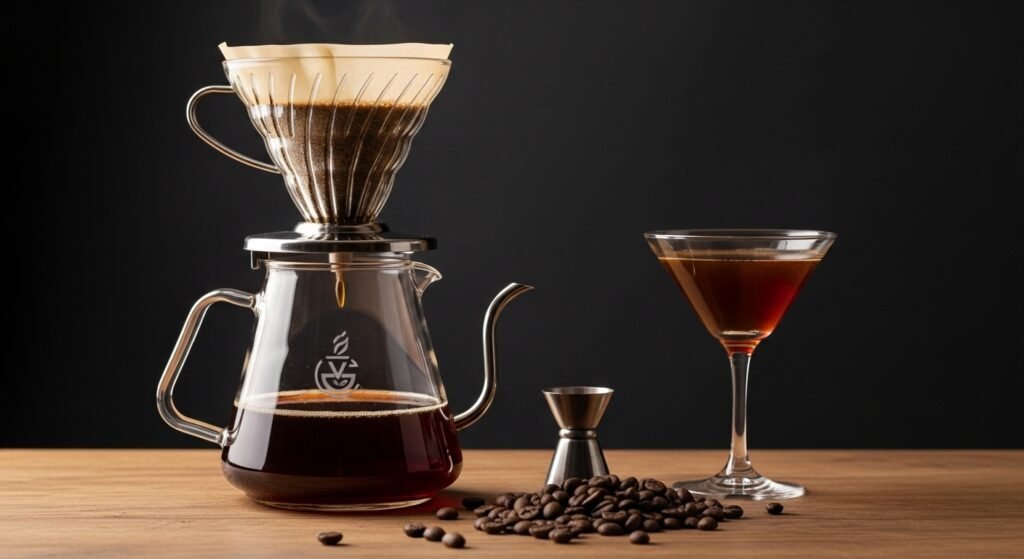
Filter Coffee: The V60 is the best way to enjoy the “sparkle” of a high-altitude Guatemalan.
-
Espresso: A Honduran coffee makes a fantastic “single origin” espresso, offering enough sweetness to be enjoyed without milk, but enough body to cut through a latte.
-
Cocktails: The clean fruitiness of these beans makes them ideal for a Coffee Gin & Tonic or a Modern Carajillo, where you want the coffee to add flavor without making the drink feel “heavy” or “muddy.”
Conclusion: The Pillars of Elegance
Guatemala and Honduras represent the best of what the Americas have to offer. They are the result of centuries of tradition meeting modern agricultural maintenance and precision. By understanding the volcanic soul of Guatemala and the rising quality of Honduras, we gain a deeper appreciation for the sensory experience that coffee can provide.
The next time you are selecting beans for your laboratory, look to Central America. Whether you seek the “fire” of the volcano or the “cream” of the Honduran hills, these origins promise a cup that is balanced, sophisticated, and endlessly rewarding.

Kevin Smith is deeply interested in the craft and culture of coffee, with practical experience exploring specialty beans, brewing techniques, and flavor development. Over the years, he has spent time studying preparation methods, observing extraction processes, and understanding how small details influence the final cup.
Through NovaWeHub, Kevin shares clear, practical, and research-based insights designed to make coffee knowledge approachable for everyone — from beginners to enthusiasts. His focus is on simplifying complex concepts and encouraging readers to explore coffee with curiosity, confidence, and a more refined sensory awareness.