
In the specialty coffee world, Brazil is often seen as the “giant of consistency.” While other origins focus on micro-lots and experimental fermentations, Brazil provides the chocolatey, nutty foundation for almost every espresso blend on the planet. However, to view Brazil as a monolith is a mistake. In our “Sensory Laboratory,” we recognize that Brazil is a continent-sized producer with vastly different microclimates and agricultural philosophies.
At the center of this production are two regions in the state of Minas Gerais: Sul de Minas and Cerrado Mineiro. Although they share a border, they represent two different eras of coffee history and two distinct sensory profiles. Understanding these differences is the key to mastering espresso calibration and appreciating the journey of the bean in South America.
Sul de Minas: The Traditional Powerhouse
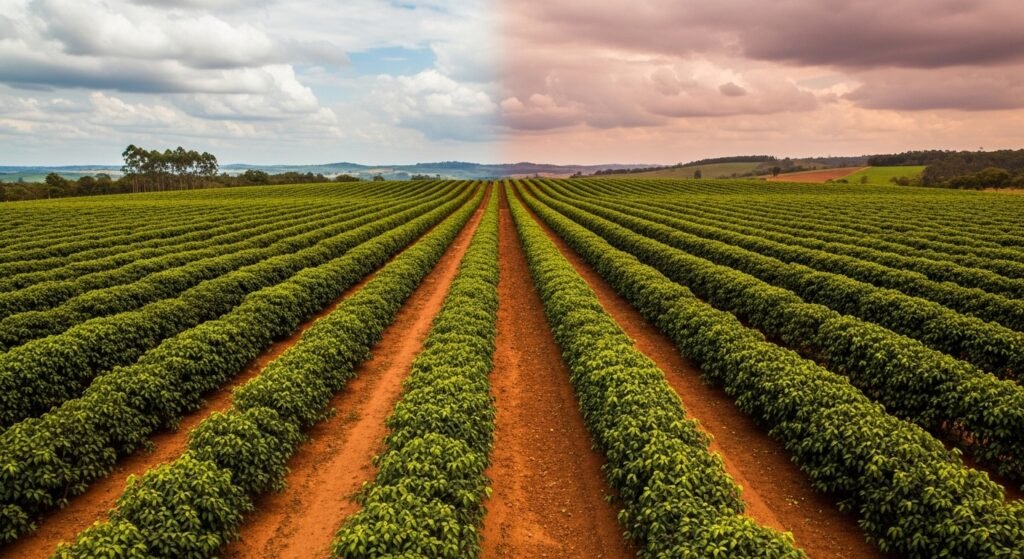
Sul de Minas is the oldest and most traditional coffee-growing region in Brazil. It is a land of rolling hills and small-to-medium-sized family farms. Because the terrain is uneven, mechanical harvesting is difficult, and much of the coffee is still hand-picked or harvested with “derriçadeiras” (hand-held vibrators).
The geography of Sul de Minas, with altitudes ranging from 900 to 1,300 meters, creates a temperate climate. This environment is perfect for the traditional “Natural” and “Pulped Natural” processes. When you drink a coffee from Sul de Minas, you are tasting the classic Brazilian profile: a heavy body and mouthfeel, low acidity, and dominant notes of milk chocolate, toasted almonds, and caramel. It is a “comfortable” coffee, designed to provide sweetness and balance in the cup.
Cerrado Mineiro: The High-Tech Revolution
To the west of Sul de Minas lies the Cerrado Mineiro, the first coffee-producing region in Brazil to receive a “Designation of Origin” (DO). Unlike the traditional hills of the south, the Cerrado is a vast, flat plateau. This flat terrain allowed for a technological revolution in the 1970s.
Farms in the Cerrado are often massive and highly mechanized. This is where the “Science of Coffee” is applied at scale. The region features well-defined seasons—hot, wet summers and bone-dry winters. This dry harvest period is a massive advantage; it allows farmers to dry their coffee on large concrete patios without the risk of rain, leading to a very clean and consistent cup. In terms of water quality and irrigation, the Cerrado is a world leader, using precision technology to manage every drop of water the trees receive.
The Sensory Divide: Acidity and Complexity
In our sensory laboratory experiments, we often compare these two regions side-by-side.
-
Sul de Minas tends to be “softer” and more floral. The higher peaks in areas like Mantiqueira de Minas can produce coffees with surprising citrus notes, almost mimicking a Central American profile.
-
Cerrado Mineiro is defined by its “cleanliness.” Because of the dry harvest and mechanical precision, these coffees have a very reliable sweetness. You will often find notes of dark chocolate, dried fruits (like raisins or prunes), and a very stable nutty finish.
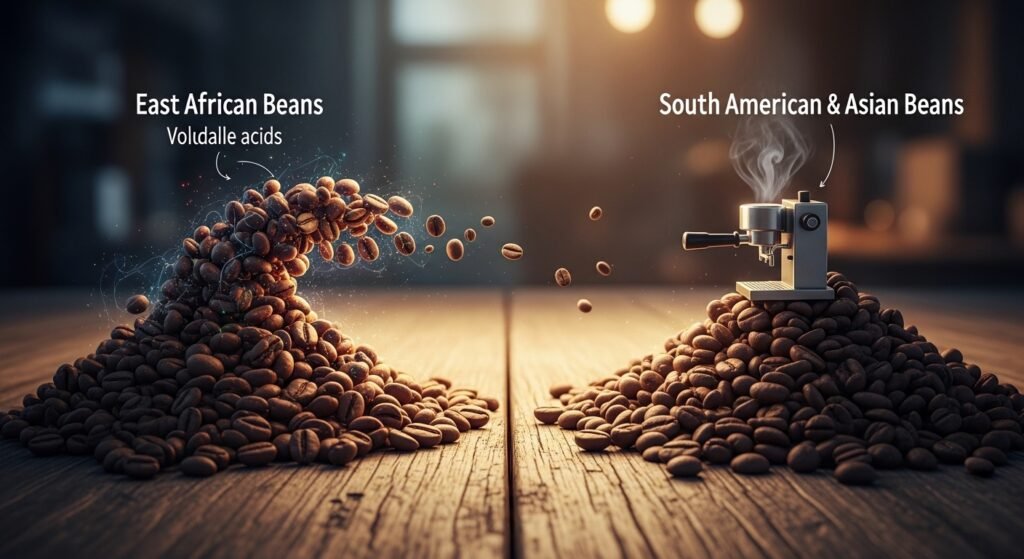
The acid vs. bitter balance in both regions is generally low in acidity compared to East African beans, which is why they are the undisputed kings of the espresso machine. They provide the “base” that supports the more volatile acids of other origins.
Processing Innovation: Beyond the Natural
While Brazil is famous for “Natural” process coffee (where the bean dries inside the fruit), both Sul de Minas and Cerrado are experimenting with new methods. We are seeing a rise in “Anaerobic Fermentations” and “Honey Processes.“
In the Cerrado, some producers are using temperature-controlled tanks to ferment the cherries before drying them. This “Laboratory Approach” allows them to introduce exotic notes like tropical fruit or cinnamon into a bean that traditionally tastes like chocolate. This innovation is changing the psychology of coffee in Brazil, proving that large-scale production can also yield specialty-grade complexity.
Brewing the Heart of Brazil
To truly appreciate these regions on the barista’s bench, you must adjust your technique:
-
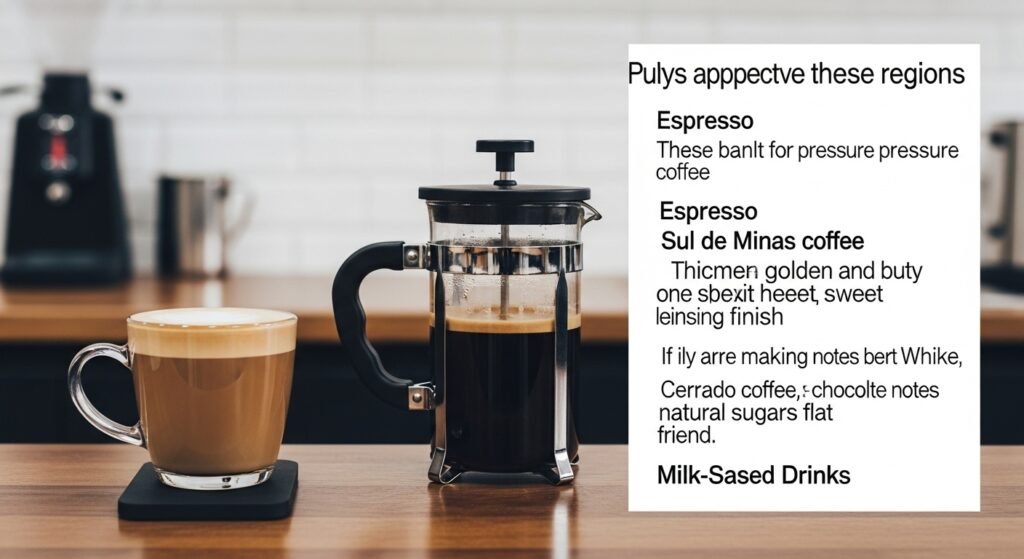
Espresso: These beans are built for pressure. A Sul de Minas coffee will produce a thick, golden crema and a sweet, lingering finish.
-
French Press: The immersion method highlights the heavy body of these coffees. Use a coarse grind consistency to avoid over-extracting the bitter notes.
-
Milk-Based Drinks: If you are making a latte or flat white, a Cerrado coffee is your best friend. Its chocolate notes pair perfectly with the natural sugars in steamed milk.
Conclusion: The Foundation of Specialty
Sul de Minas and Cerrado Mineiro are the lungs of the coffee world. They provide the volume that keeps the global industry running, but they also provide a level of consistency and sweetness that is essential for a balanced sensory experience.
By understanding the traditional heritage of the south and the technological precision of the plateau, we gain a deeper respect for the Brazilian bean. Whether you are seeking a comforting morning cup or a high-tech anaerobic lot, the heart of Brazil has something to offer the curious palate. The next time you see “Minas Gerais” on a bag of coffee, remember the hills, the plateaus, and the science that makes this the most influential coffee region on Earth.

Kevin Smith is deeply interested in the craft and culture of coffee, with practical experience exploring specialty beans, brewing techniques, and flavor development. Over the years, he has spent time studying preparation methods, observing extraction processes, and understanding how small details influence the final cup.
Through NovaWeHub, Kevin shares clear, practical, and research-based insights designed to make coffee knowledge approachable for everyone — from beginners to enthusiasts. His focus is on simplifying complex concepts and encouraging readers to explore coffee with curiosity, confidence, and a more refined sensory awareness.