
Peru is often considered a “sleeping giant” in the world of specialty coffee. For many years, its production was overshadowed by more prominent neighbors such as Colombia and Brazil. In the past decade, however, Peru has gained recognition as a leading producer of organic coffee and a destination for high-quality micro-lots.
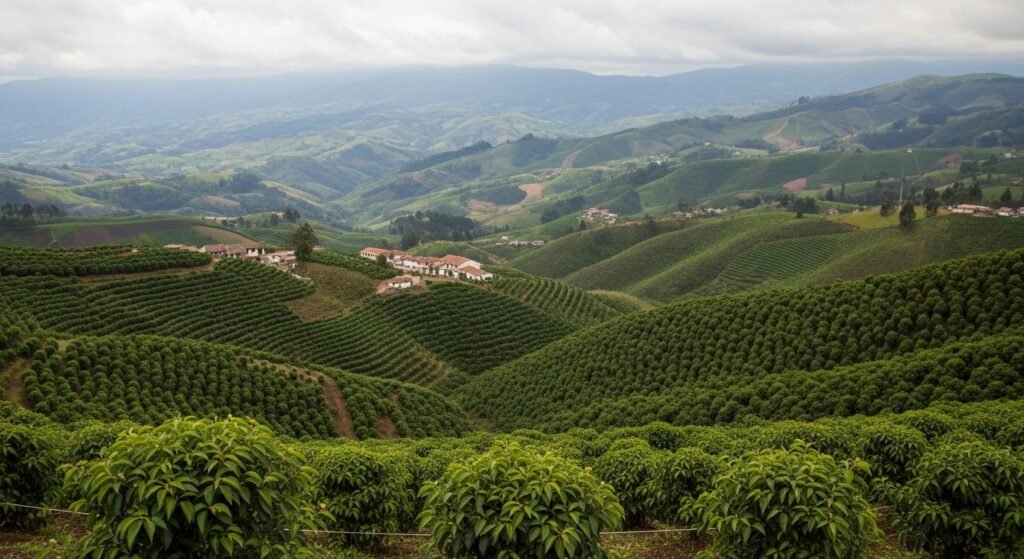
The country’s success is closely linked to its dramatic Andean terrain. Many coffee farms are located at elevations exceeding 2,000 meters above sea level, where the combination of altitude, climate, and fertile soil allows beans to develop complex flavors, bright acidity, and a well-balanced body that appeal to specialty coffee enthusiasts worldwide.
For the curious barista, Peruvian coffee is a lesson in diversity. Depending on the region, a Peruvian bean can offer the deep, nutty sweetness of a Brazilian Cerrado or the bright, floral acidity of an Ethiopian heirloom. To understand the “Spirit of Peru,” one must look beyond the bag and into the complex journey of the bean through the rugged Andean trails.

The Geography of Altitude: The Andean Laboratory
Peru is divided into three main coffee-growing regions: the North, the Center, and the South. Each is defined by the massive influence of the Andes.
-
The North (Cajamarca, Amazonas, San Martín): This is the heart of Peruvian specialty coffee. Cajamarca, in particular, has gained a reputation for producing incredibly clean, bright coffees. The combination of high altitude and volcanic soil creates a “sweet-acid” balance that is perfect for the V60 protocol.
-
The Center (Chanchamayo, Junín): Historically the largest producing area. These coffees are often more balanced and chocolatey, serving as the reliable “middle ground” of the Peruvian profile.
-
The South (Cusco, Puno): Growing in the shadow of Machu Picchu, southern Peruvian coffees are known for their massive body and intense sweetness. The high UV exposure at these altitudes forces the cherries to develop thick, protective skins rich in complex sugars.
The Organic Pioneer: Sustainability as a Standard
Peru is the global leader in certified organic coffee. In our laboratory, we view “organic” not just as a marketing label, but as a botanical variable. Without the use of synthetic fertilizers, Peruvian coffee trees rely entirely on the health of the soil and the natural ecosystem of the shade forest.
This organic approach often leads to a slower maturation of the fruit. When a coffee cherry grows slowly, it has more time to develop the organic acids—such as citric, malic, and phosphoric—that we identify on the flavor wheel. The result is a cup that feels “gentle” but complex, with a lingering sweetness that is a hallmark of the Peruvian terroir.
Sensory Profile: The Chameleonic Bean
Because Peru grows a wide variety of Arabica cultivars—including Typica, Bourbon, Caturra, and the rare Geisha—the sensory profile is incredibly varied.
-
Aromas: You will often find notes of toasted caramel, vanilla bean, and red apple.
-
Acidity: Peruvian acidity is typically “soft.” It doesn’t have the aggressive “zing” of a Kenyan coffee, but rather a smooth, refined brightness that reminds one of a ripe pear or a sweet orange.
-
Body: The mouthfeel is usually creamy and well-structured, particularly in coffees from the Cusco region. This makes them exceptional candidates for espresso calibration, where they provide a stable, sweet base.
[Image showing a comparison of flavor notes between Northern Peruvian Washed vs. Southern Peruvian Natural coffees]
The Challenge of the “Finca”: Smallholder Innovation
Unlike the massive estates of the Cerrado Mineiro, the vast majority of Peruvian coffee is produced by smallholder farmers on “fincas” that are often less than 3 hectares. These farmers are members of cooperatives that provide the technical laboratory support needed to process specialty lots.
This small-scale production allows for meticulous “Natural” and “Honey” processing. In recent years, Peruvian farmers have been winning prestigious “Cup of Excellence” awards by experimenting with anaerobic fermentations in high-altitude environments. The cold mountain air acts as a natural temperature controller for these fermentations, allowing for long, slow, and incredibly controlled flavor development.
Brewing the Andean Treasure: Barista’s Bench Tips
To get the most out of a Peruvian bean, you must respect its delicate sugar structure.
-
Filter Brewing (Chemex/V60): Peruvian coffees shine in paper filters. Use a water temperature of $92^\circ C$. If the water is too hot, you risk over-extracting the subtle nutty notes, which can mask the delicate fruit acidity.
-
The “Sweet Spot” Ratio: We recommend a 1:15 or 1:16 ratio. This slightly tighter ratio emphasizes the creamy body that makes Peru unique among its Andean neighbors.
-
Resting Time: Because many Peruvian coffees are grown at extreme altitudes, the beans are very dense. They often benefit from a longer “rest” period after roasting (10 to 14 days) to allow the internal gases to stabilize and the full flavor wheel profile to emerge.

Conclusion: The Quiet Revolution
Peru is no longer the “sleeping giant.” It is an awake, innovative, and essential part of the specialty coffee world. By combining traditional organic farming with the extreme physics of high-altitude agriculture, Peruvian producers have created a category of coffee that is both sustainable and world-class.
The next time you visit the “Sensory Laboratory,” seek out a lot from Cajamarca or Cusco. Pay attention to the clarity of the acidity and the weight of the sweetness. It is a coffee that reflects the rugged beauty of the Andes and the technical skill of the smallholder farmer. Peru reminds us that the best treasures are often found at the highest peaks, where the air is thin, the sun is bright, and the coffee is extraordinary.

Kevin Smith is deeply interested in the craft and culture of coffee, with practical experience exploring specialty beans, brewing techniques, and flavor development. Over the years, he has spent time studying preparation methods, observing extraction processes, and understanding how small details influence the final cup.
Through NovaWeHub, Kevin shares clear, practical, and research-based insights designed to make coffee knowledge approachable for everyone — from beginners to enthusiasts. His focus is on simplifying complex concepts and encouraging readers to explore coffee with curiosity, confidence, and a more refined sensory awareness.