
The world of cocktails is changing, moving beyond traditional high-proof spirits toward innovative, botanical creations known as Molecular Mocktails. For coffee professionals, this evolution presents an exciting challenge.
Alcohol naturally enhances flavor, texture, and body in a drink, giving it complexity and a distinctive mouthfeel. Reproducing that sophistication without alcohol requires careful manipulation of extraction techniques and ingredient chemistry. By applying these methods, baristas can craft non-alcoholic beverages that deliver the same depth, balance, and sensory appeal as a classic Coffee Negroni.
Coffee is the perfect candidate for this role. It possesses over 800 aromatic compounds, a natural bitterness that mimics certain spirits, and a complex acid profile that can act as a “brightener” in a drink. By mastering water quality and the chemistry of botanical infusions, we can build a “Liquid Architecture” that satisfies the palate without the need for ethanol.
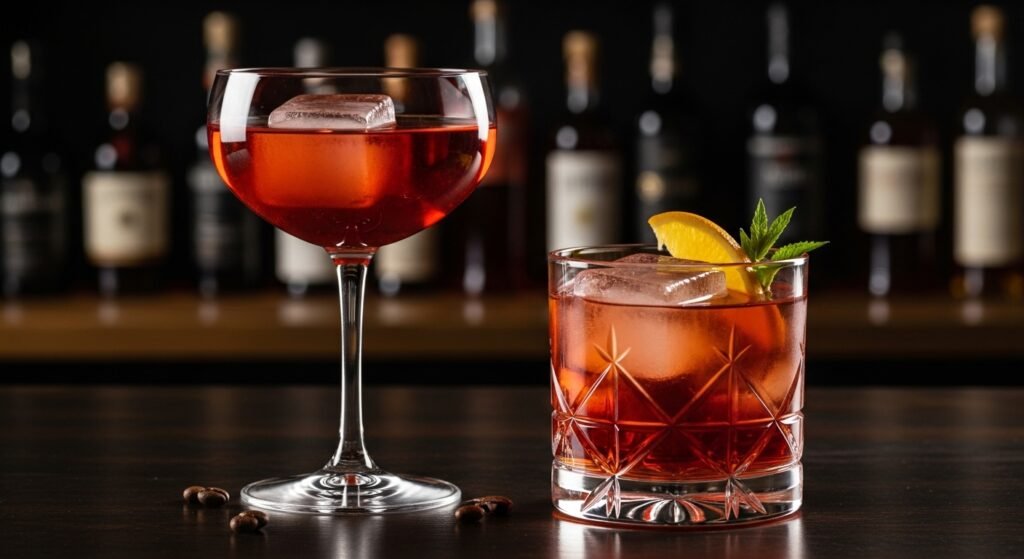
The Structural Challenge: Replacing the “Burn”
The most difficult element to replicate in a mocktail is the “ethanol burn.” In the lab, we analyze this sensation as Chemethesis—the chemical activation of pain and temperature receptors in the mouth. To replace this in a non-alcoholic coffee drink, we use “Capsaicin Triggers” or “Tannic Astringency.”
-
Capsaicin and Gingerol: Small amounts of chili or ginger extract can mimic the “heat” of a spirit.
-
Astringency: Using a high-altitude coffee that has been slightly over-extracted can provide a tannic “grip” on the tongue, similar to the sensation of a dry vermouth or a tannic red wine.
-
Acidity: Concentrated coffee acids, when paired with citrus, provide the “sharpness” that makes a drink feel “adult” and complex rather than just a “coffee soda.”
The Chemistry of Hydrosols and Infusions
In our drink laboratory, we move beyond simple syrups and into Hydrosols (aromatic waters). When we steam-distill botanicals like lavender, rosemary, or even freshly ground coffee, we capture the volatile oils in a water base.
Because mocktails lack the preservative power of alcohol, maintenance and hygiene are paramount. These water-based infusions have a very short shelf life. In the lab, we use “Cold-Press Infusions” to extract flavor without introducing the “cooked” notes of heat. This is especially effective when using Cold Brew as a base. Cold Brew provides the body and mouthfeel that thin water-based mocktails often lack.
Flavor Pairing: The “Coffee-Botanical” Synergy
A successful molecular mocktail relies on Flavor Pairing Theory. In the “Sensory Laboratory,” we look for “Molecular Overlaps”—shared chemical compounds between coffee and other ingredients.
-
The Citric Connection: A washed Kenyan coffee shares many of the same organic acids as grapefruit and lemon. Pairing a cold-extracted Kenyan with a grapefruit-oleo-saccharum creates a high-acid, refreshing mocktail.
-
The Earthy Overlap: A Yemini or Sumatran coffee shares terpenes with forest-floor botanicals like pine, sage, and mushroom. This allows for the creation of “Savory Mocktails” that provide a deep, umami experience.
-
The Maillard Bond: The roasted notes of coffee (pyrazines) pair naturally with other roasted ingredients like toasted nuts, smoked salt, or charred wood infusions.
The Tool of the Trade: The AeroPress “Espresso-Style”
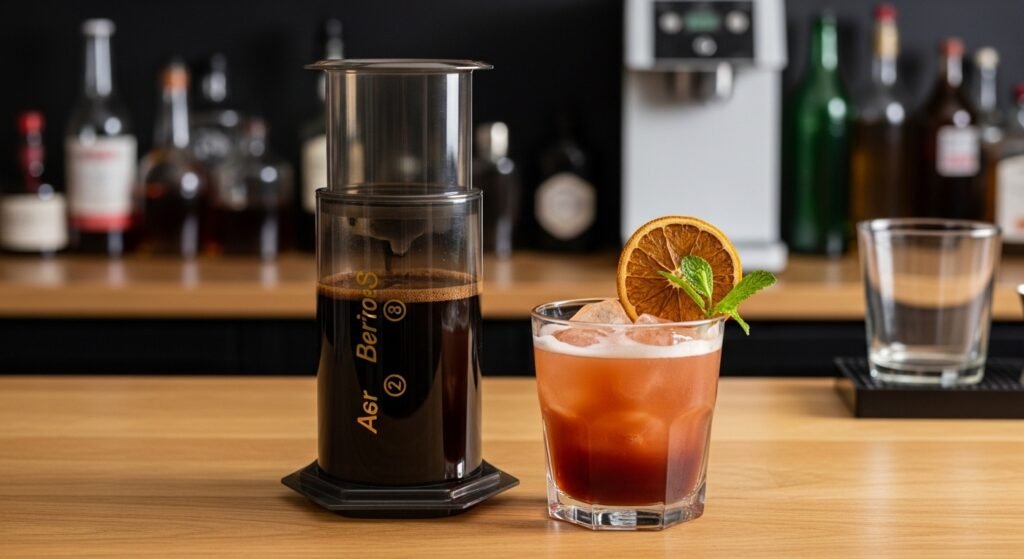
On the barista’s bench, we often use the AeroPress as our “mocktail engine.” Because it allows for high-pressure extraction and a very tight ratio (e.g., 1:5), we can create a “Coffee Concentrate” that mimics the intensity of a liqueur but remains non-alcoholic.
This concentrate is the “Anchor” of the drink. It provides the dark, bitter notes that ground the lighter, aromatic elements. In our laboratory trials, an AeroPress concentrate using a Natural Brazilian bean provides a “caramelized” weight that is the perfect substitute for dark rum in a “Mock-Daiquiri.”
Stability and Emulsion: The Role of Saponins
A major issue with mocktails is that they often “separate” in the glass. Spirits contain esters that help emulsify oils and waters. To solve this in the non-alcoholic lab, we use Aquafaba (chickpea water) or Saponins.
When you shake a coffee mocktail with aquafaba, the proteins create a stable microfoam, similar to the microfoam of steamed milk. This foam traps the aromatic volatiles and creates a luxurious mouthfeel that makes the drink feel “full” and satisfying. This technique is essential for the “Virgin Espresso Martini,” where the foam is as important as the flavor.
[Image showing the structural difference between a drink with and without a protein-based emulsion]
Laboratory Recipe: The “High-Altitude Forest” Mocktail
To celebrate the end of Cycle 20, we present a standardized lab protocol for a complex, non-alcoholic drink:
-
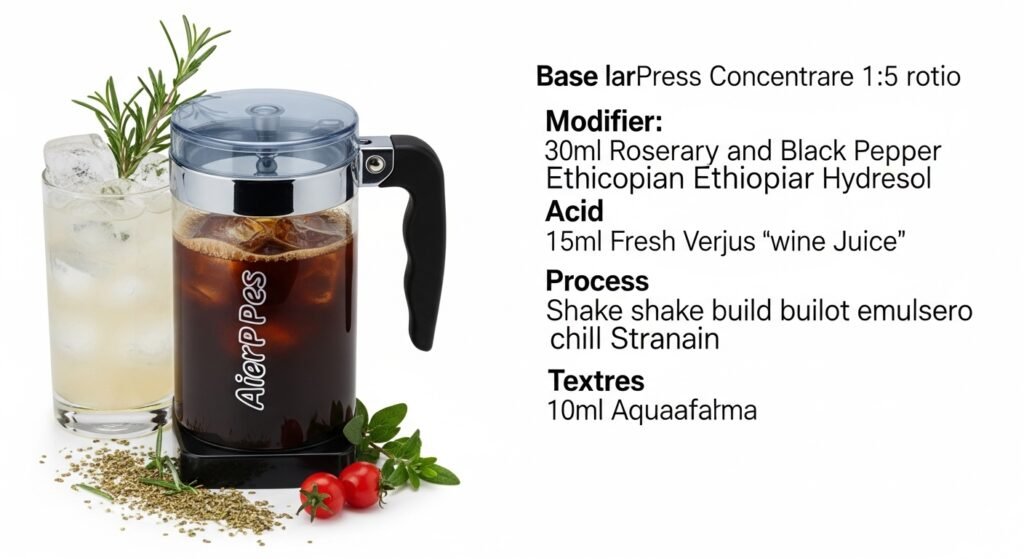
The Base: 50ml AeroPress Concentrate (1:5 ratio, Ethiopian bean).
-
The Modifier: 30ml Rosemary and Black Pepper Hydrosol.
-
The Acid: 15ml Fresh Verjus (unripe grape juice) for a “winey” acidity.
-
The Texture: 10ml Aquafaba.
-
Process: Dry shake (without ice) to build the emulsion, then shake with ice to chill. Strain into a chilled glass.
-
The Result: A drink that features the aromas of the forest, the acidity of the mountain, and the weight of a professional cocktail.
Conclusion: The Future of the Bench
Molecular mocktails represent the pinnacle of modern “Coffee Mixology.” They prove that you don’t need alcohol to create a sophisticated sensory experience. It is a field that demands a deep understanding of water quality, grind consistency, and the physics of emulsion.
As we look back on the last twenty cycles, we see that coffee is more than just a morning beverage. It is a chemical complex, a historical artifact, and a versatile tool for the modern drink laboratory. Whether we are calibrating an espresso or building a multi-layered mocktail, the principles remain the same: precision, curiosity, and a respect for the spirit of the bean.

Kevin Smith is deeply interested in the craft and culture of coffee, with practical experience exploring specialty beans, brewing techniques, and flavor development. Over the years, he has spent time studying preparation methods, observing extraction processes, and understanding how small details influence the final cup.
Through NovaWeHub, Kevin shares clear, practical, and research-based insights designed to make coffee knowledge approachable for everyone — from beginners to enthusiasts. His focus is on simplifying complex concepts and encouraging readers to explore coffee with curiosity, confidence, and a more refined sensory awareness.