
The unique flavors of East African coffees often capture attention for their vibrant acidity and complex aromas. However, the secret behind these distinctive profiles lies far beneath the surface. Ethiopia, Kenya, and Rwanda owe much of their coffee’s character to the East African Rift—a vast geological formation where the African Plate is gradually splitting.
This tectonic activity creates high-altitude landscapes, fertile volcanic soils, and varied microclimates, all of which influence the growth of coffee plants. The result is beans with bright, intricate flavors and a complexity that reflects the extraordinary environment in which they are cultivated.
This tectonic activity has created a perfect storm for coffee cultivation: extreme high altitudes, deep volcanic soils, and a unique mineral composition that feeds the coffee trees. In the lab, we see the Rift Valley not just as a geographic landmark, but as a biological engine that drives the development of the organic acids and sugars that define specialty coffee.
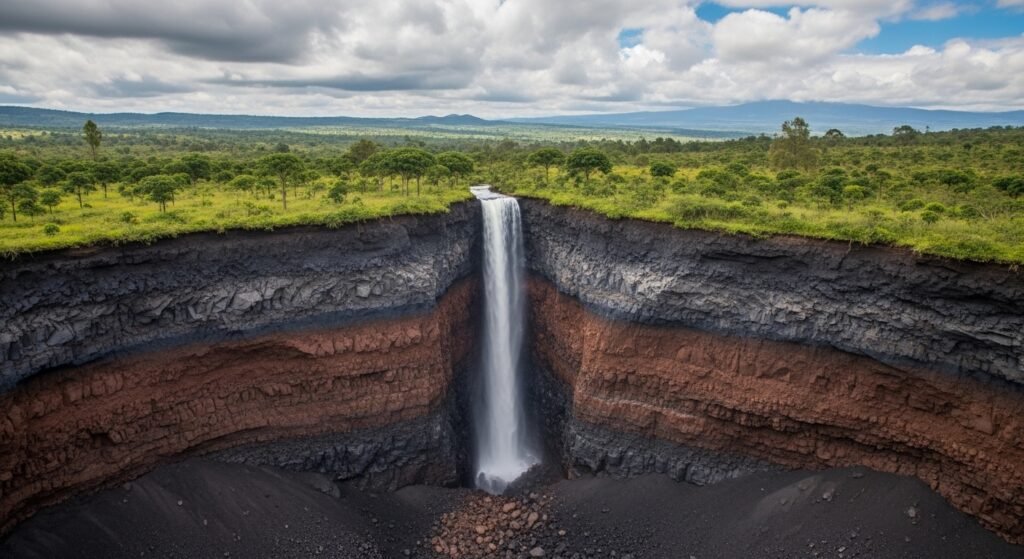
The Tectonic Blueprint: Creating the Highlands
The East African Rift is a divergent plate boundary. As the plates move apart, the crust thins and the underlying mantle pushes upward. This process, known as “Upwarping,” has created the vast plateaus and mountain ranges of East Africa.
-
The Altitude Variable: Coffee thrives in the Rift’s highlands (1,500m to 2,200m). At these heights, the air is thinner and cooler.
-
Thermal Stress and Maturation: As we’ve explored in the science of high altitude, the lower temperatures at night slow down the plant’s metabolism. This delay in the ripening of the coffee cherry allows for a higher concentration of glucose and phosphoric acid.
-
The Result: Without the tectonic lifting of the Rift Valley, the Ethiopian highlands would be much lower, much hotter, and incapable of producing the “floral” and “tea-like” profiles we prize today.
Volcanic Soil: The Mineral Laboratory
Where the Earth splits, magma rises. The Rift Valley is home to some of the most active volcanoes in the world, and their legacy is the soil. In the “Sensory Laboratory,” we study volcanic soil (specifically Andisols) as a nutrient-dense reservoir.
-
Potassium and Phosphorus: Volcanic ash is exceptionally high in these minerals. Potassium regulates the water pressure within the coffee plant, while phosphorus is essential for the production of lipids and essential oils. This mineral richness is what provides the heavy mouthfeel and syrupy body found in regions like Nyeri (Kenya) or Sidamo (Ethiopia).
-
Drainage and Structure: Volcanic soil is porous. This prevents “wet feet” (root rot) and allows the roots of the coffee tree to penetrate deep into the Earth, accessing mineral deposits that older, more compacted soils cannot offer.
The Chemistry of Flavor: Why the Rift Tastes Different
The mineral composition of the Rift’s soil directly affects the aroma wheel. When we perform a cupping at home with these beans, we notice three recurring chemical signatures:
-
Bright Phosphoric Acidity: Common in Kenyan coffees, this “sparkling” sensation is a result of the high phosphorus content in the Rift’s volcanic ash.
-
Floral Volatiles: The unique stress of the high-altitude Rift environment triggers the production of Linalool and Geraniol, the compounds responsible for the jasmine and rose scents in Ethiopian Yirgacheffe.
-
Mineral Complexity: The basaltic rocks of the Rift Valley contribute to a “clean” aftertaste—a mineral finish that highlights the sweetness without the muddy, earthy notes found in lower-altitude origins.
Water and the Rift: The Invisible Ingredient
The Rift Valley isn’t just about mountains; it’s about water. The deep Rift lakes (like Lake Tana or Lake Turkana) influence the local microclimates, providing the necessary humidity for coffee trees to survive the dry seasons.
In our laboratory trials, we’ve found that the water quality used at the washing stations within the Rift Valley is often naturally high in magnesium. Magnesium acts as a flavor extractor during the “Washed Process,” pulling more of the fruit-forward acids out of the mucilage and into the bean. This is why “Washed” African coffees have such a transparent and crystalline profile.

The Genetic Mother-Load: The Rift as a Refugium
Because the Rift Valley provided such a variety of altitudes and microclimates, it allowed the original Coffea Arabica plants to survive and diversify. Ethiopia is the only place on Earth where coffee grows wild in the forest.
In the “Sensory Laboratory,” we categorize these as Heirloom Varieties. Each “tear” in the Rift landscape created an isolated pocket where coffee evolved slightly differently. This genetic diversity is the reason why one valley in Ethiopia can produce coffee that tastes like blueberries, while the next valley produces coffee that tastes like lemon zest.
Brewing the Rift: Barista’s Bench Protocol
To respect the geological effort that went into these beans, the barista’s bench must be calibrated for density:
-
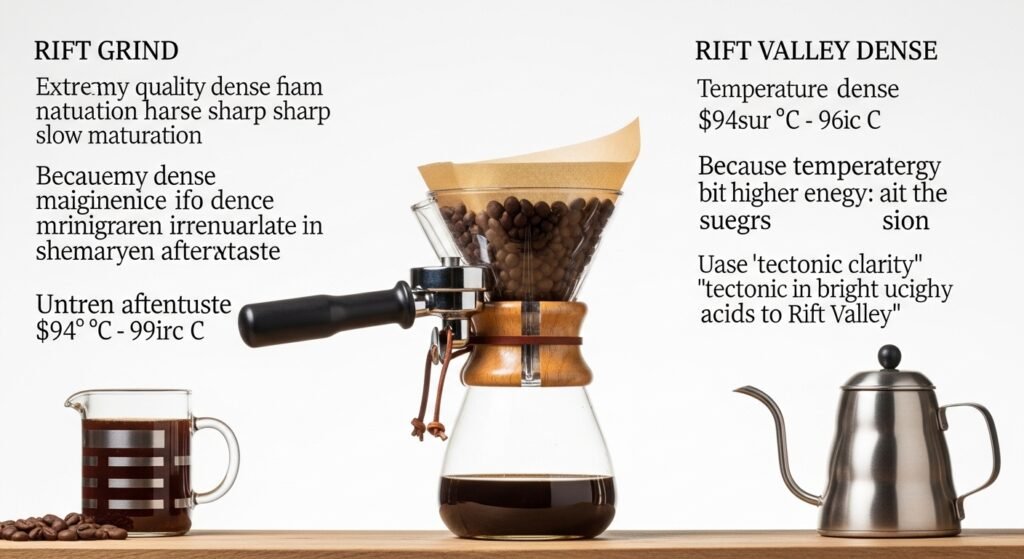
The Grind: Rift Valley beans are extremely dense because of their slow maturation. They require a high-quality grinder with sharp burrs. If the maintenance of the grinder is neglected, these dense beans will shatter irregularly, leading to an uneven aftertaste.
-
The Temperature: Because they are so dense, you need higher energy to extract the sugars. Use water at $94^\circ C – 96^\circ C$.
-
The Filter: Use a paper filter (like V60 or Chemex) to showcase the “tectonic clarity.” Avoid immersion methods like French Press if you want to experience the bright, mineral-driven acidity that the Rift Valley soil provides.
Conclusion: A Cup Born of Chaos
Every time we enjoy an African coffee, we are tasting the power of the Earth’s movement. The East African Rift Valley is a violent, chaotic geological event that has resulted in the most elegant and refined flavor profiles in the world. It is a reminder that in the “Sensory Laboratory,” the most important variable is the land itself.
By understanding the relationship between tectonic uplift, volcanic soil, and genetic diversity, we can appreciate our coffee on a deeper level. We are not just drinking a beverage; we are drinking a geological history. Respect the Rift, calibrate for the altitude, and let the aromatic complexity of the Mother Continent guide your palate. The perfect cup is a calculated result of millions of years of planetary change.

Kevin Smith is deeply interested in the craft and culture of coffee, with practical experience exploring specialty beans, brewing techniques, and flavor development. Over the years, he has spent time studying preparation methods, observing extraction processes, and understanding how small details influence the final cup.
Through NovaWeHub, Kevin shares clear, practical, and research-based insights designed to make coffee knowledge approachable for everyone — from beginners to enthusiasts. His focus is on simplifying complex concepts and encouraging readers to explore coffee with curiosity, confidence, and a more refined sensory awareness.