
Much of coffee preparation focuses on how water extracts flavor from ground beans. Factors such as water composition, temperature, and brewing ratios are carefully adjusted to highlight sweetness, acidity, and aromatic balance in the final cup. While water-based extraction captures many desirable characteristics, certain flavor compounds behave differently and are not fully soluble through traditional brewing methods.
Some aromatic elements interact more effectively with fats rather than water, opening space for creative techniques inspired by modern beverage preparation. One such approach, known as fat-washing, has gained attention in specialty drink development for its ability to introduce new layers of texture and aroma, expanding how coffee flavors can be experienced beyond conventional extraction.
Fat-washing is a process where a fat (like browned butter, coconut oil, or even bacon fat) is infused into a spirit and then chilled until the fat solidifies and can be removed. What remains is a spirit that has been chemically altered: it carries the deep, savory aromas of the fat and, more importantly, a transformative mouthfeel that mimics the velvetiness of a high-end espresso.
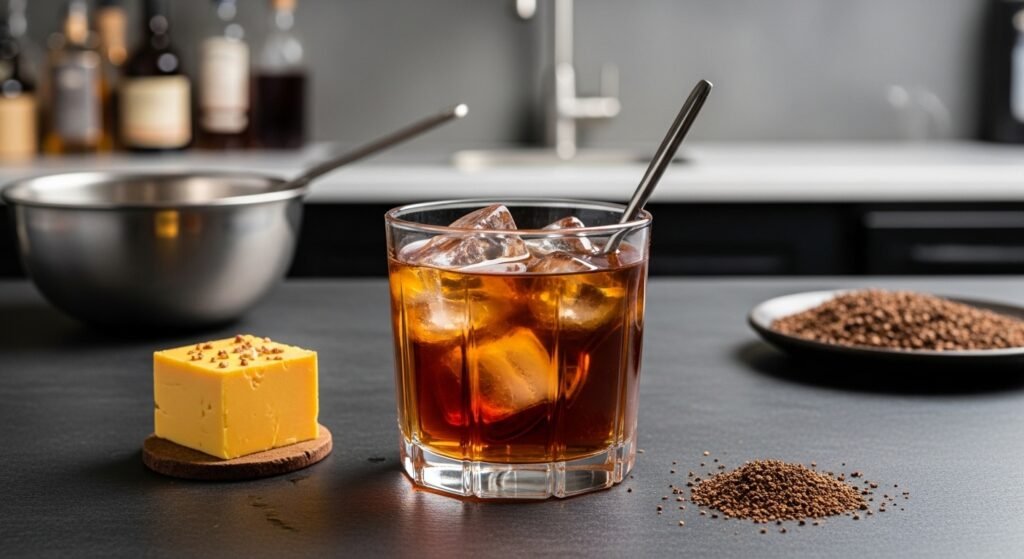
The Molecular Mechanism: Polar vs. Non-Polar Solvents
To understand fat-washing, we must look at the “Sensory Laboratory” through the lens of Polarity.
-
Water and Ethanol: Both are polar solvents. They excel at dissolving salts, sugars, and most acids.
-
Fats (Lipids): These are non-polar. Many of the compounds responsible for “smoky,” “nutty,” and “savory” flavors are non-polar and prefer to bind with fats.
-
The Extraction: When we mix a fat with a spirit (like a coffee-infused Bourbon), the alcohol acts as a bridge. Because ethanol has both a polar and a non-polar end, it can “grab” flavor compounds from the fat that water alone could never reach.
Choosing the Fat: Texture and Aroma Profiles
In our lab trials, we categorize fats by their impact on the coffee’s flavor wheel.
-
Browned Butter (Beurre Noisette): This is the gold standard for coffee mixology. The Maillard reaction in the butter creates toasted, nutty notes that perfectly complement the roasted pyrazines in coffee. It adds a “creamy” weight to the drink without the need for dairy.
-
Coconut Oil: Ideal for highlighting the tropical and floral notes of an Ethiopian or Kenyan coffee. It provides a “cleaner,” more slippery texture.
-
Smoked Fats (Bacon or Wagyu): These are used for “savory” coffee cocktails. The smoke particles in the fat bind with the earthy notes of a Sumatran or Indian coffee, creating a drink with immense depth and a long aftertaste.
The Protocol: Maceration, Freezing, and Filtration
Fat-washing is an exercise in patience and thermal control. On the barista’s bench, we follow these steps:
-
The Infusion: Melt the fat and combine it with your spirit (usually 120g of fat per 750ml of spirit). Shake vigorously. This increases the surface area, allowing the alcohol to strip the flavors from the lipids.
-
The Rest: Let the mixture sit at room temperature for 4 to 12 hours. This is the “Flavor Transfer” phase.
-
The Deep Freeze: Place the mixture in the freezer. Since fats have a higher freezing point than alcohol, they will solidify into a hard “puck” at the top of the bottle.
-
The Filtration: Once frozen, pierce the fat layer and pour the spirit through a coffee filter. This removes any remaining micro-lipids, ensuring the drink remains clear but carries the mouthfeel of the fat.
Sensory Analysis: The Impact on Astringency
One of the most remarkable findings in the “Sensory Laboratory” is that fat-washing can “fix” a problematic coffee infusion. As we discussed in our study of Astringency vs. Bitterness, tannins can cause a drying sensation.
Fats act as a lubricant. By fat-washing a coffee spirit, the lipids coat the tongue, preventing the tannins from binding to your salivary proteins. This effectively “masks” the harshness of a dark roast and highlights the aftertaste of the sweeter, more delicate compounds.
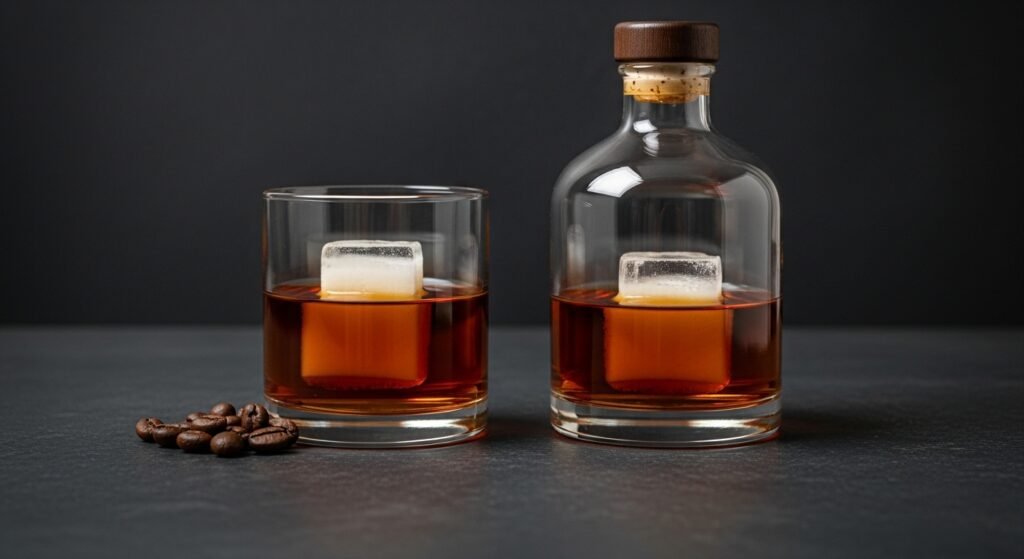
Stability and Maintenance: Avoiding Rancidity
Because we are dealing with organic fats, maintenance matters.
-
Oxidation: Fats can go rancid if exposed to oxygen and heat. Always store fat-washed spirits in the refrigerator.
-
Filter Choice: Using a high-quality paper filter is essential. If any solid fat particles remain, the drink will develop an “oily” film that ruins the sensory experience. In the lab, we often “double-filter” to ensure absolute clarity.
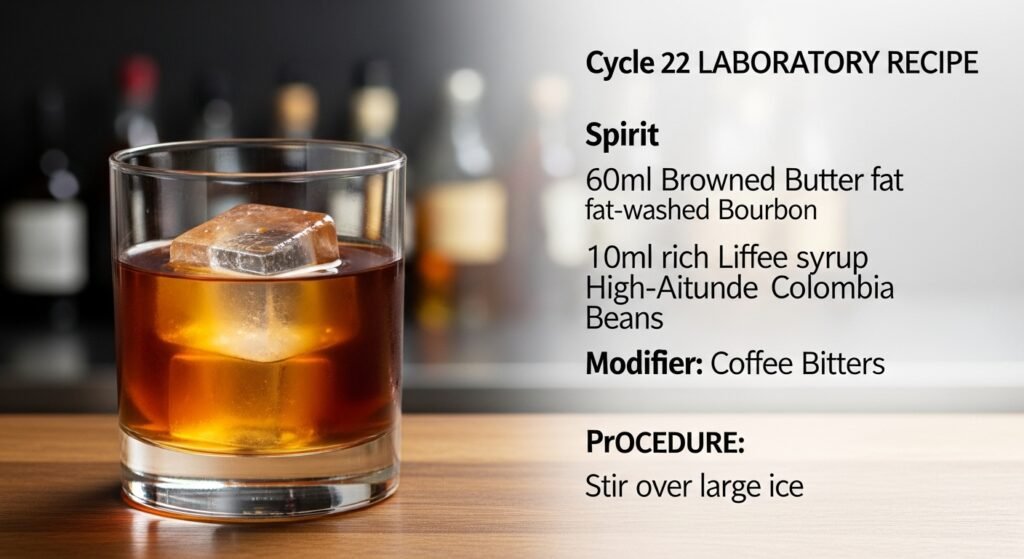
Laboratory Recipe: The “Browned Butter Coffee Old Fashioned”
To close Cycle 22, we propose this signature laboratory drink:
-
The Spirit: 60ml of Browned Butter fat-washed Bourbon.
-
The Coffee: 10ml of a rich coffee syrup made from high-altitude Colombian beans.
-
The Modifier: 2 dashes of Coffee Bitters.
-
Procedure: Stir over large ice. The browned butter provides a “shortbread” aroma, while the coffee syrup provides the structure. The result is a drink with a viscosity that feels like liquid silk.
Conclusion: The Final Layer of Flavor
Fat-washing is the ultimate bridge between the kitchen and the bar. It reminds us that the “Sensory Laboratory” is not limited to water-based chemistry. By manipulating the polarity of our solvents and the texture of our lipids, we can create coffee drinks that are structurally superior and aromatically more complex.
As we conclude the 88th article and the 22nd cycle, we see a pattern: the best coffee experiences are those that respect the physics of grinding, the chemistry of water, and the biology of the human palate. Whether you are clarifying with milk or washing with butter, you are engineering a moment of sensory perfection. Keep your equipment maintained, your ratios precise, and your curiosity endless.

Kevin Smith is deeply interested in the craft and culture of coffee, with practical experience exploring specialty beans, brewing techniques, and flavor development. Over the years, he has spent time studying preparation methods, observing extraction processes, and understanding how small details influence the final cup.
Through NovaWeHub, Kevin shares clear, practical, and research-based insights designed to make coffee knowledge approachable for everyone — from beginners to enthusiasts. His focus is on simplifying complex concepts and encouraging readers to explore coffee with curiosity, confidence, and a more refined sensory awareness.