
In modern coffee and cocktail preparation, much attention is given to how liquids interact and transform, from cascading nitrogen-infused drinks to milk-infused spirits. Beyond these techniques, innovative methods explore new physical forms of flavor. One such approach, molecular spherification, allows liquid coffee to be encapsulated within a delicate, translucent membrane.
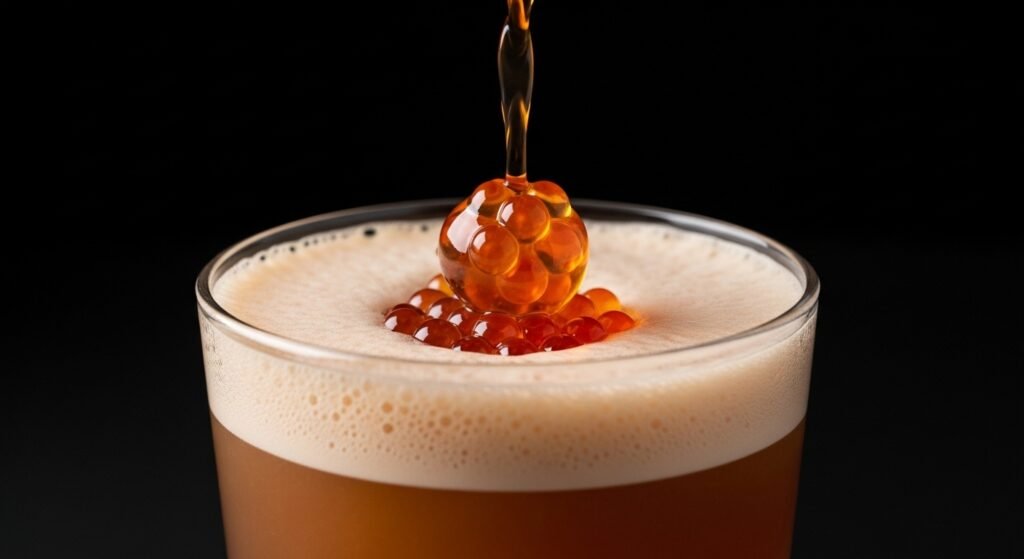
The result is a product often called “Espresso Caviar”—tiny spheres resembling sturgeon roe, yet bursting with the intense aroma and flavor of a high-altitude, single-origin coffee. This technique highlights the creative possibilities in specialty coffee and mixology, where presentation and taste combine to create a unique sensory experience.
This process is more than a visual gimmick. It is a tool for “Sensory Sequencing.” By placing coffee spheres at the bottom of a cocktail or floating them on a foam, the barista controls exactly when the coffee flavor hits the palate. It transforms the mouthfeel from a continuous liquid flow into a rhythmic series of “flavor bursts.”
The Chemistry of the Membrane: Alginate and Calcium
Spherification is a chemical reaction between a polysaccharide and a mineral. In the lab, we break this down into two components:
-
Sodium Alginate: A natural gelling agent extracted from brown seaweed. When dissolved in coffee, it remains liquid because the sodium ions keep the polymer chains apart.
-
Calcium Chloride (or Lactate): When the alginate-rich coffee droplets enter a calcium bath, a “cross-linking” reaction occurs. The calcium ions ($Ca^{2+}$) act as a molecular “glue,” binding the alginate chains together into a solid, flexible gel.
-
The Result: A gelled membrane forms instantly around the liquid core. Because the reaction happens from the outside in, the center remains liquid espresso.
Direct vs. Reverse Spherification
In our laboratory trials, we distinguish between two primary methods depending on the water quality and acidity of the coffee.
-
Direct Spherification: The alginate is mixed directly into the coffee, and the mixture is dropped into a calcium bath. This is ideal for low-calcium, low-acid coffees like those from the Caribbean.
-
Reverse Spherification: The calcium is mixed into the coffee (or the coffee naturally has high calcium levels), and it is dropped into an alginate bath. This is the preferred method for the “Drink Laboratory” because the spheres do not continue to gel toward the center, ensuring a “forever liquid” core and a better aftertaste.
The Importance of pH and Water Quality
Spherification is highly sensitive to the chemical environment.
-
Acidity: If the coffee is too acidic (pH < 4.5), which is common in high-altitude African coffees, the alginate will not dissolve properly and will become thick and “snotty.” In the lab, we use sodium citrate as a buffer to raise the pH slightly without affecting the flavor.
-
Calcium Interference: If your brewing water is too “hard” (high in calcium), the coffee will begin to gel prematurely inside the syringe. This is why maintenance of your filtration system is vital even for molecular mixology.
Sensory Analysis: Texture and Impact
The “Sensory Laboratory” analyzes Espresso Caviar based on three criteria:
-
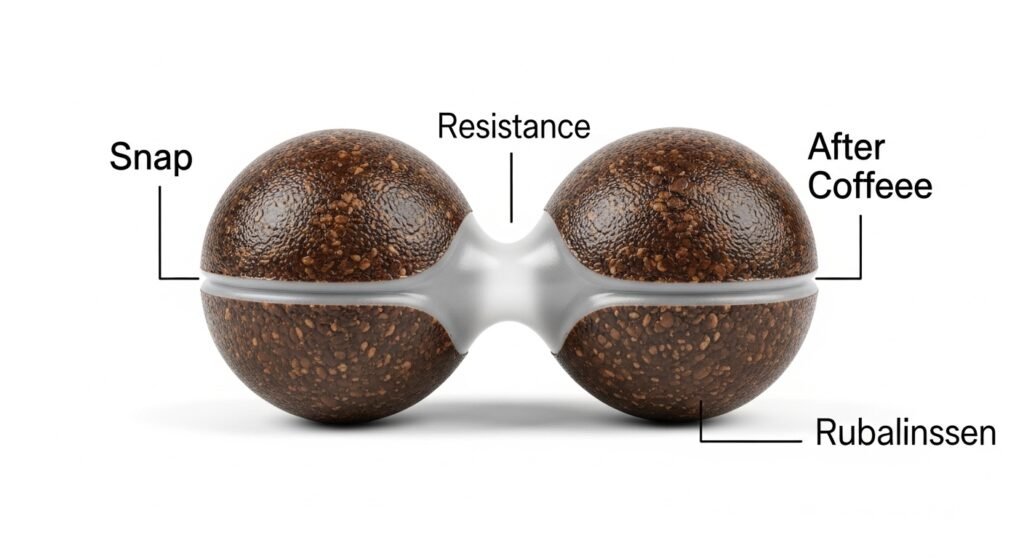
The Snap: The resistance of the membrane. A perfect sphere should “pop” with gentle pressure between the tongue and the palate.
-
The Release: The immediate flood of coffee aromas. Because the coffee is encapsulated, it hasn’t oxidized. The flavor is exceptionally “bright” and “fresh.”
-
The Cleanliness: After the pop, the membrane should dissolve or be swallowed easily without leaving a “rubbery” aftertaste.
Barista’s Bench: The Protocol for Perfect Pearls
To execute this on the barista’s bench, precision is non-negotiable:
-
The Ratio: Use 0.5% Sodium Alginate by weight. (e.g., 1g of alginate for 200ml of coffee).
-
The Mixing: Use a high-speed blender to ensure the alginate is fully hydrated. Then, let the mixture rest for 2 hours to allow all air bubbles to escape. Air bubbles will make the spheres float or prevent them from forming perfectly round shapes.
-
The Rinse: Once the spheres are “cooked” in the calcium bath (usually 30-60 seconds), they must be moved to a bath of pure filtered water to stop the reaction and remove any metallic calcium taste.
Laboratory Recipe: The “Deconstructed Espresso Martini”
To close Cycle 24, we present a signature drink that utilizes the science of spherification:
-
The Base: A clarified vodka and vanilla bean infusion.
-
The Element: Floating Espresso Caviar made from a honey-processed Colombian coffee.
-
The Garnish: A light lemon-zest foam.
-
Sensory Goal: As the guest sips the cold, clear vodka, the espresso pearls pop, creating a “pulsating” coffee flavor that evolves as they drink. It is the ultimate expression of mouthfeel engineering.

Conclusion: Bridging Science and Service
Molecular spherification is a reminder that the “Sensory Laboratory” is limited only by our understanding of chemistry. By turning liquid espresso into a solid-feeling texture, we challenge the guest to think about coffee in a new way.
As we reach the 96th article, we see that the maintenance of precision—whether in a roaster, a group head, or a molecular bath—is what defines excellence. Respect the water quality, calibrate your grind, and don’t be afraid to experiment with the physical state of your aromas. The perfect aftertaste might just be a “pop” away.

Kevin Smith is deeply interested in the craft and culture of coffee, with practical experience exploring specialty beans, brewing techniques, and flavor development. Over the years, he has spent time studying preparation methods, observing extraction processes, and understanding how small details influence the final cup.
Through NovaWeHub, Kevin shares clear, practical, and research-based insights designed to make coffee knowledge approachable for everyone — from beginners to enthusiasts. His focus is on simplifying complex concepts and encouraging readers to explore coffee with curiosity, confidence, and a more refined sensory awareness.