
Espresso is often considered the “final boss” of the coffee world. It is a temperamental, high-pressure extraction method that can produce the most divine, syrupy liquid or a salty, undrinkable mess. Unlike filter coffee, where you have a larger margin for error, espresso requires surgical precision. The process of finding the perfect settings for a specific bean is what baristas call “dialing-in.” It is a ritual of trial and error that balances grind size, dose, and yield to hit that sweet spot of flavor.
When you bring a fresh bag of beans home, your first shot is rarely perfect. Even if you have already invested in choosing the right grinder for your home setup, you still need to calibrate that machine to the unique density and roast profile of the new coffee. Dialing-in is essentially a conversation between you and the bean, where you use your palate to decode what the coffee needs. In this guide, we will break down the variables of espresso calibration and show you how to master the “Espresso Laboratory” at home.
The Three Pillars: Dose, Yield, and Time
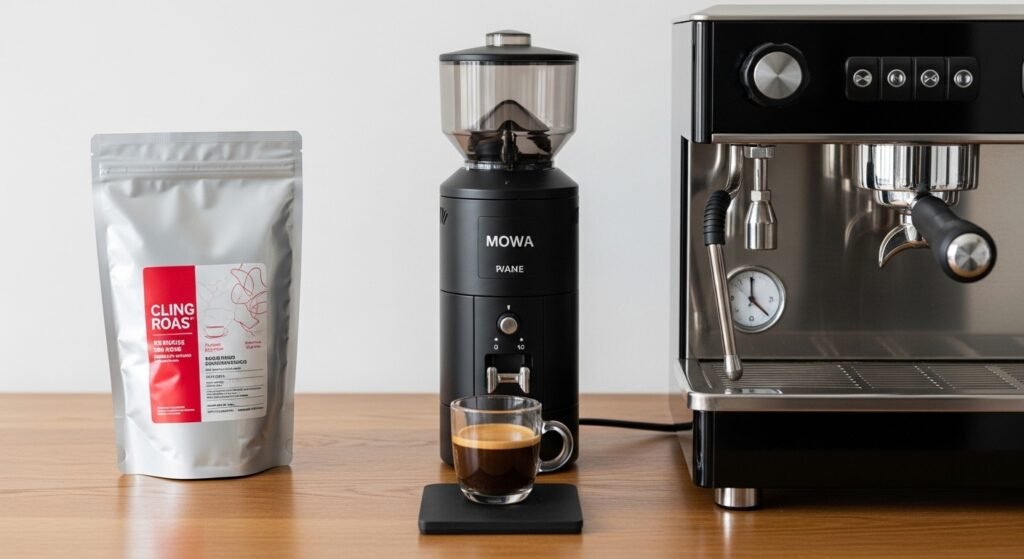
To calibrate an espresso, you must control three main variables. The Dose is the amount of dry coffee grounds you put into your portafilter (usually between 18g and 20g for a double shot). The Yield is the weight of the liquid espresso in your cup. Finally, the Time is how long it takes for the water to pass through the coffee puck. Most modern baristas aim for a starting ratio of 1:2—for example, 18g of coffee in, producing 36g of liquid out, in about 25 to 30 seconds.
This relationship is a direct application of the golden ratio, adapted for high-pressure brewing. If your shot flows too fast (under 20 seconds), the water didn’t have enough time to extract the sugars, resulting in a sour, watery taste. If it flows too slow (over 40 seconds), it will likely be bitter and ashy. Your goal in the dialing-in process is to adjust your grind size until you land within that 25–30 second window, which generally ensures a balanced extraction.
The Grind: Your Primary Lever for Success
The grind size is the most important variable you will adjust during calibration. Because espresso uses 9 bars of pressure, the coffee puck acts as a filter that resists the water. If the grind is too coarse, the water rushes through the gaps; if it is too fine, the water gets trapped and struggles to pass through. Even a microscopic adjustment on a stepless grinder can shift your extraction time by several seconds.
As you begin to identify the nuances of your shot, you might notice that while the timing is correct, the texture feels off. This is where your understanding of body and mouthfeel becomes essential. A well-dialed espresso should feel heavy and velvety on the tongue. If the espresso feels thin despite a 30-second pull, you might need to increase your dose slightly or look for a bean with a different processing method. Calibration is not just about hitting a number on a timer; it’s about achieving the physical density that makes espresso so unique.
Tasting for Correction: Sour vs. Bitter
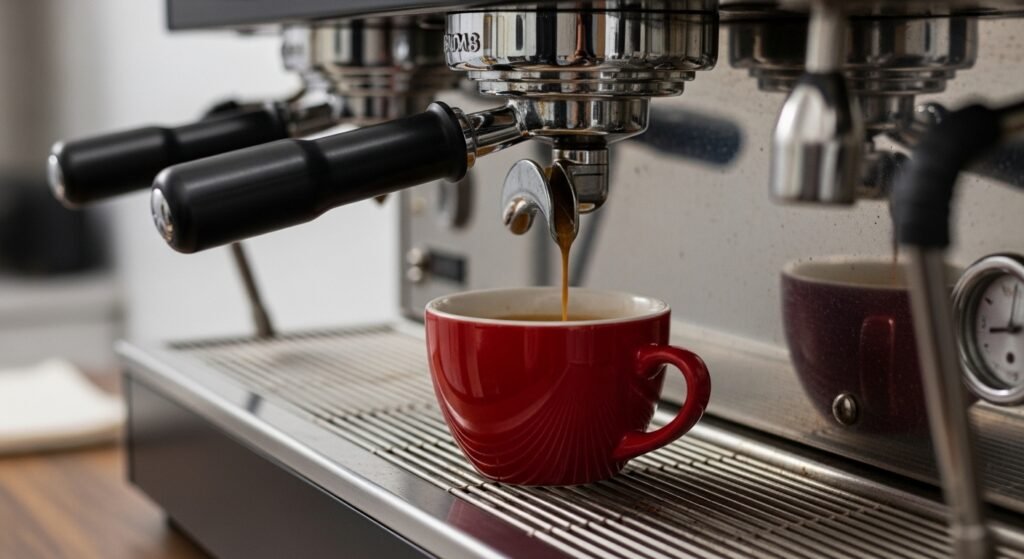
The real work of dialing-in happens after you take a sip. You must train your palate to recognize the “diagnostic flavors” of espresso. If the shot tastes sharp, salty, or makes your mouth pucker, it is under-extracted. To fix this, you need to grind finer to slow down the water and extract more flavor. On the other hand, if the shot leaves a dry, sandpaper-like feeling on your tongue or tastes like charcoal, it is over-extracted. In this case, you should grind coarser to speed up the flow.
Sometimes, you might find that the shot is balanced but lacks clarity. This often happens when the coffee hasn’t “degassed” enough after roasting. Fresh coffee is full of CO2, which can create a beautiful crema but block the water from reaching the flavor compounds. If you are struggling to find the flavor notes promised on the bag, try waiting a few days for the beans to rest, or slightly increase your yield (e.g., from 36g to 40g) to “stretch out” the flavors and reduce the intensity.
Consistency: The Secret to the Barista’s Bench
Calibration is useless without consistency. This is why tools like a distribution tool and a calibrated tamper are so popular. If you don’t compress the coffee puck evenly, the water will find the path of least resistance—a phenomenon called “channeling.” Channeling results in a shot that is simultaneously sour and bitter because some parts of the puck were over-extracted while others were barely touched.
In our home laboratory, we treat every shot as data. Record your dose, your yield, and your time in a notebook. Once you find the perfect setting for a specific bean, you’ve “locked it in.” However, remember that coffee is an organic product. As the beans age in the hopper, or as the humidity in your kitchen changes, you will need to make small “micro-adjustments” to your grind to keep the shots tasting perfect. This constant attention to detail is what separates a true home barista from someone who just pushes a button.

Conclusion: The Reward of Precision
The dialing-in process can be frustrating, especially when you go through half a bag of expensive beans just to find the right setting. But when that perfect shot finally pours—looking like warm honey and tasting like a complex symphony of flavors—the effort becomes worth it. You aren’t just making a drink; you are mastering a craft that combines physics, chemistry, and sensory art.
By taking control of your espresso machine through calibration, you ensure that every morning starts with a professional-grade experience. You no longer have to settle for “okay” coffee; you have the tools and the knowledge to demand excellence from your beans. So, grab your scale, prep your portafilter, and start dialing. Your perfect espresso is waiting to be discovered, one click of the grinder at most.

Kevin Smith is deeply interested in the craft and culture of coffee, with practical experience exploring specialty beans, brewing techniques, and flavor development. Over the years, he has spent time studying preparation methods, observing extraction processes, and understanding how small details influence the final cup.
Through NovaWeHub, Kevin shares clear, practical, and research-based insights designed to make coffee knowledge approachable for everyone — from beginners to enthusiasts. His focus is on simplifying complex concepts and encouraging readers to explore coffee with curiosity, confidence, and a more refined sensory awareness.