
South American coffees are often celebrated for their comforting chocolatey notes, but East African beans open the door to entirely new flavor experiences. Africa is the birthplace of Coffea Arabica, and in regions like Ethiopia, the plant grew naturally, giving rise to countless heirloom varieties yet to be discovered.
Brewing an East African coffee is more than preparing a cup; it is a connection to the plant’s wild origins and rich genetic history. Each sip reflects centuries of evolution, offering flavors that are as unique and untamed as the land where the beans were first cultivated.
Ethiopia and Kenya are neighboring giants, yet they offer sensory profiles that are as different as night and day. Ethiopia is often described through the lens of elegance, florals, and stone fruits. Kenya, on the other hand, is a powerhouse of intensity, famous for its high acidity and deep berry complexity. Understanding these two origins is essential for anyone looking to navigate the flavor wheel and push the boundaries of their sensory experience.

Ethiopia: The Land of Heirlooms
Ethiopia is unique because it doesn’t primarily grow specific “cultivars” like Bourbon or Caturra. Instead, it is home to “Landrace Heirlooms”—natural variations of the coffee plant that have grown in the forests for millennia. This genetic diversity is why an Ethiopian coffee can taste like Earl Grey tea one moment and strawberry jam the next.
The region of Yirgacheffe is perhaps the most famous. Situated at extreme high altitudes, Yirgacheffe coffee is known for its “washed” process, which highlights clarity. When you sip a washed Yirgacheffe, you are looking for jasmine, lemon zest, and a tea-like body and mouthfeel. Conversely, the Guja or Sidamo regions often produce incredible “Natural” processed coffees. Here, the bean dries inside the cherry, absorbing deep fermented notes of blueberry, dried apricot, and even chocolate.
Kenya: The Science of the “SL” Varieties
While Ethiopia is wild and diverse, Kenya is organized and scientific. The Kenyan coffee industry is built on the research of the Scott Agricultural Laboratories (SL), which in the 1930s identified the SL28 and SL34 varieties. These plants were selected specifically for their drought resistance and, more importantly, their spectacular cup quality.
Kenyan coffee is defined by its acidity. In the lab, we don’t just call it “sour”; we identify it as phosphoric acidity. This is the same type of acid found in sparkling sodas—it creates a “zing” or a “sparkle” on the tongue that is unmistakable. Kenyan coffees are often “double washed,” a labor-intensive process that involves fermenting the beans twice to ensure absolute purity of flavor. The result is a cup bursting with notes of blackcurrant, tomato, grapefruit, and a syrupy sweetness that balances the intense tartness.
The Phosphoric Punch: Why Kenya Stands Out
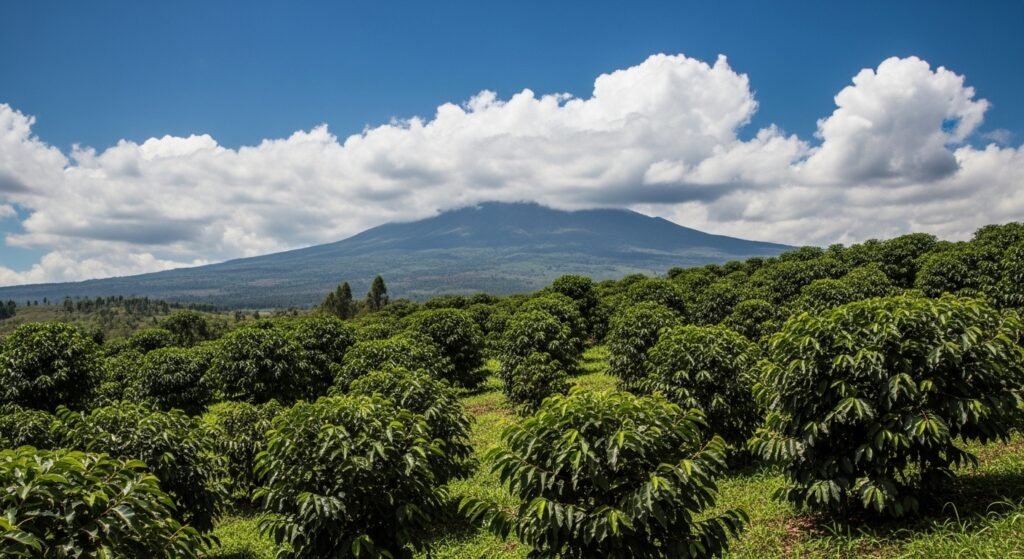
The reason Kenya’s profile is so aggressive lies in its volcanic soil and its unique grading system. The soil around Mount Kenya is exceptionally rich in phosphorus, which the plants absorb and concentrate in the beans. Furthermore, Kenya uses a size-based grading system: AA (the largest), AB, and PB (Peaberry).
While size doesn’t always equal quality, in Kenya, the AA lots often come from the most nutrient-rich trees, leading to the complex aftertaste that roasters chase. When navigating the flavor wheel, a Kenyan coffee will often sit in the “Berry” and “Dried Fruit” sections, offering a savory-sweet complexity that is found nowhere else on Earth.
Brewing the African Spirit
Because of their delicate nature and high acidity, African coffees are the primary reason the V60 protocol exists.
-
Water Temperature: Use a high temperature ($94^\circ C – 96^\circ C$). African beans are very dense because they grow so slowly at high altitudes. You need the extra thermal energy to break through the cellular structure and extract the sugars.
-
Grind Size: Aim for a medium-fine setting. If the grind is too coarse, the coffee will taste like “sour water.” If it’s too fine, the delicate florals will be masked by a dry bitterness.
-
Filtration: Always use paper filters. The oils in African coffee are minimal but very aromatic. Paper allows the “enzymatic” notes—the fruit and flowers—to take center stage without being weighed down by silt.
The Social and Economic Terroir
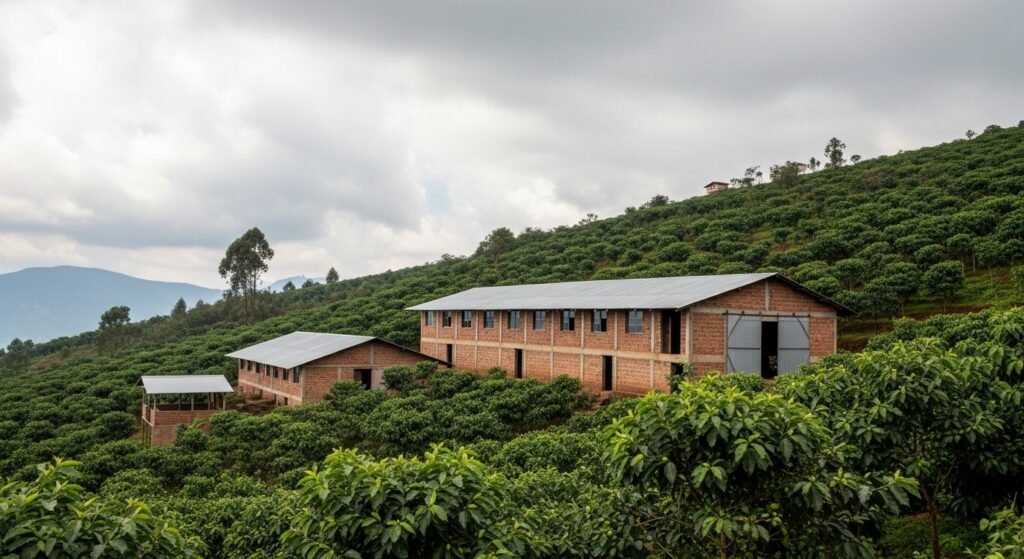
Understanding Africa also means understanding the cooperative system. In both Ethiopia and Kenya, the majority of coffee is grown by smallholders who bring their harvest to a central “washing station” or factory. This collective effort is what allows for the consistent quality we see in specialty lots.
However, climate change and economic shifts are threatening these “cradle” regions. As temperatures rise, farmers are forced to move higher up the mountains, making the journey of the bean even more difficult. In our “Sensory Laboratory,” we value these beans not just for their taste, but for their rarity. Every cup of a high-scoring Kenyan or Ethiopian lot is a fleeting moment of agricultural perfection.
Conclusion: The Ultimate Palate Cleanser
The African Cradle offers a palate-cleansing experience. After a week of drinking heavy, chocolatey Brazilian blends, an Ethiopian or Kenyan coffee acts as a sensory reset. It reminds us that coffee is a fruit, a seed of a flowering plant, and that its potential for flavor is nearly infinite.
Whether you are seeking the jasmine-scented elegance of a Yirgacheffe or the blackcurrant explosion of a Nyeri AA, Africa is the place where you will find the answers. Respect the high altitude, master your pour-over technique, and prepare your palate for a wild, untamed journey. The laboratory is never more exciting than when an African coffee is on the bench.

Kevin Smith is deeply interested in the craft and culture of coffee, with practical experience exploring specialty beans, brewing techniques, and flavor development. Over the years, he has spent time studying preparation methods, observing extraction processes, and understanding how small details influence the final cup.
Through NovaWeHub, Kevin shares clear, practical, and research-based insights designed to make coffee knowledge approachable for everyone — from beginners to enthusiasts. His focus is on simplifying complex concepts and encouraging readers to explore coffee with curiosity, confidence, and a more refined sensory awareness.