
The Caribbean is often overlooked in discussions about coffee, with attention usually drawn to the high-altitude regions of mainland Latin America. Yet the story of coffee in the Americas began on these islands. Jamaica and Puerto Rico produce coffees that offer a very different sensory experience compared to the bright, acidic profiles popular in modern specialty coffee.
Coffees from the Caribbean are celebrated for their full body, smooth mouthfeel, natural sweetness, and minimal bitterness. These characteristics create a balanced and rich cup, highlighting the unique growing conditions and traditional cultivation methods that have shaped the region’s coffee legacy.
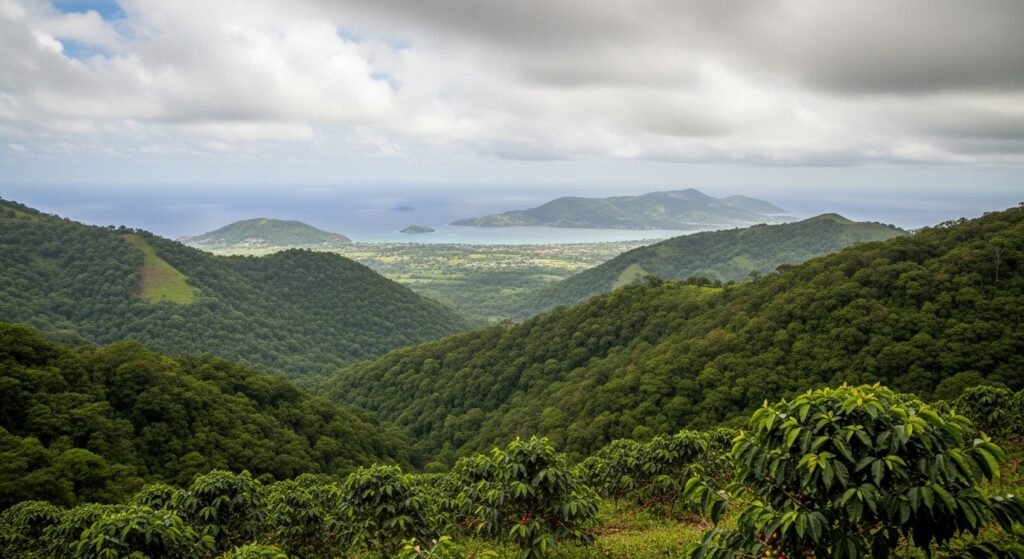
To understand Caribbean coffee is to understand the “Island Microclimate.” These are regions where the high-altitude peaks are constantly cooled by trade winds and shaded by a persistent mist. This environmental stability creates a long, slow maturation process for the coffee cherry, allowing the sugars to develop with a complexity that is often missing in faster-growing regions.
Jamaica Blue Mountain: The Physics of the Mist
Jamaica Blue Mountain (JBM) is perhaps the most famous coffee brand in the world. In the lab, we analyze JBM not just as a luxury product, but as a botanical miracle. To be certified as “Blue Mountain,” the coffee must be grown in a specific geographical area of the Blue Mountains at altitudes between 910 and 1,700 meters.
The secret to JBM’s profile is the “Blue Mist.” The mountains are almost always covered in a thick cloud layer that protects the trees from the intense Caribbean sun. This natural “shade-grown” environment slows down the metabolism of the coffee tree.
-
The Result: A bean that is exceptionally dense and low in caffeine.
-
The Profile: JBM is famous for its “cleanliness.” It possesses a mild, nutty sweetness and a total absence of the harsh aftertaste found in lower-quality island coffees.
Puerto Rico: The Resurrection of the “Coffee of Popes”
Puerto Rico was once one of the largest coffee exporters in the world, with its beans being the preferred choice of the Vatican and European royalty in the 19th century. After decades of decline due to hurricanes and economic shifts, the island is currently experiencing a “Specialty Resurrection.“
The coffee is grown primarily in the central mountain range (La Cordillera Central), in regions like Yauco, Adjuntas, and Jayuya.
-
The Profile: Puerto Rican coffee is the definition of “balance.” It often features a heavy, syrupy body with notes of dark chocolate, cedar, and dried fruit.
-
The Processing: Unlike the traditional “Washed” JBM, many Puerto Rican farmers are now experimenting with “Honey” and “Natural” processes to highlight the volcanic terroir of the island.
The Wood-Barrel Storage: A Unique Aging Science
One of the most distinctive aspects of the Jamaican “Sensory Laboratory” is the packaging. JBM is the only coffee in the world that is legally required to be shipped in wooden barrels rather than jute bags.
From a chemical perspective, the wood acts as a secondary buffer. It protects the green beans from the fluctuating humidity of sea travel and prevents the beans from absorbing the “earthy” smells often associated with jute. This maintenance of the environment is why JBM arrives at its destination with a clarity of flavor that is unparalleled in the industry.
Sensory Analysis: The “Neutral” Gold
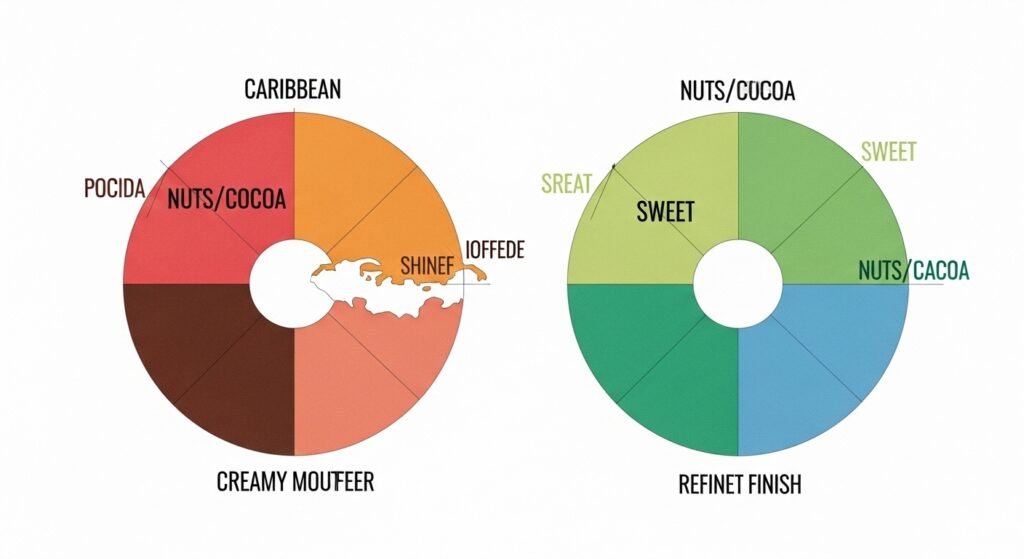
When we use the flavor wheel, Caribbean coffees often fall into the “Nuts/Cocoa” and “Sweet” categories.
-
Mild Acidity: The acidity is phosphoric and soft, rather than citric and sharp. It provides a “sparkle” without the “sourness.“
-
Creamy Mouthfeel: Because of the slow maturation, the beans have a high lipid content, resulting in a buttery texture.
-
Refined Finish: The hallmark of a true Caribbean heritage bean is a “short” and clean finish that leaves the palate refreshed.
Brewing the Caribbean: Barista Recommendations
Because these coffees are so expensive and delicate, the barista’s bench protocol must be precise:
-
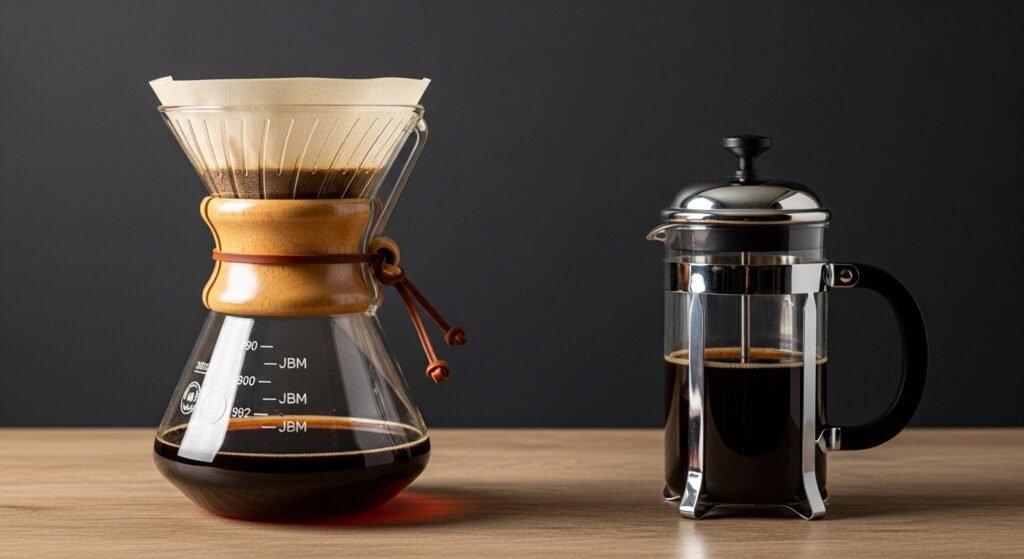
The Method: The Chemex is the preferred tool for JBM. Its thick filter highlights the coffee’s legendary clarity. For a Puerto Rican Yauco Selecto, a French Press can emphasize the heavy, chocolatey body.
-
The Temperature: Use a lower temperature ($90^\circ C – 92^\circ C$). These beans are low in acidity; using boiling water can pull out woody notes that distract from the sweetness.
-
The Ratio: Use a 1:16 ratio. These coffees are about elegance, not intensity. A tighter ratio can make them feel “heavy” rather than “balanced.“
Conclusion: The Value of Tradition
Jamaica and Puerto Rico represent a different era of coffee appreciation. In a world that is obsessed with “experimental” and “funky” flavors, the Caribbean remains the standard for classical elegance. These are coffees for the purist—someone who values the science of balance over the shock of high acidity.
As we continue our journey of the bean, we must respect these island origins for their resilience and their commitment to quality. Whether it is the mist-covered peaks of the Blue Mountains or the volcanic slopes of Jayuya, the Caribbean heritage is a vital part of our global “Sensory Laboratory.” The next time you have the opportunity to taste these rare beans, take your time. Appreciate the history, the slow maturation, and the incredible sweetness of the “Old World” of coffee.

Kevin Smith is deeply interested in the craft and culture of coffee, with practical experience exploring specialty beans, brewing techniques, and flavor development. Over the years, he has spent time studying preparation methods, observing extraction processes, and understanding how small details influence the final cup.
Through NovaWeHub, Kevin shares clear, practical, and research-based insights designed to make coffee knowledge approachable for everyone — from beginners to enthusiasts. His focus is on simplifying complex concepts and encouraging readers to explore coffee with curiosity, confidence, and a more refined sensory awareness.