
For a long time, the worlds of the barista and the bartender were separate. One operated under the bright lights of the morning, focusing on extraction yields and water quality, while the other thrived in the dim glow of the evening, mastering infusions and balance. But in recent years, these two worlds have collided, resulting in some of the most innovative beverages of the decade. Perhaps no drink represents this fusion better than the Coffee Gin & Tonic (CG&T).
It sounds simple on paper, but in the “drink laboratory,” the CG&T is a complex interplay of chemistry. You have the crisp, quinine-driven bitterness of tonic water, the herbal and piney notes of gin, and the deep, roasted complexity of coffee. When combined, these elements don’t just sit next to each other; they elevate one another. To master this drink, you must understand the science of aroma and the delicate acid vs. bitter balance that defines both great specialty coffee and world-class cocktails.
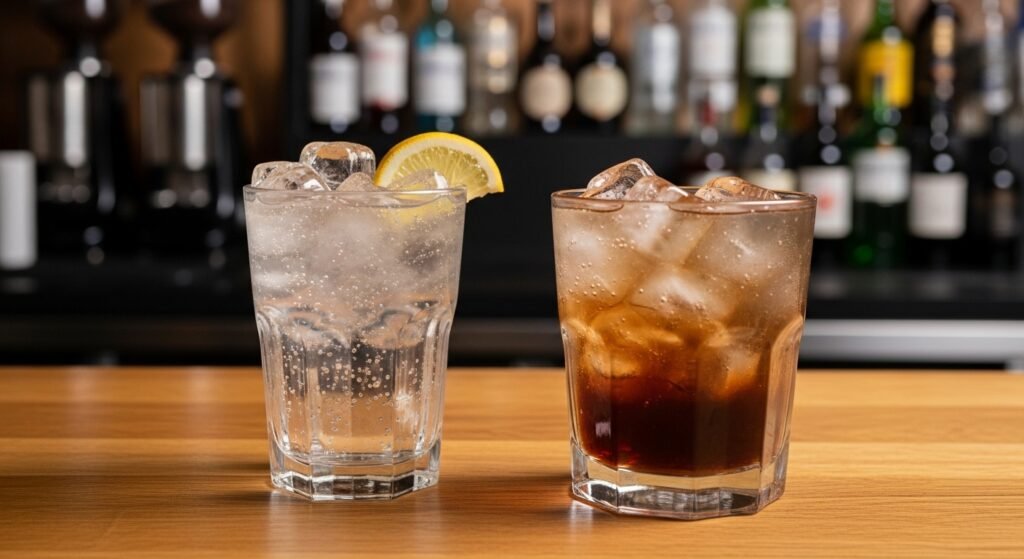
The Chemistry of Bubbles and Caffeine
The magic of the Coffee G&T lies in carbonation. When you pour tonic water over a coffee base—whether it’s a concentrated cold brew or a fresh espresso—the CO2 in the bubbles acts as a delivery vehicle for aromatic compounds. Carbonation tickles the palate and forces volatile molecules up into the retro-nasal passage, enhancing your ability to identify flavor notes.
However, there is a technical challenge: the “fizz factor.” Coffee is full of nucleation sites (tiny particles and oils). If you pour tonic water too quickly over fresh espresso, it will erupt in a foam that quickly goes flat. In our laboratory experiments, we’ve found that using a chilled cold brew concentrate or allowing your espresso to cool slightly on the barista’s bench prevents this “volcano effect,” preserving the crispness of the tonic and the integrity of the drink’s body and mouthfeel.
Selecting the Botanical Partners: Gin and Coffee Profiles
Not all gins are created equal, and the same goes for coffee. To create a revolution in a glass, you must pair them strategically.
-
The Floral Approach: If you are using a Panamanian Geisha or an Ethiopian Heirloom, you want a Gin that leans into its floral and citric roots (like Hendrick’s or a classic London Dry). The jasmine and bergamot notes of the coffee will dance with the juniper and cucumber of the gin.
-
The Nutty/Chocolatey Approach: If your coffee comes from Brazilian regions or a Honey-processed Costa Rican farm, it will likely have notes of caramel, hazelnut, and cocoa. These pair beautifully with “Old Tom” gins or those infused with spices like cardamom and orange peel.
Precision Construction: Ratios and Layering
In our step-by-step cupping guides, we always emphasize precision. The Coffee G&T is no different. A standard laboratory-approved ratio is:
-
40ml Gin
-
100ml Premium Tonic Water
-
20ml Coffee (Espresso or Cold Brew Concentrate)
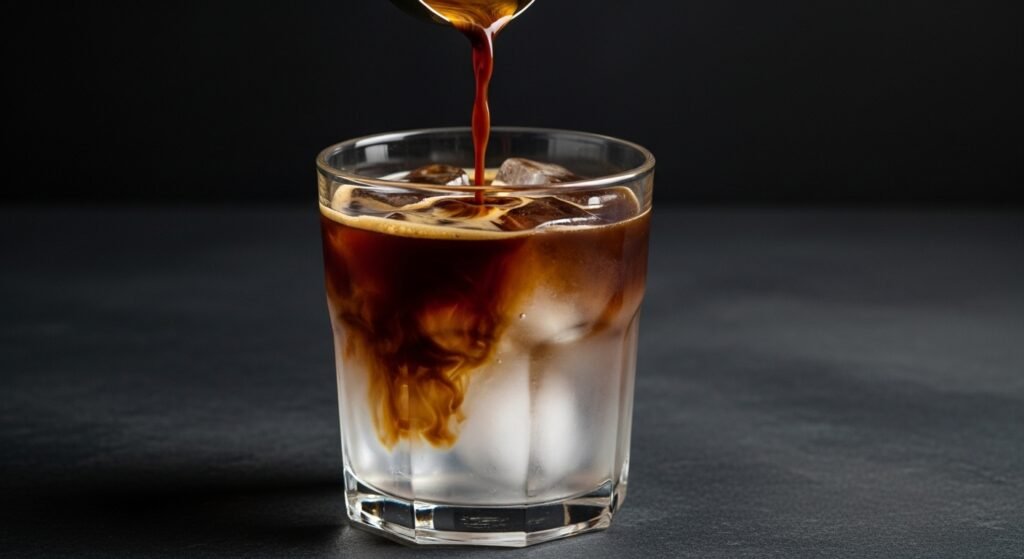
To achieve a beautiful visual layer—similar to the classic Irish coffee—you should fill a glass with large, clear ice cubes. Add the gin and tonic first, stir gently to combine, and then slowly pour the coffee over the back of a spoon. Because the coffee has a different density (especially if it’s a calibrated espresso), it will float on top of the tonic for a moment before slowly bleeding down into the glass like a dark, caffeinated cloud. This is the “Instagrammable” moment, but it’s also functional: the first few sips will be coffee-forward, gradually transitioning into a crisp, botanical finish.
The Garnish: Bridging the Olfactory Gap
The garnish is the final bridge in this botanical revolution. Since we are dealing with high-quality ingredients, the garnish should serve a purpose. A sprig of rosemary or thyme can highlight the herbal notes of the gin, while a slice of dehydrated grapefruit or a twist of lemon can accentuate the acidity of a high-altitude coffee.
One of our favorite laboratory tricks is to add a few whole coffee beans to the top of the ice. As the drink sits, the beans release a faint dry fragrance that reminds the drinker of the journey of the bean from seed to export. It turns a simple cocktail into a full-sensory experience.
Maintenance and Equipment: Keep it Crisp
Just as you must maintain your coffee equipment, you must also take care of your bar tools. Residual oils from yesterday’s espresso in your jigger can ruin the delicate botanicals of a premium gin. Ensure your glassware is sparkling clean and your ice is fresh. Old “freezer-burnt” ice will introduce off-flavors that distract from the terroir of the coffee.

Conclusion: The Future of the Caffeinated Cocktail
The Coffee Gin & Tonic is proof that the “Drink Laboratory” is a place of endless possibility. It challenges the idea that coffee is only a morning beverage or that gin is only for the evening. By respecting the science of aftertaste and the principles of extraction, we create a drink that is refreshing, complex, and sophisticated.
Whether you are hosting a summer party or looking for a new way to enjoy your carefully selected beans, the CG&T is a botanical revolution that deserves a spot in your repertoire. It is a celebration of flavor, a masterclass in balance, and a perfect example of why coffee is the most versatile ingredient in the world. So, grab your gin, chill your tonic, and pull a fresh shot—it’s time to experiment.

Kevin Smith is deeply interested in the craft and culture of coffee, with practical experience exploring specialty beans, brewing techniques, and flavor development. Over the years, he has spent time studying preparation methods, observing extraction processes, and understanding how small details influence the final cup.
Through NovaWeHub, Kevin shares clear, practical, and research-based insights designed to make coffee knowledge approachable for everyone — from beginners to enthusiasts. His focus is on simplifying complex concepts and encouraging readers to explore coffee with curiosity, confidence, and a more refined sensory awareness.