
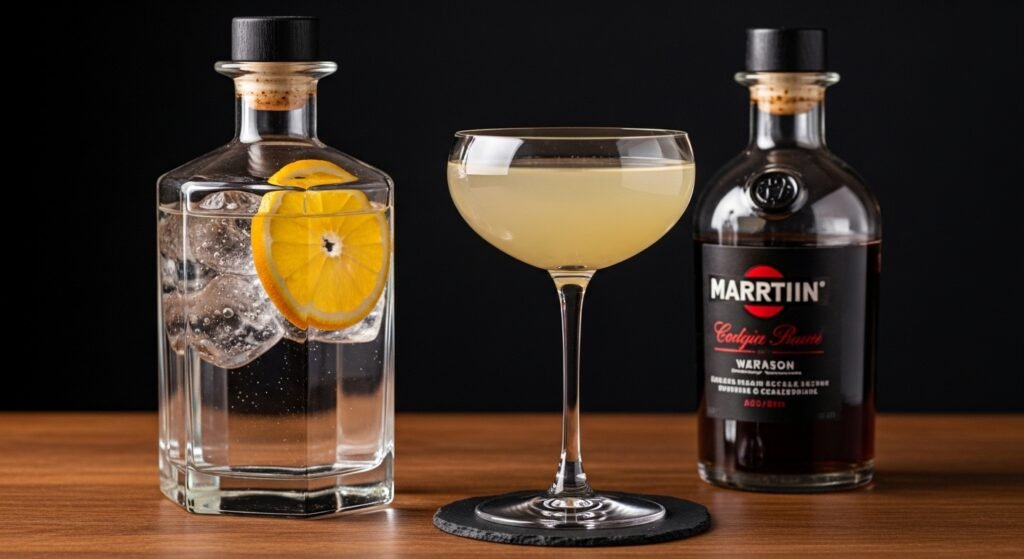
The Negroni is often cited as the ultimate bartender’s cocktail. It is a perfect equilateral triangle of equal parts: gin, sweet vermouth, and Campari. It is a drink built on the foundation of bitterness. In our “drink laboratory,” the addition of coffee isn’t just an extra ingredient—it’s a structural enhancement. A Coffee Negroni takes the existing botanical bitterness and grounds it with the earthy, chocolatey, and often fruity flavor notes of a well-sourced bean.
To master this experiment, one must move beyond the idea of coffee as a “dark roast.” We are looking for a sensory experience where the acidity of the coffee complements the citrus in the gin, while the coffee’s oils provide a heavier body and mouthfeel to stand up to the thick, sugary nature of the vermouth. This is the “evolution” of the classic Carajillo and the Espresso Martini, targeting a palate that appreciates the sophisticated acid vs. bitter balance.
The Chemistry of Triple Bitterness
In most culinary applications, bitterness is something to be masked or avoided. However, in a Negroni, we celebrate it. The Coffee Negroni features three distinct “bitter profiles” that must be balanced with laboratory precision:
-
Quinine and Gentian: Found in the Campari/Aperitif, providing a sharp, medicinal, and herbal “ping.”
-
Botanical/Woody: Found in the Gin, often highlighting juniper and roots.
-
Roasted/Organic Acids: Found in the coffee, providing a deep, resonant bitterness backed by caramelized sugars.
The key to a successful barista-standard cocktail is ensuring these three don’t clash. If you use a coffee with a harsh, smoky profile, the drink becomes “one-note.” Instead, using a high-altitude Colombian coffee or a vibrant African lot provides a citric brightness that bridges the gap between the gin and the orange garnish.
The Method: Infusion vs. Cold Brew
In the laboratory, we have two primary paths to integrate coffee into the Negroni. Each affects the aftertaste differently.
1. The Coffee-Infused Gin: This is the “purest” method. By flash-infusing whole coffee beans directly into the gin for 1 to 2 hours, you extract the aromatic oils and a subtle body without introducing the water content of brewed coffee. This maintains the traditional 1:1:1 ratio and ensures the drink remains high-proof and crystalline.
2. The Cold Brew Concentrate: If you prefer a more “coffee-forward” drink with a darker visual, a high-intensity cold brew concentrate is the answer. As we discussed in our guide to cold brew science, the lack of heat during extraction prevents the release of volatile acids that might clash with the vermouth. This results in a smoother, more “chocolatey” profile that makes the Negroni surprisingly approachable.
Precision Matters: Water and Maintenance
Even in a cocktail with alcohol and sugar, water quality is the silent architect. If your ice is made from poor-quality tap water, it will introduce “off-notes” as it melts, ruining the delicate terroir of your beans.
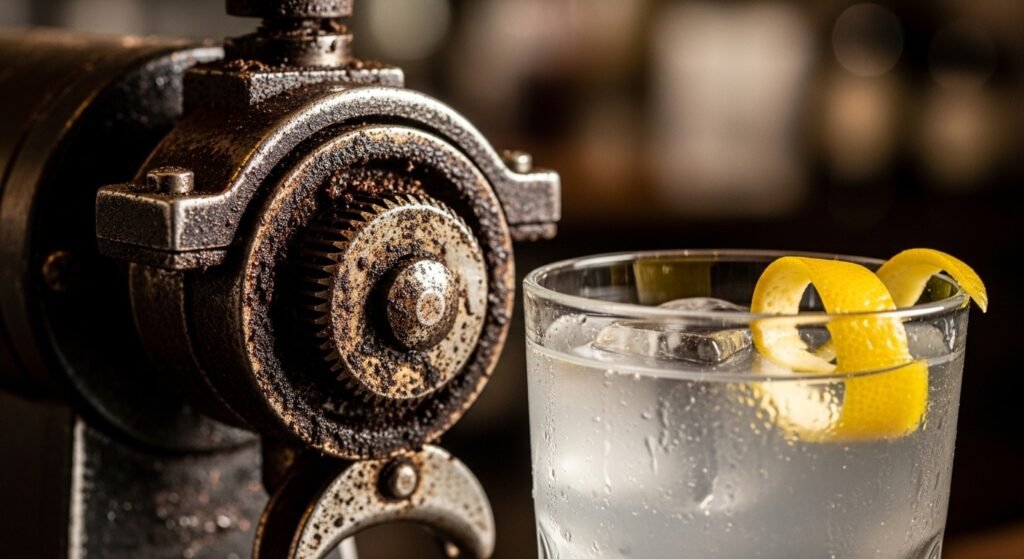
Furthermore, the maintenance of your equipment is vital. If you are using a grinder that hasn’t been cleaned, the rancid oils from previous roasts will be amplified by the gin’s alcohol, leading to a “metallic” or “dusty” finish. A professional sensory experience requires every tool, from the burrs to the shaker, to be pristine.
Choosing the Bean: The Brazilian vs. Ethiopian Debate
-
The Brazilian Choice: A natural-process coffee from Sul de Minas or Cerrado Mineiro offers notes of toasted hazelnuts and dark cocoa. This creates a “warm” Negroni that feels comforting and pairs perfectly with a heavier, more traditional sweet vermouth.
-
The African Choice: A washed coffee from Ethiopia or Kenya introduces floral aromas (like bergamot or jasmine) and a high citric acidity. This creates a “sparkling” Negroni that is incredibly refreshing and plays well with a more botanical-heavy gin.
Whichever you choose, ensure your grind size is consistent for the infusion. If you have too many “fines” in your infusion, the drink will become cloudy and the aftertaste will turn unpleasantly dry.
The Ritual: Stir, Don’t Shake
In the journey of the bean, we often talk about respecting the structure. A Negroni should be stirred, not shaken. Shaking introduces air bubbles and chips of ice that dilute the drink too quickly and cloud the liquid.
Place your 30ml Gin (infused), 30ml Campari, and 30ml Sweet Vermouth in a mixing glass with plenty of ice. Stir for about 20 seconds. This allows for “controlled dilution,” where the water quality from the ice slowly opens up the flavor notes of the coffee. Strain over a single, large clear ice cube. The body and mouthfeel should be velvety and heavy, coating the palate with layers of herbal and roasted complexity.

Conclusion: A Masterpiece of Balance
The Coffee Negroni is the ultimate expression of the “Drink Laboratory” philosophy. It takes a classic formula and adds a layer of agricultural and chemical depth that can only be achieved through specialty coffee. It is a drink that challenges the senses and rewards the curious.
By understanding the acid vs. bitter balance and being meticulous with your barista’s bench techniques, you elevate the Negroni from a simple aperitivo to a complex sensory journey. Whether you prefer the nutty warmth of Brazil or the floral height of Ethiopia, the Coffee Negroni is a testament to the fact that coffee is a botanical equal to the world’s finest spirits.

Kevin Smith is deeply interested in the craft and culture of coffee, with practical experience exploring specialty beans, brewing techniques, and flavor development. Over the years, he has spent time studying preparation methods, observing extraction processes, and understanding how small details influence the final cup.
Through NovaWeHub, Kevin shares clear, practical, and research-based insights designed to make coffee knowledge approachable for everyone — from beginners to enthusiasts. His focus is on simplifying complex concepts and encouraging readers to explore coffee with curiosity, confidence, and a more refined sensory awareness.