
If the 1980s gave birth to the Espresso Martini out of a late-night request at a London bar, the 2020s have refined it into a scientific pursuit. Once a simple mix of “vodka, sugar, and coffee,” the modern Espresso Martini is now a test of a barista’s ability to manage lipids, gases, and thermal shock. It has become the gold standard by which coffee bars and cocktail lounges are judged. But what makes one version a watery disappointment and another a velvety, decadent masterpiece?
The answer lies in the “Drink Laboratory” philosophy. We don’t just see ingredients; we see molecular interactions. The Espresso Martini is essentially an emulsion—a delicate balance of water-based coffee, alcohol, and the oils found in the espresso’s crema. To master it, you must apply the same rigors of water quality and espresso calibration that you use for your morning brew. In this guide, we will explore the evolution of this cocktail, the physics of its iconic foam, and how to style it for the ultimate sensory impact.

The Physics of the Foam: It’s All About the Crema
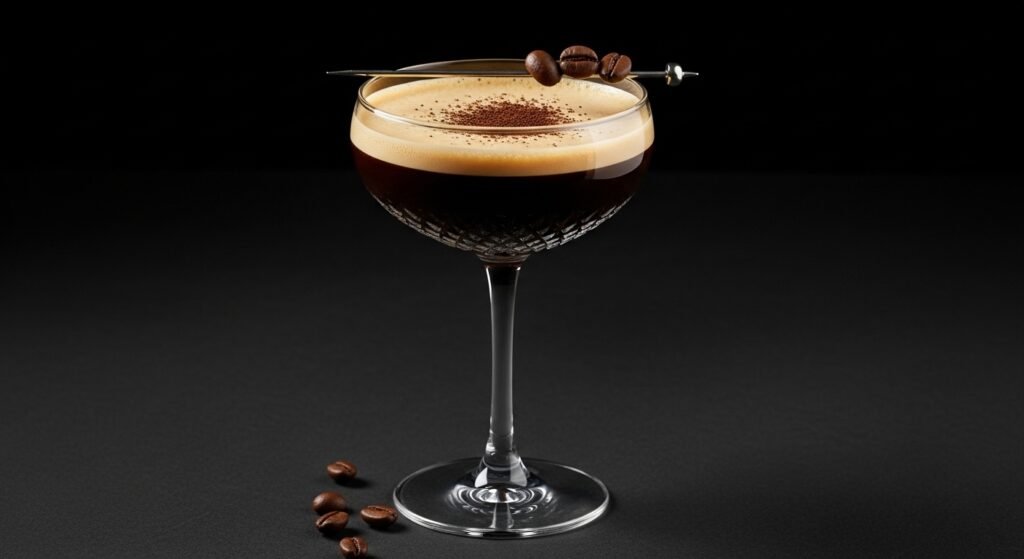
The most defining characteristic of a great Espresso Martini is the thick, persistent layer of foam (the “head”) that sits atop the dark liquid. This isn’t just bubbles; it is a stable protein-and-lipid structure. The secret to this foam is the quality of the espresso.
When you pull a fresh shot of espresso, the 9 bars of pressure force CO2 into the liquid, creating crema. These oils and gases are the building blocks of the cocktail’s foam. If you use “old” espresso or a cold brew concentrate that hasn’t been pressurized, you will struggle to achieve that “guinness-like” head. As we learned in our study of milk chemistry and microfoam, proteins need to be agitated to trap air. When you shake the cocktail vigorously with ice, you are “stretching” those espresso proteins, creating a stable foam that should be able to support three coffee beans on its surface without them sinking.
The Temperature Paradox: Dealing with Thermal Shock
One of the biggest mistakes in the laboratory is adding a boiling-hot espresso shot directly onto ice. This causes “thermal shock,” which can lead to excessive dilution and a “muddy” aftertaste. However, you cannot wait too long, or the crema will dissipate (the shot “dies”).
The professional solution is to pull the shot directly into a small chilled vessel or to use a “shaking” technique that prioritizes speed. By chilling the vodka and coffee liqueur beforehand, you ensure that the hot espresso is immediately brought down to a temperature that preserves its flavor notes. This preservation is what allows the bright acidity of a high-altitude Colombian bean or the spicy depths of an Asian profile to cut through the sweetness of the liqueur.
Choosing the Spirit: Beyond Basic Vodka
While vodka is the traditional choice because of its neutral profile, the “evolution” of the drink has seen a shift toward more characterful spirits.
-
Aged Rum: Using a dark rum brings notes of molasses and spice that complement Brazilian coffee regions with their natural chocolate and nut profiles.
-
Tequila/Mezcal: This creates an “Espresso Martuila,” where the earthy, smoky notes of the agave spirit play against the acid vs. bitter balance of the coffee.
-
Gin: As we explored in the Coffee Gin & Tonic, the botanicals in gin can highlight the floral notes of an Ethiopian heirloom.
Regardless of the spirit, the golden ratio of the cocktail must be respected. A standard “Lab Recipe” is 50ml Spirit, 25ml Fresh Espresso, and 15ml Coffee Liqueur (adjusting sugar syrup based on the roast profile of the coffee).

Equipment and Maintenance: The Invisible Saboteurs
In our guide to maintenance matters, we discussed how dirty equipment ruins flavor. In the Espresso Martini, this is amplified. If your espresso machine’s group head is dirty, the rancid oils will be front and center in the cocktail. Similarly, if your cocktail shaker isn’t properly cleaned, the “ghosts” of previous drinks will haunt your coffee.
Water quality also matters for the ice. “Cloudy” ice is full of impurities and trapped air, which causes it to melt faster and dilute the drink unevenly. For a professional sensory experience, use “clear ice”—large cubes that chill the drink without turning it into a watery mess. This maintains the body and mouthfeel that makes the Espresso Martini feel like a luxurious dessert.
Styling and Sensory Impact
The final stage of the evolution is the “Style.” Presentation is a psychological primer; it tells the brain what to expect. A perfectly poured Espresso Martini should have a sharp line between the black body and the tan foam.
-
The Garnish: The traditional three beans represent health, wealth, and happiness. But in the modern lab, we might use a dusting of fine coffee grounds (using your precision grinder) to add an immediate aromatic punch.
-
The Glassware: A chilled coupe glass or a classic martini glass is essential. The wide surface area allows the aroma of the coffee to reach your nose before you take a sip, engaging your retro-nasal olfaction.
Conclusion: The Ultimate Caffeinated Canvas
The Espresso Martini is no longer just a party drink; it is a canvas for the entire journey of the bean from seed to export. It combines the agricultural excellence of the farmer with the technical precision of the barista and the creative flair of the mixologist.
By understanding the science of the foam, the impact of thermal shock, and the importance of spirit selection, you elevate this drink from a simple stimulant to a sophisticated masterpiece. It is the perfect conclusion to an evening and the ultimate proof that coffee’s versatility knows no bounds. Whether you prefer it classic or evolved, remember: the secret is always in the espresso.

Kevin Smith is deeply interested in the craft and culture of coffee, with practical experience exploring specialty beans, brewing techniques, and flavor development. Over the years, he has spent time studying preparation methods, observing extraction processes, and understanding how small details influence the final cup.
Through NovaWeHub, Kevin shares clear, practical, and research-based insights designed to make coffee knowledge approachable for everyone — from beginners to enthusiasts. His focus is on simplifying complex concepts and encouraging readers to explore coffee with curiosity, confidence, and a more refined sensory awareness.