
For decades, the image of Juan Valdez and his mule, Conchita, has been synonymous with quality coffee. But beyond the clever marketing of the mid-20th century lies a biological and geographical reality that makes Colombia one of the most remarkable coffee-growing nations on Earth. While nations like Brazil lead in volume, and countries like Ethiopia lead in ancient genetic history, Colombia has established itself as the “Gold Standard” for washed Arabica. It is a country where the terrain is so rugged and the microclimates so diverse that the coffee takes on a character that is both balanced and surprisingly complex.
What makes Colombian coffee a global benchmark is not just the plant, but the verticality of its landscape. The Andes Mountains split into three distinct cordilleras (ranges) as they run through Colombia, creating an endless labyrinth of valleys and high-altitude slopes. This unique topography allows for coffee to be harvested somewhere in the country almost every day of the year. In this deep dive into “Origin and Earth,” we will explore the specific factors of Colombian terroir, the rigorous quality standards of its producers, and why it remains a favorite for both the traditional drinker and the modern specialty explorer.
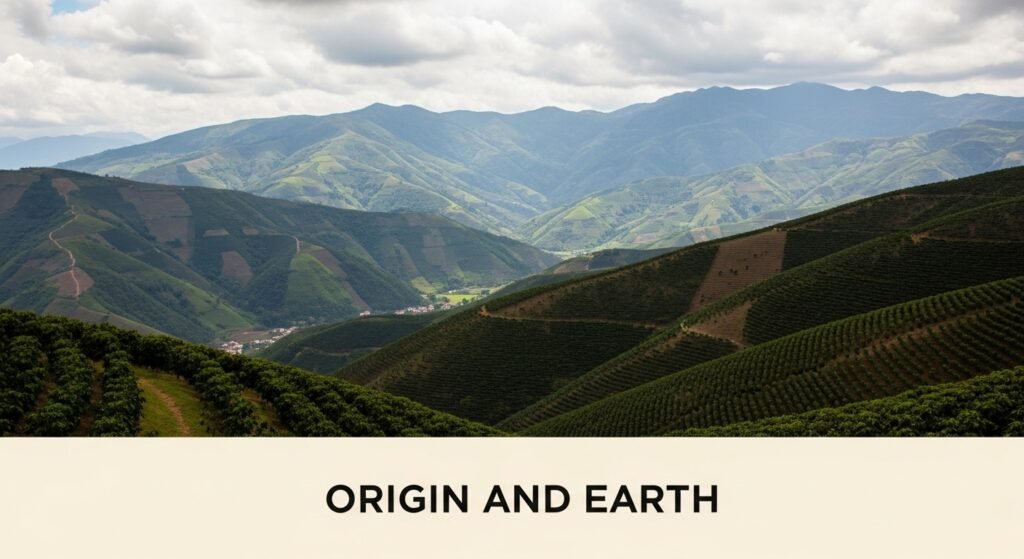
The Vertical Terroir: Three Cordilleras and Infinite Microclimates
To understand Colombian coffee, you must understand the Andes. Unlike the flat plateaus often found in Brazilian coffee regions, Colombia’s coffee is grown on incredibly steep slopes. This verticality creates “thermal floors.” A farm located at 1,200 meters will produce a radically different flavor profile than a farm just a few kilometers away at 1,900 meters. As we explored in the secrets of high altitude and mountain coffee, these higher elevations slow down the maturation of the cherry, concentrating the sugars and organic acids.
Colombia is also blessed with two harvest seasons: the cosecha (main harvest) and the mitaca (secondary harvest). This is due to its proximity to the equator and the complex rain patterns created by the mountains. For the consumer, this means that Colombian coffee is always “fresh.” While other origins might suffer from “past crop” flavors toward the end of their cycle, Colombia’s diverse regions—from the northern hills of Sierra Nevada to the southern peaks of Huila and Nariño—ensure a constant supply of vibrant, high-quality beans.
The Classic Colombian Profile: Balance and Versatility
The world fell in love with Colombian coffee because of its balance. A classic Colombian cup is the perfect middle ground between the heavy sweetness of a Natural process coffee and the sharp, tea-like acidity of African profiles. It typically features a medium body, a clean caramel sweetness, and a bright, citrusy acidity that professional tasters describe as “sparkling.“
This versatility makes it the ultimate “all-rounder” on the barista’s bench. Whether you are using it as the base for a modern Carajillo or brewing it as a delicate pour-over, Colombian coffee adapts. Its acid vs. bitter balance is so harmonious that it is often used as the benchmark for “standard” specialty coffee. When you identify flavor notes in a Colombian bean, you are likely to find red apple, brown sugar, and a subtle nuttiness—flavors that are universally enjoyed and easy for beginners to recognize.
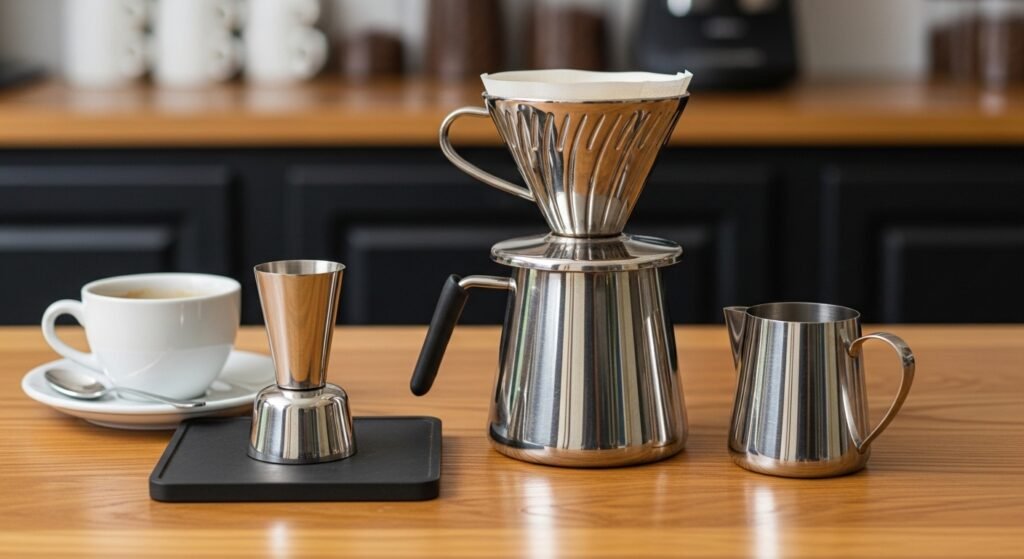
Quality Control and the FNC: A National Priority
One of the reasons Colombian coffee is so consistent is the Federación Nacional de Cafeteros (FNC). Founded in 1927, the FNC is one of the world’s most successful rural NGOs. They have created a system where even the smallest family farm has access to technical assistance, price guarantees, and a centralized quality control system. This ensures that the journey of the bean from seed to export is carefully monitored.
The FNC also runs the Cenicafé research center, which has developed resilient varieties like “Castillo” and “Colombia” that can withstand leaf rust while maintaining high cup quality. This scientific approach to farming means that Colombian producers can focus on the nuances of water quality during processing and the precision of their fermentation times. For the home enthusiast, this means that even a “standard” bag of Colombian coffee has undergone more rigorous testing than many other origins, guaranteeing a clean and reliable aftertaste.
Southern Stars: Huila, Cauca, and Nariño
While the “Coffee Axis” (Eje Cafetero) is the traditional heart of production, the southern departments of Huila, Cauca, and Nariño are the darlings of the specialty coffee world today. These regions feature even higher altitudes and more dramatic volcanic landscapes. The coffee from Huila, in particular, is famous for its intense fruitiness and complex acidity, often winning “Cup of Excellence” awards.
In these southern regions, farmers are experimenting more with cold brew extractions and anaerobic fermentations to highlight their unique terroir. The result is a Colombian coffee that can sometimes taste more like a Kenyan or an Ethiopian, breaking the stereotype of Colombia being “just a balanced coffee.” If you are hosting a coffee cupping at home, including a coffee from Huila alongside a traditional Antioquia lot is a fantastic way to demonstrate how geography can change the flavor within the same country.

The Importance of Hand-Picking
Finally, we must mention the human element. Because of the steep Andes slopes, mechanical harvesting is impossible in most of Colombia. Every single cherry must be picked by hand. This allows for “selective harvesting,” where pickers only take the perfectly ripe red cherries and leave the green ones on the branch for another day.
This manual labor is the primary reason why Colombian coffee has such a clean and sweet profile. There is no machine that can match the eye of a skilled picker. This commitment to quality, combined with the proper maintenance of equipment at the mills, ensures that the raw potential of the Colombian terroir is preserved until it reaches your calibrated espresso machine. It is a labor of love that involves millions of people and defines the culture of an entire nation.
Conclusion: The Reliable Masterpiece
Colombia has earned its reputation as a world standard through a combination of geological luck and human discipline. It is the origin that offers something for everyone: from the comforting morning mug to the high-end competition coffee. By understanding the cordilleras, the climate, and the culture of the Colombian farmer, you gain a deeper appreciation for every sip.
Whether you are a barista looking for the perfect espresso extraction or a casual drinker exploring new origins, Colombia remains the heart of the coffee world. It is a place where the mountains and the people work in harmony to produce a bean that is, quite simply, a masterpiece. Next time you see “Product of Colombia” on a bag, remember the vertical slopes, the volcanic soil, and the centuries of tradition that went into that single cup.

Kevin Smith is deeply interested in the craft and culture of coffee, with practical experience exploring specialty beans, brewing techniques, and flavor development. Over the years, he has spent time studying preparation methods, observing extraction processes, and understanding how small details influence the final cup.
Through NovaWeHub, Kevin shares clear, practical, and research-based insights designed to make coffee knowledge approachable for everyone — from beginners to enthusiasts. His focus is on simplifying complex concepts and encouraging readers to explore coffee with curiosity, confidence, and a more refined sensory awareness.