
In the world of coffee-based cocktails, the Espresso Martini has long held the crown. However, a new challenger has emerged from the vibrant bar scenes of Mexico and Spain to take the lead in sophistication: the Carajillo. While its origins are humble—traditionally a simple mix of coffee and brandy or rum—the modern iteration has evolved into a luxurious, frothy, and aromatic experience. The secret lies in the marriage between a perfectly extracted espresso and Licor 43, a Spanish liqueur infused with 43 secret botanicals including vanilla, citrus, and spices.
The Carajillo is a masterclass in balance. It combines the intense, roasted bitterness of coffee with the botanical sweetness of the liqueur. In the “drink laboratory,” we don’t just stir these ingredients; we shake them to create a chemical transformation. The result is a drink with a thick, velvety foam and a temperature contrast that makes it the perfect “digestif.” To master this cocktail, you must apply the same precision you use on the barista’s bench, ensuring that every element is calibrated for maximum flavor.
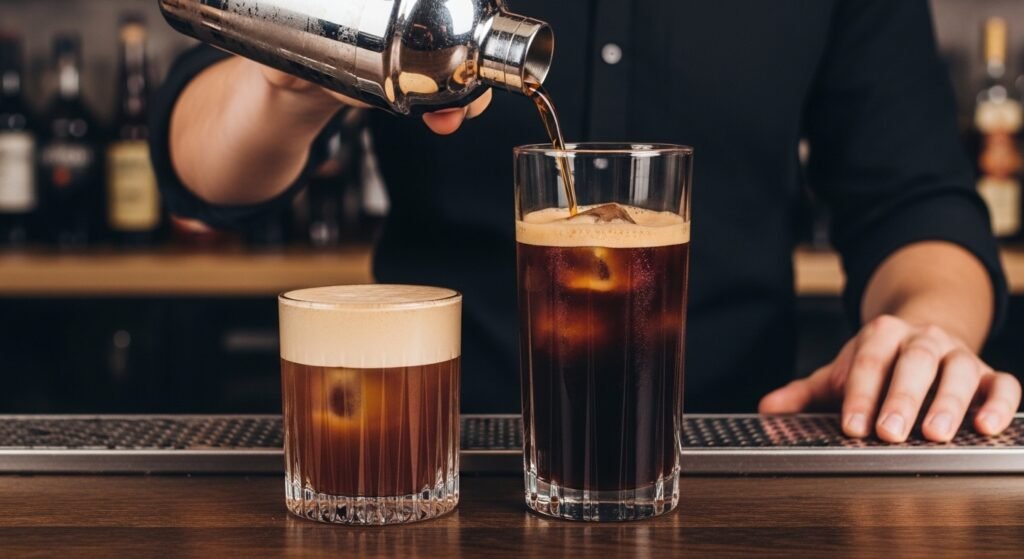
The Anatomy of the Perfect Shot
The heart of a great Carajillo is the espresso. Because Licor 43 is quite sweet and viscous, you need an espresso that provides a strong, acidic, and bitter counterpoint. This is the moment to use those beans you’ve carefully selected from diverse Brazilian coffee regions, particularly those with notes of dark chocolate or toasted nuts.
The espresso must be fresh. If you use “dead” espresso or cold brew concentrate, you will lose the vital oils that help create the cocktail’s signature foam. When you pull your shot, pay attention to the body and mouthfeel; a syrupy, well-extracted espresso will integrate much better with the liqueur during the shaking process. If your espresso is too thin, the cocktail will feel watery and lose its luxurious texture.
The Shake: Emulsification and Temperature
Mixing a Carajillo is an exercise in physics. You aren’t just chilling the drink; you are emulsifying the oils of the coffee with the sugars of the liqueur. The standard recipe is a 1:1 ratio: 50ml of Licor 43 and 50ml (a double shot) of hot espresso.
Fill a cocktail shaker with large, solid ice cubes. High-quality ice is essential; if the ice is too small, it will melt too quickly and dilute the drink before the foam has a chance to form. Add the liqueur first, then the hot espresso. This order is a common debate in the laboratory, but adding the hot liquid last ensures the ice doesn’t melt prematurely. Shake vigorously for at least 15 to 20 seconds. The “hard shake” is what creates the tiny air bubbles that result in a thick, meringue-like head on the drink.
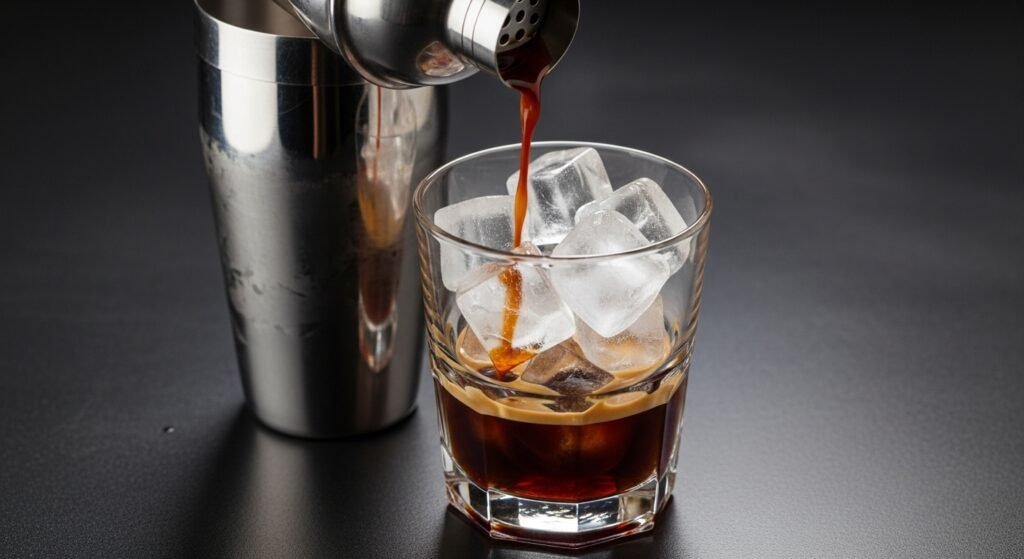
Presentation and Glassware
A sophisticated drink deserves a sophisticated vessel. The modern Carajillo is typically served in a “rocks” glass (lowball) over a single large ice sphere or cube. This presentation isn’t just for aesthetics; a large ice cube melts slowly, allowing you to enjoy the evolving flavor notes of the vanilla and coffee without the drink becoming overly diluted.
As you strain the mixture from the shaker into the glass, you should see a clear separation: a deep, dark amber liquid at the bottom and a dense, golden foam at the top. This visual contrast is reminiscent of a perfectly poured classic Irish coffee, highlighting the layers of the drink. To finish, many bartenders express a twist of orange peel over the glass, adding a bright citric aroma that cuts through the sweetness of the vanilla.
The Science of Flavor Pairing
Why does the Carajillo work so well? It comes down to the acid vs. bitter balance. The bitterness of the coffee prevents the liqueur from being cloying, while the vanilla and citrus notes of the Licor 43 highlight the hidden fruitiness of the coffee bean.
If you want to take your laboratory experiment further, try using beans from different altitudes. A high-altitude Ethiopian coffee will bring a floral, citrusy edge to the Carajillo, making it taste lighter and more botanical. Conversely, a medium-roast Brazilian bean will make the drink taste like a liquid dessert—reminiscent of vanilla custard and roasted cocoa.

Conclusion: A New Classic
The Modern Carajillo is a testament to the endless creativity of the coffee world. It respects the journey of the bean while introducing it to new, exciting companions. Whether you are serving it at a dinner party or enjoying it as a weekend treat, the Carajillo offers a level of complexity and elegance that few other two-ingredient drinks can match.
By mastering the shake, the temperature, and the choice of bean, you elevate a simple mixture into a professional-grade cocktail. It is a reminder that the “Coffee Laboratory” isn’t limited to the morning; it is a space for exploration that lasts well into the evening. Grab your shaker, pull a fresh shot, and discover why the Carajillo is the modern world’s favorite way to drink coffee after dark.

Kevin Smith is deeply interested in the craft and culture of coffee, with practical experience exploring specialty beans, brewing techniques, and flavor development. Over the years, he has spent time studying preparation methods, observing extraction processes, and understanding how small details influence the final cup.
Through NovaWeHub, Kevin shares clear, practical, and research-based insights designed to make coffee knowledge approachable for everyone — from beginners to enthusiasts. His focus is on simplifying complex concepts and encouraging readers to explore coffee with curiosity, confidence, and a more refined sensory awareness.