
Brewing coffee is not only about flavor—it’s also a careful exercise in chemistry. Cold brew, for example, relies on extended steeping rather than heat to extract sugars and aromatic compounds from the beans.
Once the coffee is prepared, techniques from the “Drink Laboratory” transform it further. One of the most striking innovations in this space is Nitro Cold Brew, where infused nitrogen creates a creamy texture and a visually captivating cascading effect, elevating the sensory experience while preserving the smooth, rich flavors of the original brew.
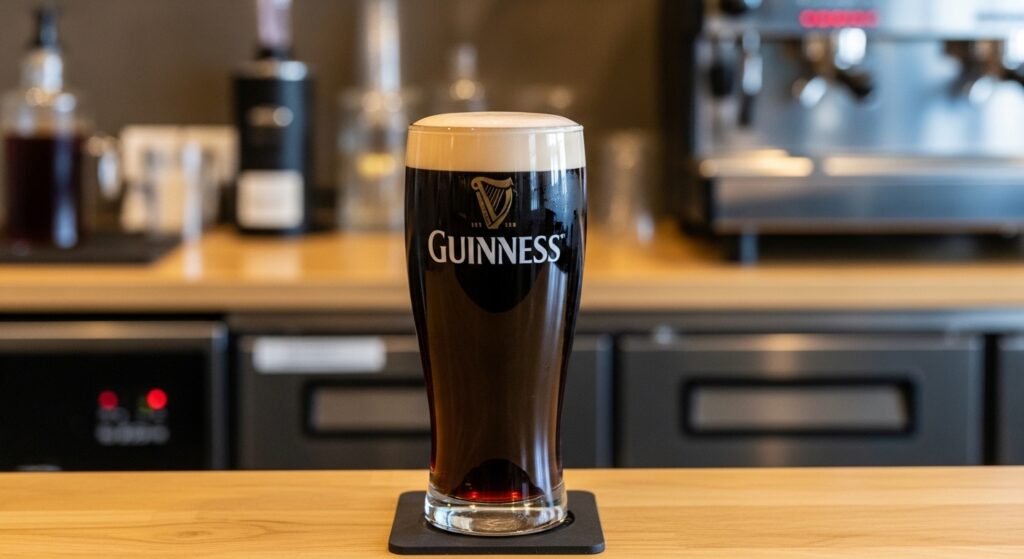
By infusing cold brew coffee with pure nitrogen ($N_2$) gas under high pressure, we create a beverage that challenges our sensory expectations. It looks like a Guinness, feels like silk, and tastes sweeter than standard coffee, even without added sugar. This phenomenon is a masterclass in gas chromatography and fluid dynamics. To master Nitro, a barista must understand why nitrogen behaves differently than carbon dioxide ($CO_2$) and how to manage the “Cascade Effect” on the barista’s bench.
The Physics of Nitrogen vs. Carbon Dioxide
In the beverage world, $CO_2$ is the standard for carbonation. But in the “Sensory Laboratory,” we avoid $CO_2$ for coffee because it creates carbonic acid when dissolved in water, which would ruin the delicate acid balance of the coffee.
-
Solubility: Nitrogen is much less soluble in water than $CO_2$. It requires higher pressure to force it into the liquid.
-
Bubble Size: Because $N_2$ doesn’t dissolve easily, it forms “micro-bubbles” (roughly 10 to 100 times smaller than $CO_2$ bubbles).
-
The Result: These micro-bubbles do not pop aggressively on the tongue. Instead, they provide a creamy, thick mouthfeel that coats the palate, masking any residual bitterness and highlighting the coffee’s natural sweetness.
The Cascade Effect: An Exercise in Fluid Dynamics
When Nitro Cold Brew is poured through a restrictor plate (a small disc with tiny holes), the high pressure drops instantly. This causes the dissolved nitrogen to come out of solution, creating the famous “Cascade.”
-
The Physics of the Sink: While we perceive the bubbles as “falling,” they are actually rising. In the center of the glass, the liquid moves downward because the bubbles near the glass walls are slowed down by friction. This creates a circular convection current.
-
The “Head” of the Drink: As the bubbles eventually settle at the top, they form a thick, persistent foam. In the “Sensory Laboratory,” we analyze this foam as a “Flavor Trap.” The foam concentrate the volatile aromatic compounds, delivering a powerful olfactory hit with the first sip.
Sensory Perception: The “Sweetness” Illusion
One of the most frequent questions on the barista’s bench is why Nitro tastes sweeter than regular cold brew. The answer lies in Texture-Taste Interference.
-
Suppression of Bitterness: The creamy micro-foam coats the bitter-sensitive taste buds on the back of the tongue. By physically blocking these receptors, the brain perceives less bitterness.
-
Increased Surface Area: The micro-bubbles increase the surface area of the liquid as it enters the mouth, allowing more aromas to reach the olfactory bulb.
-
The Temperature Factor: Nitro is typically served very cold, but the creamy texture prevents the “numbing” effect that ice-cold water usually has on the tongue, allowing the aftertaste to linger longer.
Technical Maintenance: Nitrogen Purity and Pressure
Achieving the perfect Nitro pour requires strict maintenance and calibration.
-
Gas Purity: In the lab, we use food-grade Nitrogen (99.9% pure). Any oxygen contamination will cause the coffee to oxidize rapidly, resulting in a stale, “cardboard” aftertaste.
-
The Infusion Pressure: For a standard cold brew, a pressure of 35-45 PSI is required to achieve the necessary dissolution. If the pressure is too low, the drink will be “flat”; if too high, the pour will be overly “volcano-like” and messy.
-
Temperature Control: The coffee must be kept at $2^\circ C – 4^\circ C$. Warm coffee cannot hold nitrogen, meaning you lose the cascade and the texture immediately.
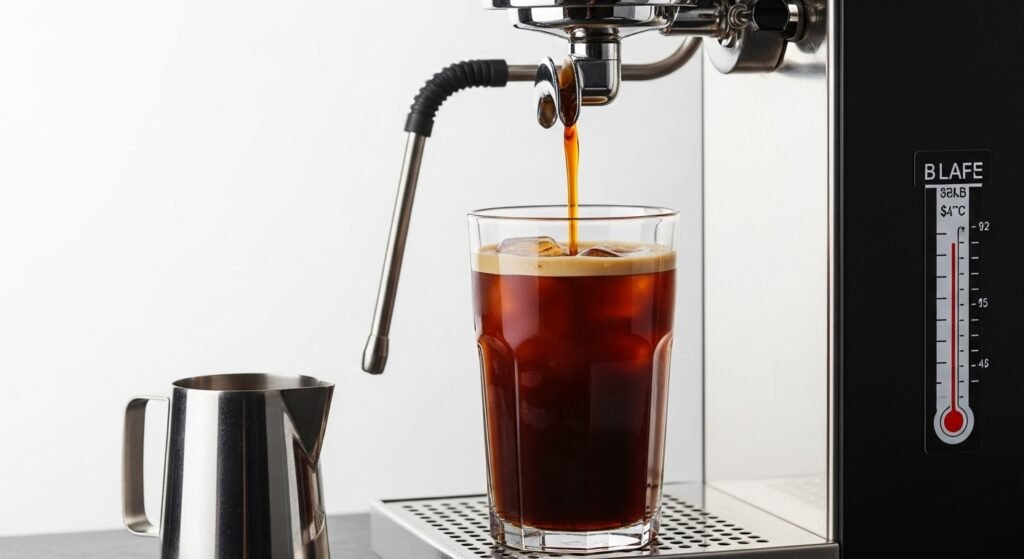
Laboratory Recipe: The Nitro-Infused “Mountain” Punch
To celebrate the end of Cycle 23, we offer a laboratory-grade Nitro cocktail:
-
The Base: A 1:10 Cold Brew made with high-altitude Kenyan beans.
-
The Modifier: 20ml of Elderflower syrup to complement the Kenyan acidity.
-
The Process: Charge the mixture in a Nitro-keg with $N_2$. Let it sit for 24 hours to ensure “Molecular Integration.”
-
The Pour: Use a stout tap for maximum aeration.
-
The Sensory Goal: A drink that combines the “sparkling” acidity of the mountains with the “silky” texture of the laboratory.

Conclusion: Engineering the Future of Cold Coffee
Nitro Cold Brew is the perfect intersection of physics and flavor. It proves that the “Sensory Laboratory” is not just about the bean, but about the delivery system. By manipulating gas dissolution, we can alter the mouthfeel and sweetness of coffee without adding a single calorie.
As we conclude the 92nd article and the 23rd cycle, we see how far we’ve come. From calibrating espresso to engineering the “Cascade Effect,” the journey is one of constant scientific discovery. Respect the water quality, maintain your nitro lines, and always look for the physics behind the pour. The perfect aftertaste is often a matter of how the bubbles behave.

Kevin Smith is deeply interested in the craft and culture of coffee, with practical experience exploring specialty beans, brewing techniques, and flavor development. Over the years, he has spent time studying preparation methods, observing extraction processes, and understanding how small details influence the final cup.
Through NovaWeHub, Kevin shares clear, practical, and research-based insights designed to make coffee knowledge approachable for everyone — from beginners to enthusiasts. His focus is on simplifying complex concepts and encouraging readers to explore coffee with curiosity, confidence, and a more refined sensory awareness.