
Coffee is widely appreciated for its aromas and flavor textures, but for many professionals and academics, its value goes beyond taste. It functions as a nootropic, a substance that can enhance cognitive abilities such as focus, memory, creativity, and motivation in healthy individuals.
This functional aspect of coffee explains why it has become an essential part of daily routines around the world. Each cup not only delivers sensory enjoyment but also provides a measurable boost to mental performance, blending pleasure with productivity in a single beverage.
The main driver of this cognitive enhancement is, of course, caffeine. But as we have seen in our previous study of coffee and sleep, caffeine is a blunt instrument. It blocks adenosine receptors to prevent tiredness, but it can also trigger the “fight or flight” response, leading to jitters, anxiety, and a loss of fine motor control—the nightmare of any barista attempting intricate latte art. To solve this, the “Sensory Laboratory” looks toward the “L-Theanine Bridge,” a synergistic relationship that balances the brain’s neurochemistry.
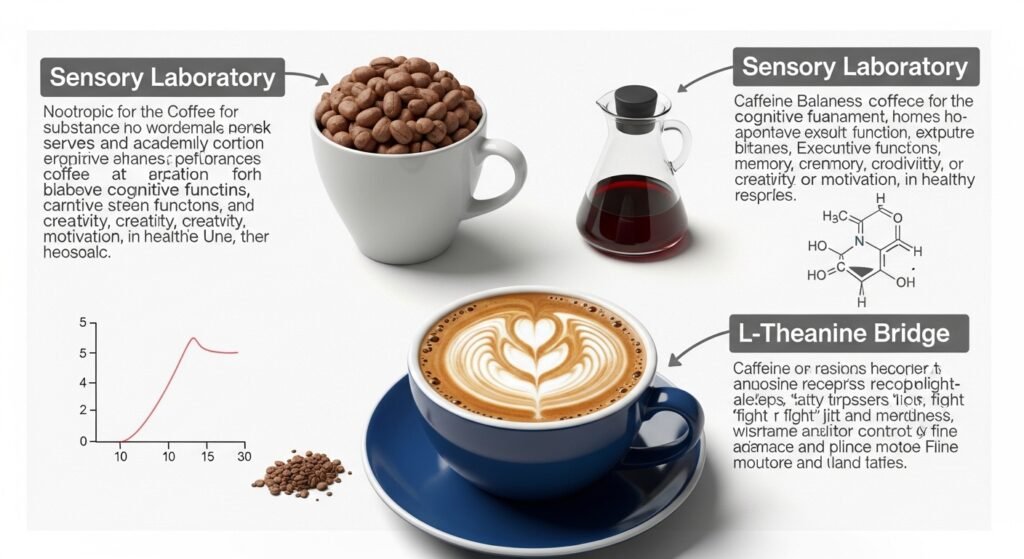
The Neurochemistry of Focus: Dopamine and Glutamate
When you consume a high-quality espresso, several things happen in your brain simultaneously.
-
Dopamine Release: By blocking adenosine, caffeine indirectly increases the signaling of dopamine, the neurotransmitter associated with reward and motivation. This is why the first cup of the day often brings a sense of euphoria and “can-do” attitude.
-
Glutamate Signaling: Caffeine increases the firing rate of neurons by enhancing glutamate activity. Glutamate is the brain’s primary excitatory neurotransmitter, essential for learning and memory.
-
Acetylcholine Preservation: Some studies suggest that coffee compounds may inhibit the breakdown of acetylcholine, a neurotransmitter critical for focus and attention to detail.
In the lab, we observe that this neurochemical cocktail creates a state of “High Arousal.” For simple tasks (like cleaning the barista’s bench), this is perfect. But for complex tasks requiring creative “flow,” high arousal can be counterproductive.
The L-Theanine Bridge: Balancing the Jitters
L-Theanine is an amino acid found primarily in tea leaves, but it has become a staple of “biochemical coffee stacking” in the “Sensory Laboratory.”
-
The Physics of Sinergy: L-Theanine promotes relaxation without sedation by increasing Alpha brain waves. When combined with caffeine, it creates a “Steady State” of focus.
-
The “Smart Coffee” Effect: Caffeine provides the energy (the engine), while L-Theanine provides the calm focus (the steering wheel). This combination allows for heightened alertness without the increased blood pressure and heart rate typically associated with high-dose caffeine.
In our laboratory trials, we find that drinkers who pair their high-altitude African coffee with a source of L-Theanine report a more “sustained” focus that lacks the typical 2:00 PM crash.
Chlorogenic Acids: The Brain’s Antioxidant Shield
While caffeine gets all the attention, the “Sensory Laboratory” is increasingly interested in Chlorogenic Acids (CGAs). These are polyphenols found in high concentrations in coffee.
From a brain performance perspective, CGAs act as neuroprotective agents. They reduce oxidative stress in the brain and have been linked to improved mood and cognitive processing speed. However, CGAs are heat-sensitive.
-
The Barista Variable: In the lab, we find that light-to-medium roasts preserve significantly more CGAs than dark roasts. If your goal is “Brain Performance,” you should choose a light-roasted Kenyan or Ethiopian bean brewed with a filter method to maximize these neuroprotective compounds.
The Psychology of the Ritual: Placebo and Performance
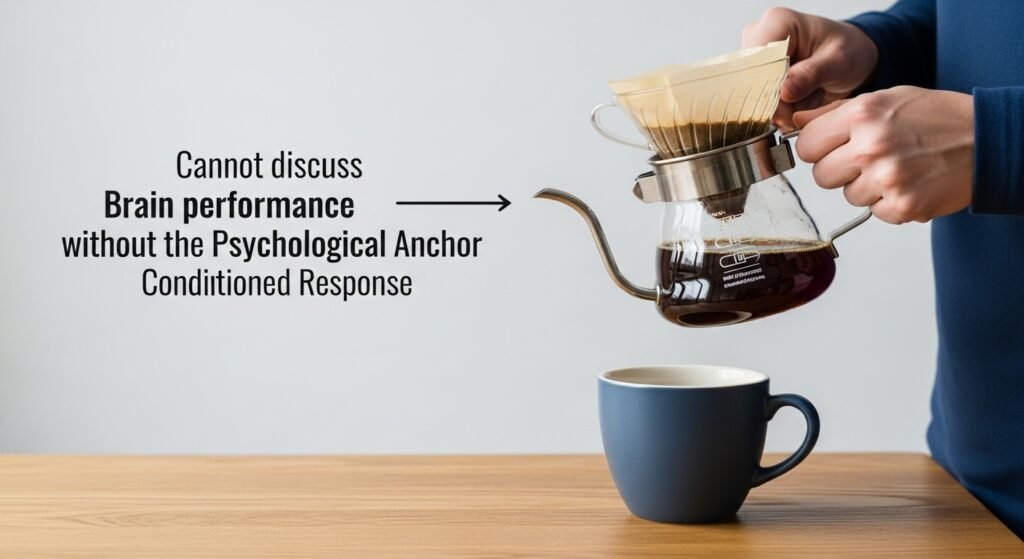
We cannot discuss brain performance without acknowledging the Psychological Anchor. In our “Sensory Laboratory,” the act of brewing coffee—the smell of the freshly ground beans, the sound of the pour-over, the warmth of the mug—triggers a “Conditioned Response.”
Your brain begins to release dopamine before the caffeine even hits your bloodstream. This ritualistic aspect creates a mental “workspace.” For the professional, the maintenance of this ritual is just as important as the chemical intake. It signals to the brain that it is time to transition from “rest” to “performance.”
Optimizing the Nootropic Cup: Laboratory Guidelines
To turn your coffee into a peak performance tool, the “Sensory Laboratory” recommends the following protocol on the barista’s bench:
-
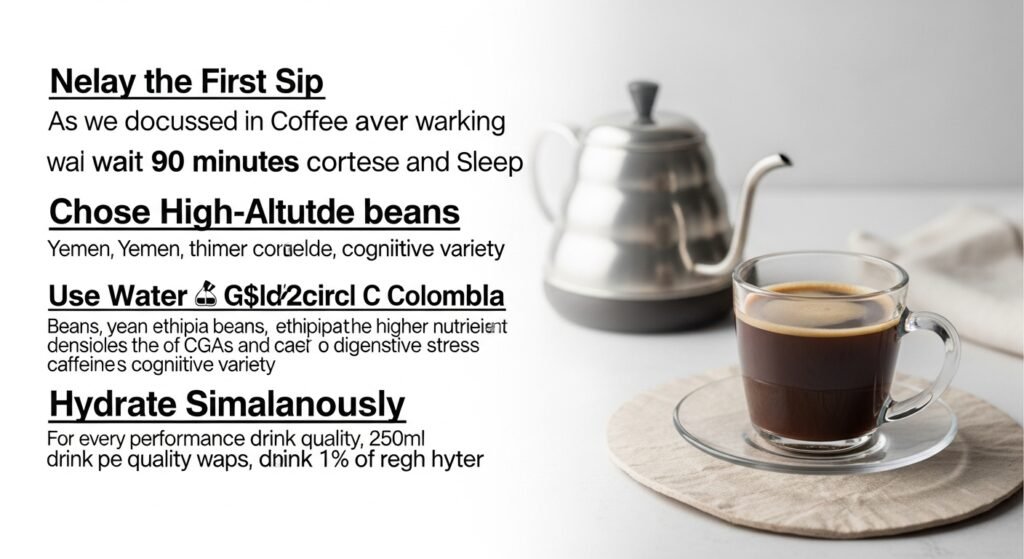
Delay the First Sip: As we discussed in Coffee and Sleep, wait 90 minutes after waking to allow your natural cortisol to clear.
-
Choose High-Altitude Beans: Beans from Yemen, Ethiopia, or Colombia tend to have higher nutrient density and more complex acid profiles, which support cognitive variety.
-
Control the Temperature: Use water at $92^\circ C$. This is the “Goldilocks” zone—hot enough to extract the CGAs and caffeine, but cool enough to avoid the bitter tannins that can cause digestive stress (which distracts from focus).
-
Hydrate Simultaneously: For every cup of coffee, drink 250ml of high-quality water. Brain performance drops significantly with even 1% dehydration.
Conclusion: The Cognition Laboratory
Coffee is the world’s most accessible nootropic, but like any lab experiment, it requires precise calibration. By understanding the interaction between caffeine and adenosine, the benefits of CGAs, and the balancing power of L-Theanine, we can use coffee to reach new heights of mental clarity.
In the “Sensory Laboratory,” we believe that the best cup of coffee is one that tastes incredible and makes you feel even better. Whether you are calibrating an espresso for a busy morning or slowly enjoying a V60 during a deep-work session, remember that you are performing a biological upgrade. Respect the chemistry, refine the grind, and let your brain reap the rewards of the perfect extraction.

Kevin Smith is deeply interested in the craft and culture of coffee, with practical experience exploring specialty beans, brewing techniques, and flavor development. Over the years, he has spent time studying preparation methods, observing extraction processes, and understanding how small details influence the final cup.
Through NovaWeHub, Kevin shares clear, practical, and research-based insights designed to make coffee knowledge approachable for everyone — from beginners to enthusiasts. His focus is on simplifying complex concepts and encouraging readers to explore coffee with curiosity, confidence, and a more refined sensory awareness.