
In the quest for the perfect cup, we often focus on the most visible variables: the origin of the beans, the water quality, and the brewing method. However, in our “sensory laboratory,” we have identified a silent hero—or a subtle villain—that dictates the success of every extraction: the grinder. Grinding is the process of breaking down the coffee bean to increase its surface area, allowing water to act as a solvent and extract the flavors we love.
But not all grinds are created equal. The difference between a world-class sensory experience and a muddy, disappointing cup usually comes down to one word: Consistency. If your grind is inconsistent, with a mix of large chunks and fine dust, you are essentially brewing two different coffees at the same time. To master the barista’s bench, you must understand the physics of particle size distribution and why a high-quality grinder is the most important investment in your laboratory.
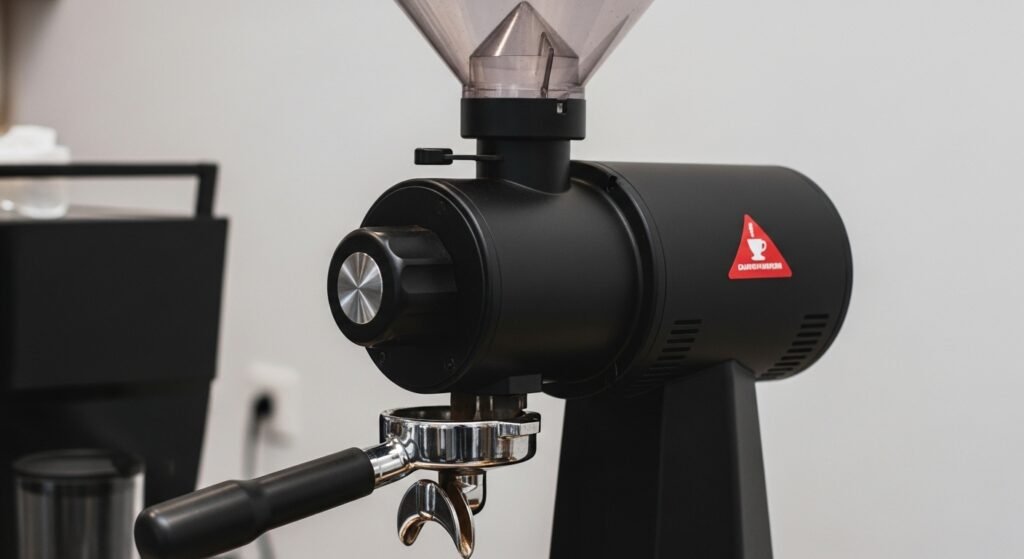
Particle Size Distribution: The Battle of Fines and Boulders
When you grind coffee, the beans don’t just break into perfectly uniform cubes. They shatter into a spectrum of sizes. In the lab, we measure this using “Particle Size Distribution” (PSD). Ideally, we want a “unimodal” distribution—a tight peak where most particles are the exact same size.
In reality, many lower-quality grinders produce a “bimodal” distribution, creating two types of problematic particles:
-
Fines: Microscopic dust-like particles that extract almost instantly. They provide bitterness and can clog filters, leading to a dry aftertaste.
-
Boulders: Large chunks that take much longer to extract. They often remain under-extracted, contributing sour, salty notes.
When you have too many fines and boulders in the same batch, your cup suffers from “simultaneous over-and-under-extraction.” This ruins the acid vs. bitter balance and masks the delicate flavor notes of the coffee. This is why a professional grinder doesn’t just “cut” the coffee; it manages the distribution of these particles with mathematical precision.
Burr Types: Flat vs. Conical Science
In the barista’s bench, the debate between flat and conical burrs is legendary. Both have unique chemical impacts on the final brew:
-
Conical Burrs: These are typically found in home grinders and produce a wider particle distribution. This “bimodality” can actually be beneficial for calibrating espresso, as the fines help restrict water flow, creating a heavier body and mouthfeel. They tend to highlight traditional notes like chocolate and nuts.
-
Flat Burrs: Favored by high-end specialty cafes, flat burrs produce a more uniform (unimodal) grind. This results in incredible clarity of flavor. If you are brewing a high-altitude Colombian coffee or a floral African lot, flat burrs will allow you to taste the specific terroir with surgical precision.
[Image comparing flat vs conical burr sets and their respective particle distribution graphs]
Heat and Friction: The Silent Flavor Killers
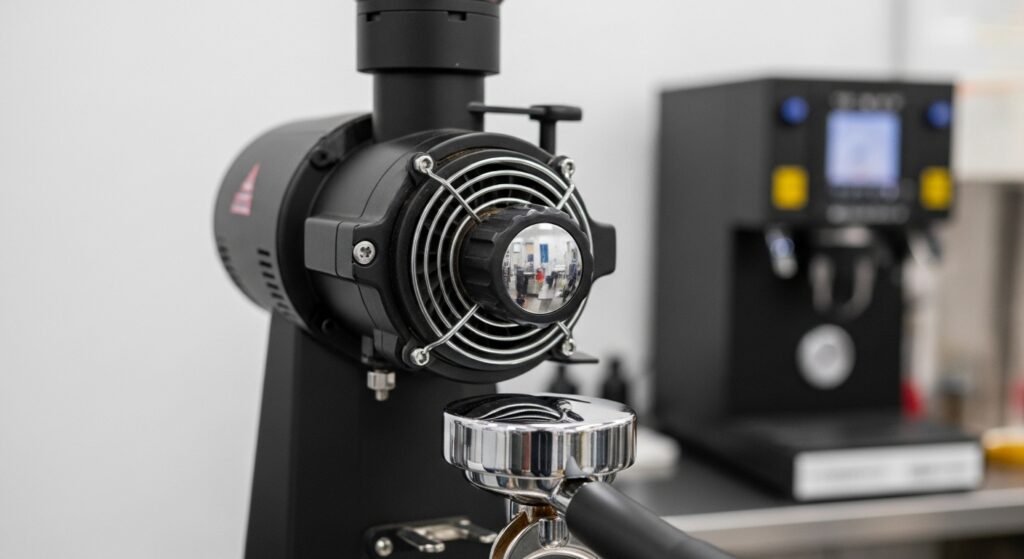
Grinding is a high-friction activity that generates heat. In a laboratory setting, heat is a variable we must control. If the burrs become too hot during a long grinding session, they can begin to “cook” the volatile oils within the coffee before the water even touches it. This leads to a loss of aroma and a flat, “baked” flavor.
This is why professional grinders are built with heavy-duty materials like steel or ceramic and often feature cooling fans. To maintain the sensory experience, a barista must monitor the grinder’s temperature. This is also why we recommend grinding “on demand”—only grinding exactly what you need for the current brew—to prevent the oils from oxidizing and losing their aftertaste potential.
Dialing In: Matching Grind to Method
The golden ratio is irrelevant if your grind size doesn’t match your brewing method. In the lab, we follow the “Surface Area Principle”: the shorter the contact time, the finer the grind.
-
Espresso: Requires a very fine, powdery grind to create resistance against the 9 bars of pressure. Calibrating espresso often requires adjustments as small as a few microns.
-
Pour-over (V60/Chemex): Needs a medium-fine grind, similar to table salt. This allows the water quality to flow through at a rate that extracts the bright acids.
-
French Press: Needs a coarse grind, like sea salt. Since the coffee is immersed for several minutes, a coarse grind prevents over-extraction and keeps the body and mouthfeel clean.
-
Cold Brew: Requires the coarsest possible setting. The long, cold extraction process works best with large particles to avoid a “muddy” or silty texture.
Maintenance Matters: The Cost of Dirty Burrs
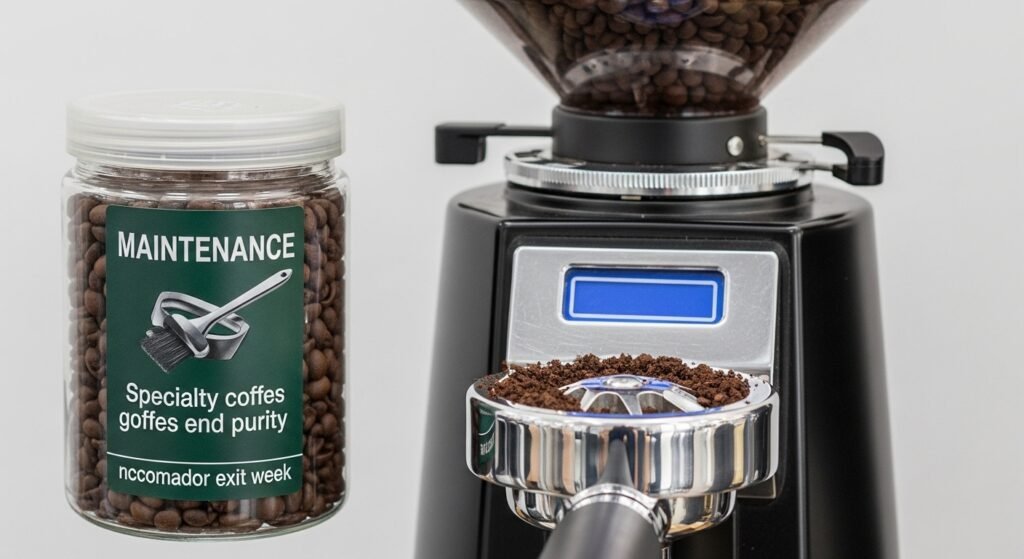
We have discussed maintenance matters for machines, but the grinder is often neglected. Coffee beans contain oils that, over time, coat the burrs and the exit chute. These oils turn rancid quickly. If you don’t clean your grinder regularly, every new batch of specialty beans you buy will be contaminated by the “ghosts” of old, oxidized coffee.
A clean grinder ensures that the journey of the bean ends with purity. We recommend using a brush or specialized grinder cleaning pellets once a week to keep the burrs sharp and the flavor profile transparent.
Conclusion: Investing in the Foundation
The grinder is the bridge between the bean and the cup. You can have the most expensive high-altitude beans and the most sophisticated espresso machine, but if your grinder is inconsistent, your coffee will never reach its potential.
In the “sensory laboratory,” we prioritize the grinder above all else. It is the tool that gives you control over the acid vs. bitter balance and allows you to identify the flavor notes that make specialty coffee so special. Remember: consistency is king. Respect the grind, maintain your equipment, and the rewards in your cup will be limitless.

Kevin Smith is deeply interested in the craft and culture of coffee, with practical experience exploring specialty beans, brewing techniques, and flavor development. Over the years, he has spent time studying preparation methods, observing extraction processes, and understanding how small details influence the final cup.
Through NovaWeHub, Kevin shares clear, practical, and research-based insights designed to make coffee knowledge approachable for everyone — from beginners to enthusiasts. His focus is on simplifying complex concepts and encouraging readers to explore coffee with curiosity, confidence, and a more refined sensory awareness.