
Colombia is more than just a coffee producer; it is a global icon. For decades, the image of Colombian coffee was one of consistency—a “safe” and balanced cup that served as the gold standard for what coffee “should” taste like. However, in the modern “sensory laboratory,” we have discovered that the terroir of Colombia is one of the most diverse on the planet. From the volcanic peaks of the south to the humid forests of the north, Colombia offers a spectrum of flavors that ranges from deep chocolate to vibrant tropical fruits.
At the heart of this diversity is the department of Huila. While Colombia has many famous growing regions—such as Antioquia, Tolima, and Nariño—Huila has earned a special place on the barista’s bench. It is a region where geography, climate, and human dedication converge to produce what many call the “perfect” coffee. To understand the soul of Colombia, we must go beyond the marketing and look at the science of high altitude and the unique processing innovations that are keeping Colombia at the forefront of the specialty revolution.
Huila: The Intersection of Two Cordilleras
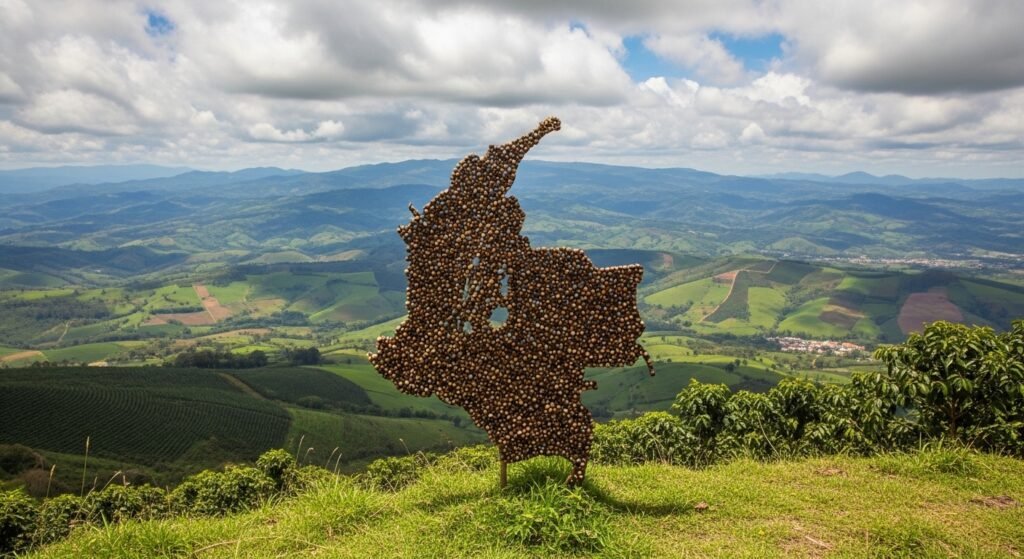
Huila’s secret lies in its geography. It is located where the Central and Eastern ranges (cordilleras) of the Colombian Andes meet. This creates a dramatic landscape of fertile valleys and towering peaks, providing a wide range of microclimates. The altitude in Huila typically ranges from 1,200 to 1,900 meters above sea level, which is the “sweet spot” for high-quality Arabica.
The volcanic soil from the nearby Nevado del Huila volcano is exceptionally rich in minerals. This mineral density, combined with the stable water quality of the mountain springs, allows the coffee trees to develop complex organic acids. When you identify flavor notes in a Huila coffee, you will often find a bright, malic acidity (reminiscent of green apples) and a very clean, sweet finish. This balance of acid vs. bitter is what makes Colombian coffee so prized by roasters around the world.
The Harvest Cycle: Freshness All Year Round
One of the reasons Colombia is so dominant in the market is its unique ability to harvest coffee nearly all year round. Because Colombia is located so close to the equator, different regions experience their “Main Crop” and “Mitaca” (secondary crop) at different times.
In Huila, the main harvest typically happens between September and December, with the smaller Mitaca harvest in the spring. This means that a calibrated barista can always find “fresh crop” Colombian coffee, avoiding the staleness that can affect origins with only one harvest per year. This constant availability of fresh beans is vital for maintaining the vibrant aftertaste and aromatic intensity that Colombian coffee is known for.
The Washed Process Perfection
While Brazil is the master of the Natural process, Colombia is the world leader in the Washed (Wet) Process. In this method, the fruit and mucilage are completely removed before the beans are dried. This requires a high volume of clean water and precise maintenance of equipment like de-pulpers and fermentation tanks.
The washed process highlights the “intrinsic” flavor of the bean rather than the flavor of the fruit. This results in the “crystal clarity” of flavor that we look for in our sensory experience. In Huila, farmers have perfected the fermentation stage, often using “extended fermentation” or “anaerobic” techniques to boost the sweetness and complexity of the cup. This is a critical part of the journey of the bean, where the farmer acts as a chemist to manipulate the final profile of the coffee.
Sensory Profile: What to Expect from Huila
When conducting a cupping session at home with a Colombian Huila, pay attention to the following characteristics:
-
Acidity: Expect a “sparkling” or “effervescent” quality. It should be bright but not sour.
-
Body: Huila coffees generally have a medium body and mouthfeel—not as heavy as an Asian coffee, but silkier than a typical Central American cup.
-
Sweetness: Look for notes of panela (unrefined cane sugar), caramel, and honey.
-
Aroma: Intense floral and red fruit aromas are common in high-altitude lots.
This versatility makes Colombian coffee the “MVP” of the barista’s bench. It performs beautifully as a V60 pour-over, where the clarity of the washed process shines, but it also has enough sweetness and structure to hold up as a calibrated espresso.
Beyond Huila: Nariño and Sierra Nevada
While Huila is the star, the soul of Colombia extends to its extremes. To the south, in Nariño, coffee grows at some of the highest altitudes in the world (up to 2,300 meters). The cold nights at these heights force the coffee cherry to develop more sugars to protect the seed, resulting in an incredibly sweet and complex cup.
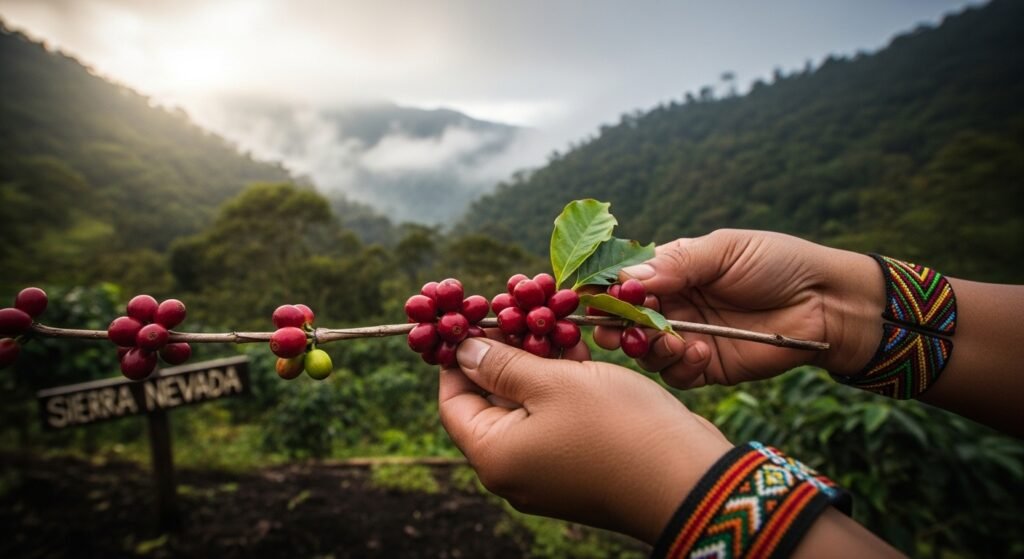
To the north, in the Sierra Nevada de Santa Marta, coffee grows in a completely different environment—the world’s highest coastal mountain range. Here, the coffee is often grown by indigenous communities and has a heavier, more chocolatey profile that reminds one of the Brazilian Cerrado. Understanding these regional differences is the key to mastering the “Origin and Earth” category.
Conclusion: The Resilience of the Colombian Bean
Colombia has faced many challenges, from climate change to coffee leaf rust (roya). Yet, through the work of the FNC (Federación Nacional de Cafeteros) and the passion of individual farmers in Huila, it remains the standard-bearer for quality. The Colombian bean is resilient, complex, and endlessly rewarding.
The next time you brew a cup from Huila, remember the cordilleras, the volcanic soil, and the meticulous washed processing. You are tasting a legacy of high-altitude excellence that has been refined over centuries. Whether you are seeking the clarity of a pour-over or the balance of a Modern Carajillo, the soul of Colombia is there, offering a sensory experience that is both familiar and excitingly new.

Kevin Smith is deeply interested in the craft and culture of coffee, with practical experience exploring specialty beans, brewing techniques, and flavor development. Over the years, he has spent time studying preparation methods, observing extraction processes, and understanding how small details influence the final cup.
Through NovaWeHub, Kevin shares clear, practical, and research-based insights designed to make coffee knowledge approachable for everyone — from beginners to enthusiasts. His focus is on simplifying complex concepts and encouraging readers to explore coffee with curiosity, confidence, and a more refined sensory awareness.