
Specialty coffee enthusiasts often seek out exceptional beans that stand apart from conventional flavor profiles. In recent decades, Panama has emerged as a notable example of this kind of distinction. While Brazil dominates in volume and Africa is celebrated for its genetic diversity, Panama has become synonymous with luxury and exclusivity in the coffee world.
It is in this region that the Geisha (or Gesha) variety was rediscovered, redefining expectations for what a single-origin coffee can deliver. Known for its delicate floral aromas, vibrant acidity, and complex taste, Geisha has not only transformed the specialty coffee market but also influenced the way coffee connoisseurs approach evaluation and appreciation of flavor.
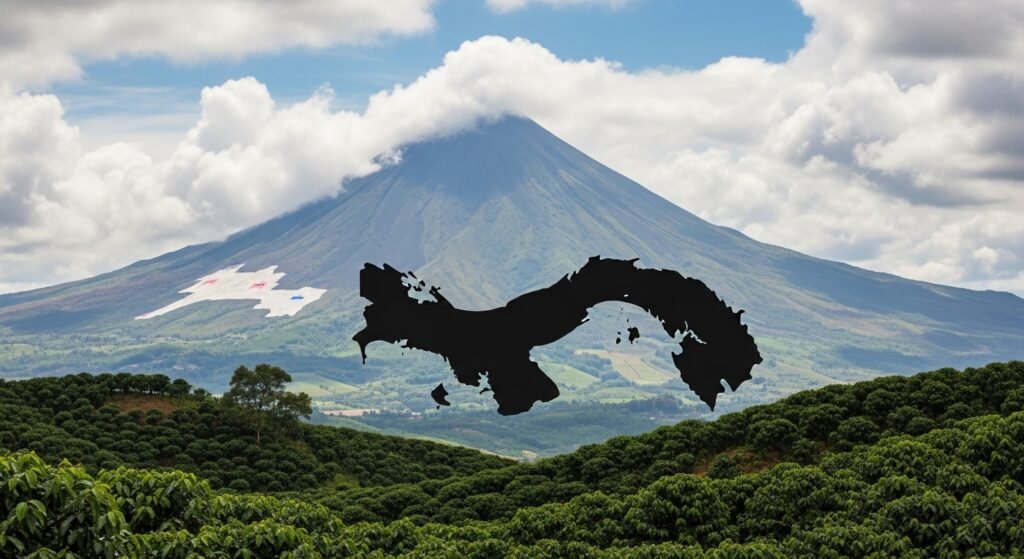
Panama’s success is not an accident; it is a result of a perfect geological storm. The country’s unique shape and the presence of the Volcán Barú create microclimates where the Atlantic and Pacific winds collide. This environmental stress, combined with the extreme altitudes of the Chiriquí province, forces coffee trees to work harder, concentrating sugars and aromatic compounds in a way that is scientifically unparalleled.
The Geisha Phenomenon: From Ethiopia to Boquete
The story of Panamanian coffee is inextricably linked to the Geisha variety. Originally collected from the Gori Gesha forest in Ethiopia in the 1930s, the seeds eventually made their way to Panama in the 1960s. For decades, it was ignored because it was difficult to grow and produced a low yield. However, in 2004, the Peterson family of Hacienda La Esmeralda entered a Geisha lot into the “Best of Panama” competition, and the specialty world was never the same.
In our lab, we analyze Geisha not just as a coffee, but as a botanical miracle. It possesses a distinct aromatic profile characterized by bergamot, jasmine, and lemongrass. Unlike the heavy body and mouthfeel of a traditional Bourbon or Caturra, Geisha is tea-like and ethereal. Its elegance is so high that it often scores above 90 points on the SCA scale, commanding prices that exceed $2,000 per pound at auction.
The Volcán Barú: A Soil of Fire and Ash
The “Spirit of Panama” is anchored by the Volcán Barú. At 3,474 meters, it is the highest point in the country. The surrounding regions of Boquete, Volcán, and Renacimiento benefit from volcanic soil that is rich in nitrogen, potassium, and phosphorus.
This soil acts as a natural laboratory. The high mineral content and the porous nature of the volcanic ash allow for exceptional drainage, which is crucial during the heavy rains of the Panamanian wet season. Furthermore, the “Bajareque”—a fine mist that drifts over the mountains—keeps the coffee trees hydrated and cool even during the sunny days. This slow maturation process allows the flavor notes to develop more complexity, particularly the high-frequency floral and citric acids that Panama is famous for.
Innovation in Processing: The Science of Fermentation
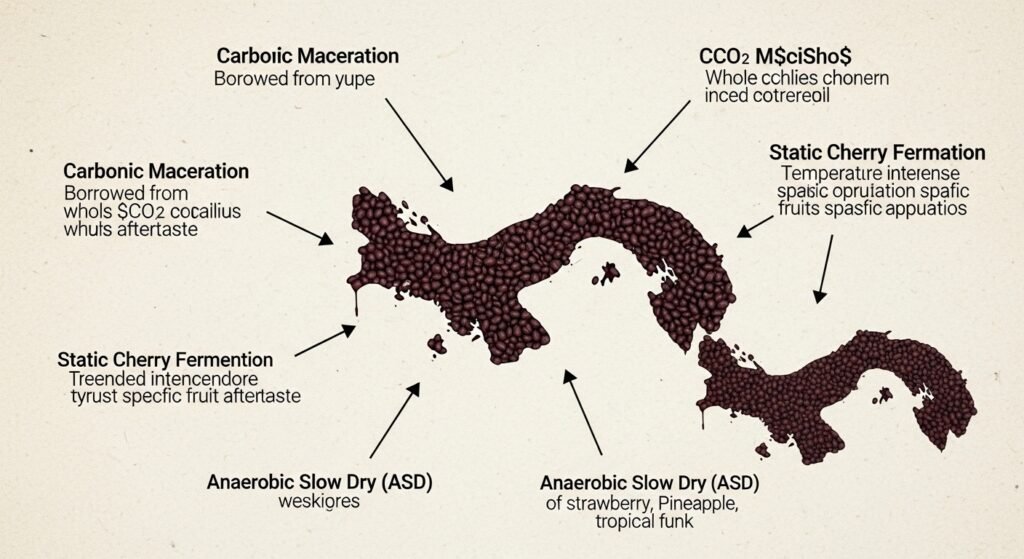
Panama is not content with just having great soil; it is also the global leader in processing innovation. In the Chiriquí highlands, producers treat the wet mill like a chemistry lab. We are seeing the rise of:
-
Carbonic Maceration: Borrowed from the wine industry, where whole cherries are fermented in a $CO_2$ rich environment.
-
Static Cherry Fermentation: Controlling temperature and yeast populations to emphasize specific fruity aftertaste profiles.
-
Anaerobic Slow Dry (ASD): A method that creates intense, winey notes of strawberry, pineapple, and tropical funk.
These methods are designed to highlight the acid vs. bitter balance of the Geisha variety. When you brew a Panamanian coffee, you aren’t just tasting the bean; you are tasting a highly controlled bio-chemical experiment.
The Microclimate Map: Boquete vs. Volcán
To truly understand Panama on the barista’s bench, you must know the valleys.
-
Boquete: The most famous region. The east-facing slopes receive the Atlantic influence, producing coffees with a classic, refined acidity and intense floral aromas.
-
Volcán: Located on the west side of the volcano, this region is generally drier and sunnier. The coffees here tend to have more “snap” and a brighter, citric-forward profile.
-
Renacimiento: The “hidden gem” near the Costa Rican border. This region focuses on traditional varieties and organics, offering a more rustic but equally complex sensory experience.
Brewing the “Champagne” of Coffee
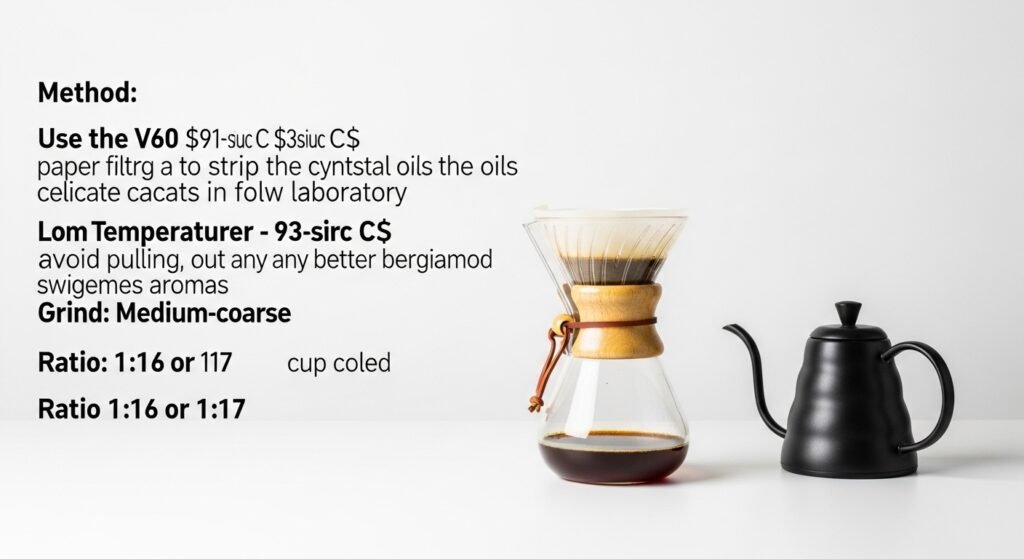
Because Panamanian Geishas are so expensive and delicate, the brewing protocol is sacred. In the laboratory, we follow these rules:
-
Method: Use the V60 or Chemex. You want a paper filter to strip away the oils and leave only the crystalline clarity.
-
Temperature: Slightly lower ($91^\circ C – 93^\circ C$). High heat can “burn off” the delicate jasmine and bergamot aromas.
-
Grind: Medium-coarse. You want a slow, gentle extraction to avoid pulling out any bitter tannins that might mask the sweetness.
-
Ratio: 1:16 or 1:17. Give the coffee space to “breathe” so you can perceive the layers of flavor as the cup cools.
Conclusion: The Luxury of Precision
Panama has taught the coffee world that “perfection” is a combination of nature and nurture. It is the spirit of the mountain meeting the curiosity of the scientist. By focusing on the Geisha variety and pushing the boundaries of high-altitude agriculture, Panamanian producers have created a category of coffee that sits alongside the world’s greatest delicacies.
Whether you are tasting a classic washed Boquete or an experimental anaerobic lot from Volcán, the experience is transformative. It reminds us that coffee is not just a commodity; it is an art form. The next time you have the opportunity to try a Panamanian coffee, take your time. Watch how the aromas shift as the temperature drops, and appreciate the decades of innovation that went into that single, extraordinary cup.

Kevin Smith is deeply interested in the craft and culture of coffee, with practical experience exploring specialty beans, brewing techniques, and flavor development. Over the years, he has spent time studying preparation methods, observing extraction processes, and understanding how small details influence the final cup.
Through NovaWeHub, Kevin shares clear, practical, and research-based insights designed to make coffee knowledge approachable for everyone — from beginners to enthusiasts. His focus is on simplifying complex concepts and encouraging readers to explore coffee with curiosity, confidence, and a more refined sensory awareness.