
For decades, the mark of a skilled barista was their ability to “cut” an espresso shot by eye, watching the color of the crema turn from a deep tiger-stripe to a pale blond. Later, we introduced the digital scale and the timer to the barista’s bench, attempting to standardize the brew ratio. But in the modern “Sensory Laboratory,” we have realized that weight and time are merely proxies for what truly matters: Volume and Flow Rate.
The “Volumetric Revolution” is the shift toward machines equipped with high-precision flow meters. These devices don’t just measure how long the pump has been running; they measure the exact number of milliliters of water passing through the coffee puck. This technology is the key to achieving professional-grade consistency, especially when dealing with the complex aromas of high-altitude beans.
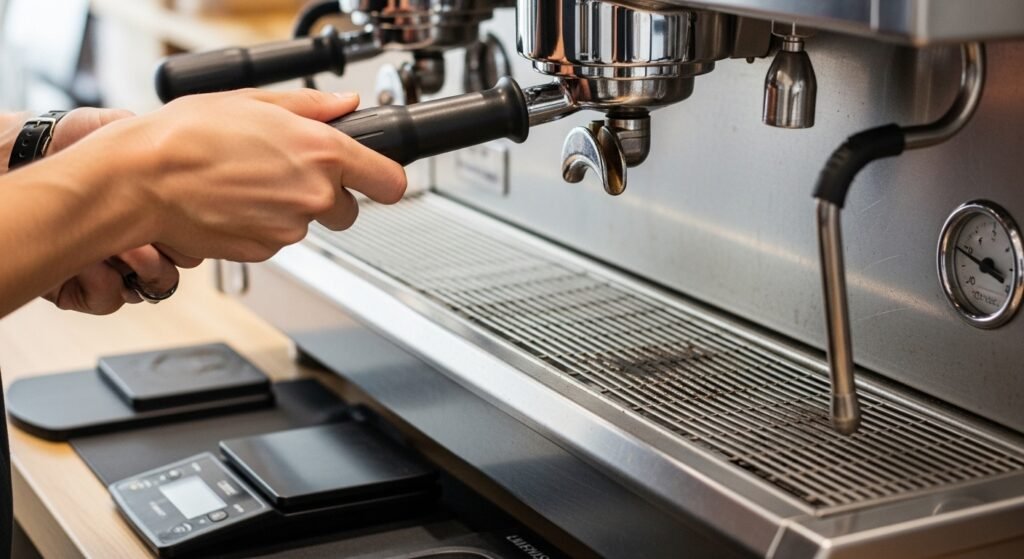
The Physics of the Flow Meter: How It Works
At the heart of a volumetric espresso machine is a small component called a Flow Meter (or Flow Sensor). In the lab, we analyze this as a transducer that converts mechanical motion into electronic pulses.
-
The Impeller: Inside the meter, a tiny pinwheel (impeller) spins as water passes through.
-
The Hall Effect: Each rotation of the impeller is recorded by a sensor. The machine’s computer counts these pulses—often hundreds per shot—to determine the precise volume of water delivered to the group head.
-
Accuracy vs. Precision: Unlike a human barista who might be distracted, a flow meter provides a level of precision that ensures the aftertaste of the first shot of the day is identical to the hundredth.
Why Weight Isn’t Enough: The “Puck Retention” Variable
In our previous discussions on espresso calibration, we emphasized using a scale. While weighing the output is vital, it has a significant flaw: it doesn’t account for what happens inside the puck.
-
Water Absorption: Different coffees, depending on their roast profile and origin, retain different amounts of water. A very fresh coffee with high $CO_2$ levels will resist water more than an older bean.
-
The Volumetric Advantage: A volumetric machine ensures that the input of water is consistent. If the machine is set to deliver 60ml, it will do so regardless of how much the coffee “swells.” This creates a more stable extraction environment, allowing the aromatic volatile compounds to develop predictably.
Flow Profiling: The New Frontier of Extraction
The revolution doesn’t stop at stopping the shot. Advanced machines in the “Sensory Laboratory” now allow for Flow Profiling. This is the ability to change the speed of the water at different stages of the extraction.
-
Gentle Pre-Infusion: Starting with a low flow rate allows the coffee puck to saturate evenly, preventing the channeling we discussed in Cycle 21.
-
The Ramp-Up: Once the puck is stable, the flow increases to build the necessary pressure for crema and body.
-
The Decline: Tapering the flow at the end of the shot helps avoid the extraction of heavy, bitter tannins, preserving a sweet and clean aftertaste.
The Maintenance of Precision: Keeping the Meters Calibrated
In the “Sensory Laboratory,” we know that maintenance matters. Volumetric systems are highly sensitive to mineral buildup.
-
Scale and Calcification: If water quality is not managed, calcium deposits can form on the impeller of the flow meter. This causes the wheel to spin slower or skip pulses, leading to “shot drifting”—where the volumes become inconsistent.
-
Cleaning Protocols: Regular backflushing and the use of scale-inhibiting filters are mandatory to keep the volumetric revolution running smoothly. A barista must treat their flow meters with the same respect they give their grinder burrs.
Sensory Impact: Consistency as a Tool for Discovery
When the variable of volume is “locked in” by technology, the barista is free to focus on other sensory nuances.
In our laboratory trials, we’ve found that baristas using volumetric machines are more likely to notice subtle changes in terroir. Because the machine is doing the “math” of the volume, the human can focus on the aroma wheel. If a shot tastes different, the barista knows it isn’t because they missed the “stop” button—it’s because the grind or the bean has shifted. This isolation of variables is the essence of the scientific method.
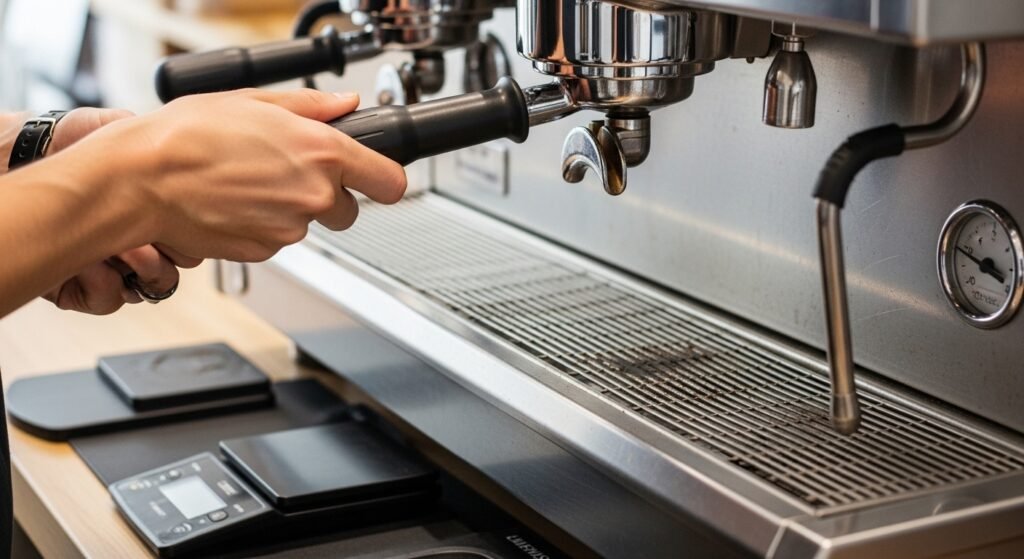
[Image showing a barista adjusting the volumetric settings on a high-end multi-boiler espresso machine]
The Future: Gravimetrics vs. Volumetrics
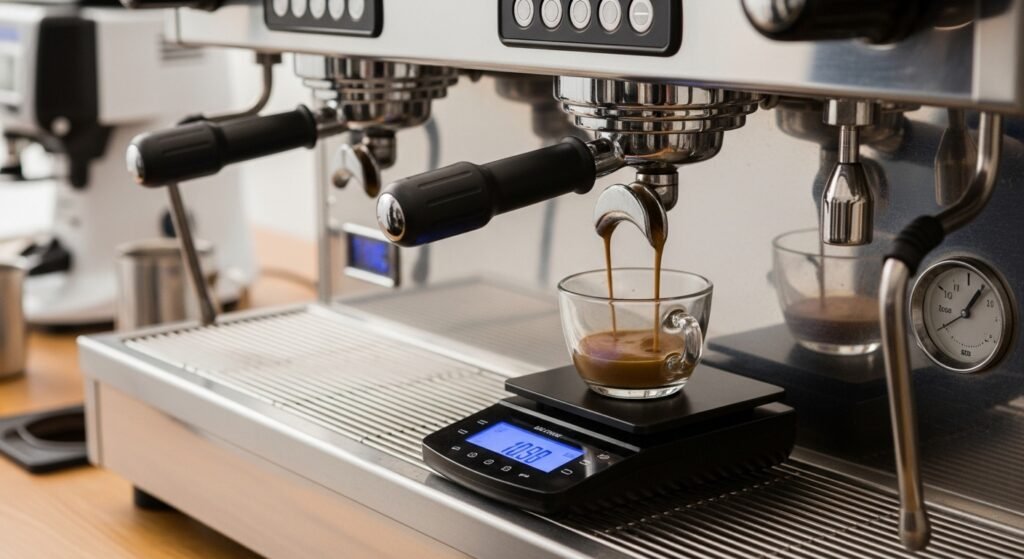
The latest evolution on the barista’s bench is Gravimetrics—machines with scales built directly into the drip tray that talk to the flow meters.
-
The Sinergy: The machine starts by measuring flow, but it stops the shot based on the real-time weight of the liquid in the cup.
-
The Result: This is the “Gold Standard” of consistency. It combines the mechanical precision of the flow meter with the finality of the brew ratio. For a laboratory aiming for a 2.0 yield (e.g., 18g in, 36g out), gravimetrics eliminate the 1-2 gram variance common in manual shots.
Conclusion: Empowering the Barista Through Technology
The Volumetric Revolution is not about replacing the barista; it is about empowering them. By delegating the repetitive task of measuring volume to high-precision flow meters, we allow the professional to spend more time on sensory analysis and customer engagement.
In the “Sensory Laboratory,” we embrace these tools as a way to honor the effort of the producer. Every bean that survives the journey from a high-altitude farm deserves an extraction that is as precise as modern physics allows. Master your flow meters, maintain your water quality, and join the revolution of consistency. The perfect aftertaste is no longer an accident; it is a calculated result.

Kevin Smith is deeply interested in the craft and culture of coffee, with practical experience exploring specialty beans, brewing techniques, and flavor development. Over the years, he has spent time studying preparation methods, observing extraction processes, and understanding how small details influence the final cup.
Through NovaWeHub, Kevin shares clear, practical, and research-based insights designed to make coffee knowledge approachable for everyone — from beginners to enthusiasts. His focus is on simplifying complex concepts and encouraging readers to explore coffee with curiosity, confidence, and a more refined sensory awareness.